More about The Quiet Ingenuity of Hung Yen and the Miracle of Woven Bamboo
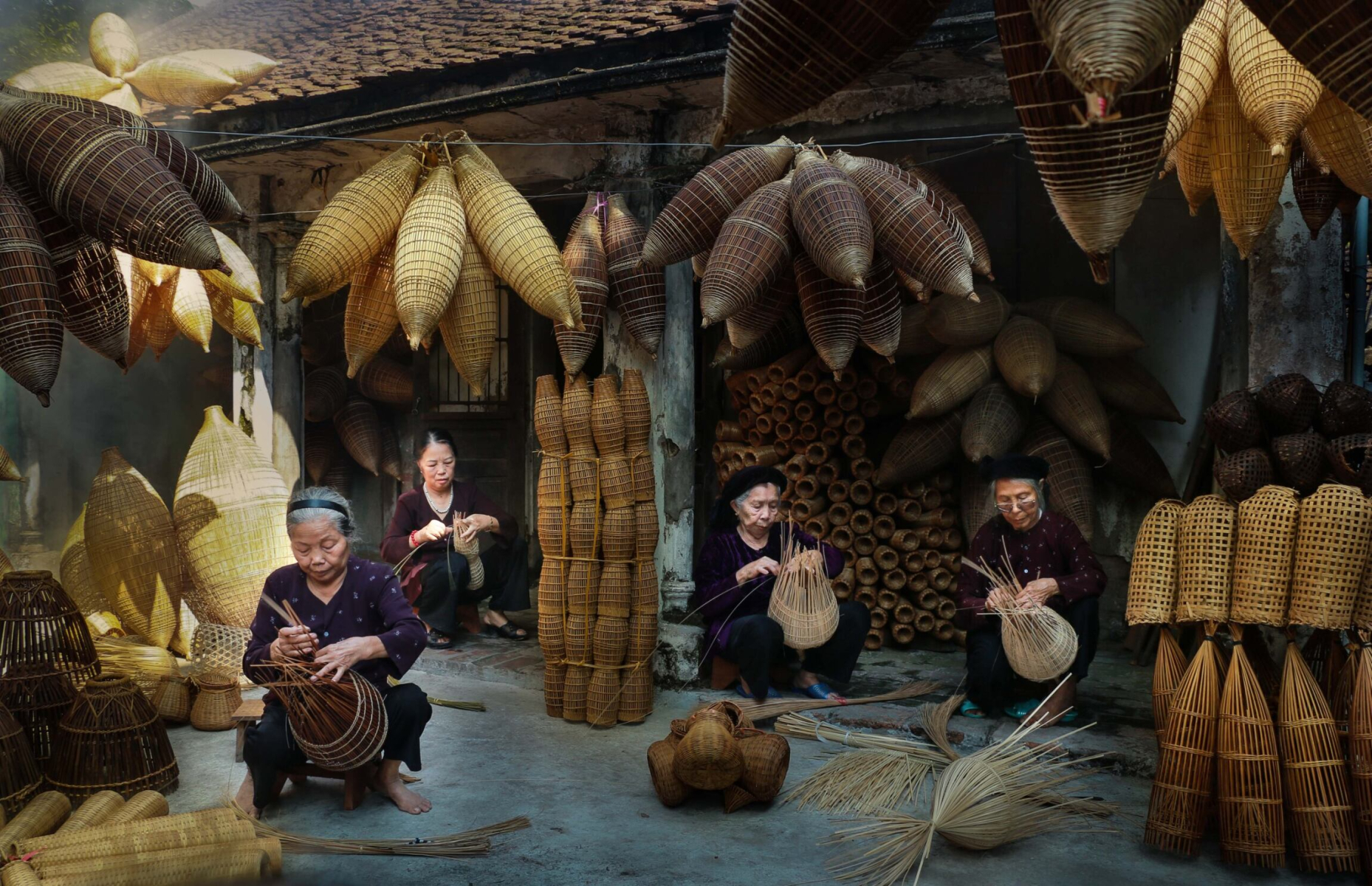
The workshops weaving traditional fish traps in Thu Sy
In the heart of Tien Lu district, Thu Sy commune is the historic centre of production of do, traditional bamboo traps used to catch fish and shrimp in the shallow waters of the delta. Rural life here is organised around brick-paved inner courtyards and shady spaces where artisans of all ages are busy at work. The manufacturing process, which requires great manual dexterity, relies exclusively on bamboo and rattan split into thin, even strips.
Local artisans first prepare the frame of the trap before carefully weaving the strips into a rounded, tapering structure with an inverted funnel that stops the fish from getting out. To watch the weavers at work and the traps drying in the open air, late morning, between 10 am and noon, is the ideal time of day. This is when freshly finished traps are laid out in the sun in the courtyards, creating repetitive geometric shapes that look like large open wooden flowers.
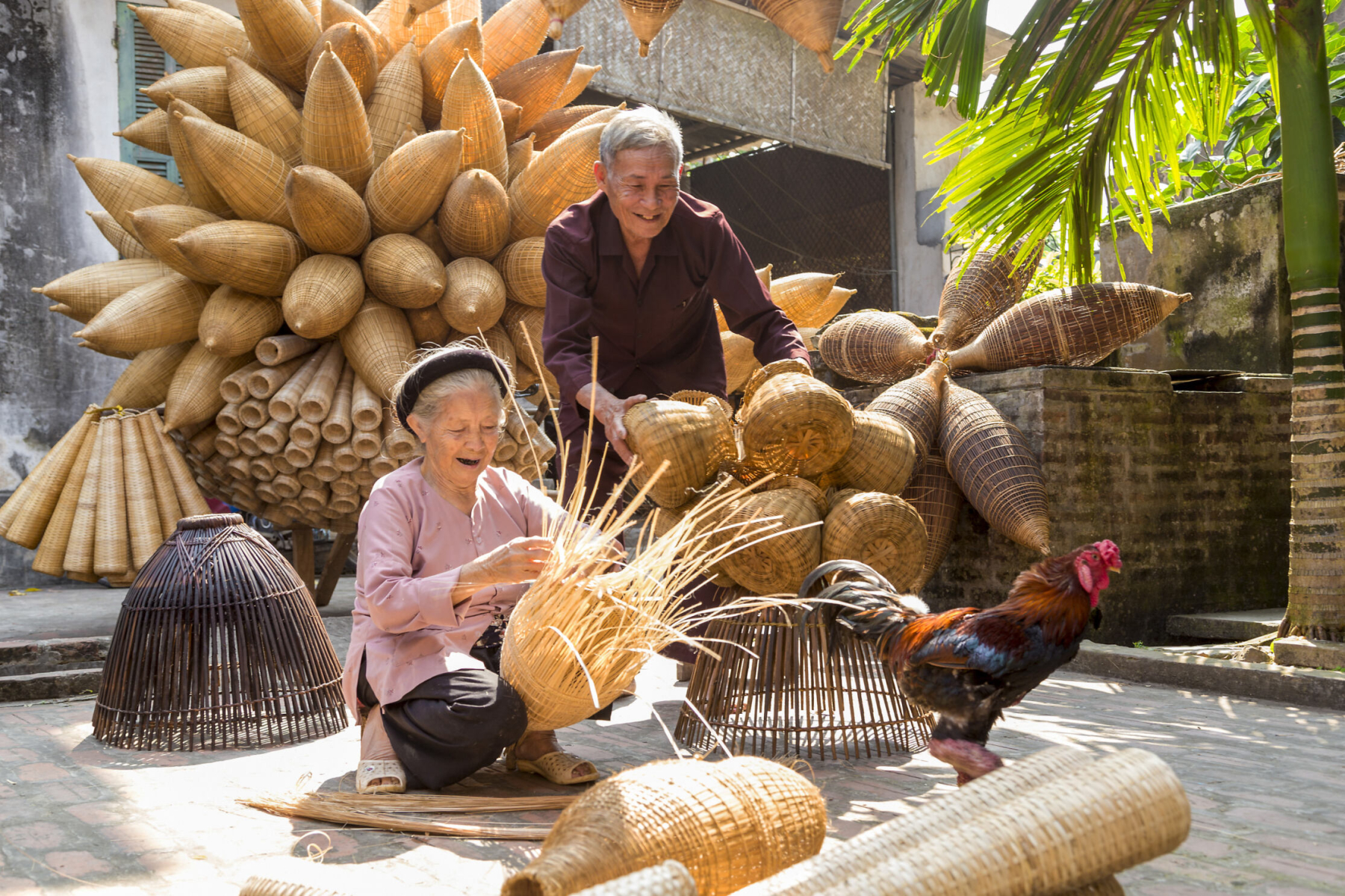
Photo: VNA
The atmosphere of the courtyards and the smoking process
Local life connected with this craft can be seen very concretely in the family homes themselves. The inner courtyards serve as open-air workshops, piled with bundles of raw bamboo and traps being finished. The atmosphere is marked by the steady rhythm of weaving and the sound of blades splitting the wood. Once assembled, the traps undergo an essential technical step: they are hung over a fire of straw and rice husks in a dedicated room.
This smoking treatment, which lasts several hours, gives the bamboo a characteristic dark brown colour and makes it more resistant to wood-boring insects and rot during long immersion in the water of the rice fields. Artisans are happy to share the details of this technique, explaining how the regularity of the weave determines how well the trap works. This local, very traditional activity shows how an old utilitarian skill continues to structure the economy of an entire community without losing its family roots.
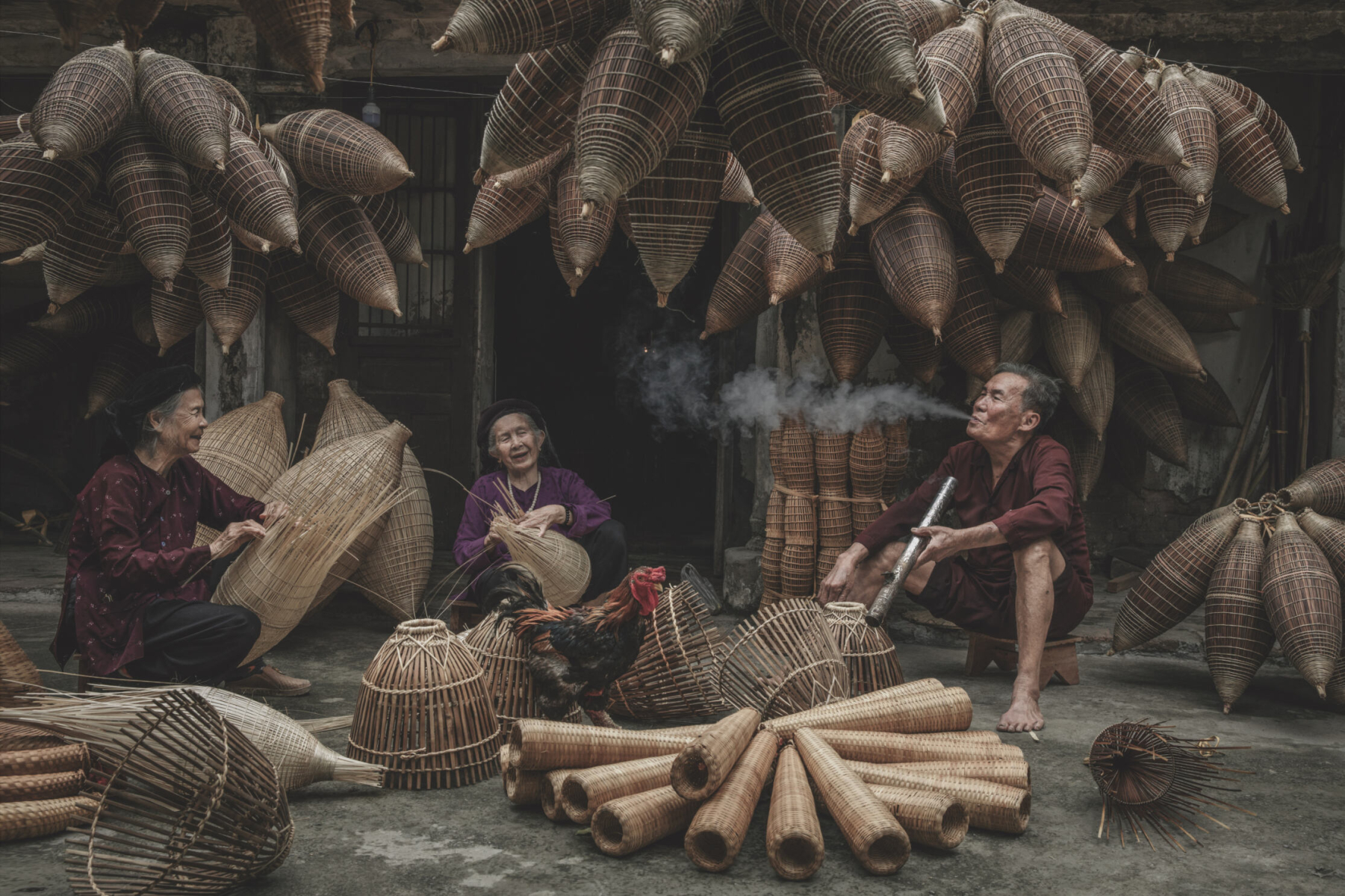
Photo: VNA
Uses of the fish trap and criteria of sturdiness
For travellers passing through Thu Sy, identifying a top-quality traditional trap comes down to precise technical criteria. A well-made piece has an extremely tight weave, with no rough spots or broken strips, so the catch cannot escape. The frame should be rigid and the neck perfectly fitted to withstand the pressure of flowing water.
Historically designed for fishing in canals, Thu Sy traps are now finding new uses outside agriculture. They are increasingly sought after by architects and interior designers who turn them into original light fittings or design features in traditionally styled restaurants and hotels. When buying a do directly from the workshop, it is a good idea to check the regularity of the rattan bindings at the base of the structure, which guarantee the object’s longevity whether it is used for fishing or decoration.
Practical information and ideas for combined itineraries
Thu Sy village is mainly reached from Hanoi via the Hanoi - Haiphong expressway (CT.04) and then Provincial Road 396, with a journey time by road of between an hour and a half and two hours. To make the most of a day in the province, a visit to the weaving workshops can be part of a wider tour including other major heritage sites of Hung Yen.
It is worth continuing west to explore the historic complex of Pho Hien, a thriving 17th-century trading port that still has remarkable religious buildings such as the Chu Dong Tu temple and Chuong Pagoda, famous for its wood carvings. Close to the return route, a stop at the Xuan Quan pottery village or the Tuong Ban soy-sauce village shows the diversity of the crafts that sustain the rural economy of the Red River Delta.
A preserved balance between tradition and modern rural life
Through the perseverance of the basket-weavers of Thu Sy, Hung Yen province demonstrates the viability of craft structures in the face of the proliferation of industrial plastic fishing gear. Visiting these courtyards full of smoked bamboo structures, combined with the surrounding centuries-old temples, offers a technical, measured and factual insight into a tradition that defines the identity of the Red River Delta, linking the memory of the elders’ gestures to the region’s economic life today.