More about Soc Trang
The ten key stops on a stay in Soc Trang
1. The enchanting Bat Pagoda (Chua Doi / Mahatup)

The enchanting Bat Pagoda. Photo: Henry Duong
Founded in the 16th century and listed as a national historic monument, Mahatup pagoda, commonly known as the Bat Pagoda (Chua Doi), is one of the most famous masterpieces of Khmer Theravada Buddhist architecture in the Mekong Delta. Nestled in a vast green park shaded by century-old banyans, it stands out for its main hall (Vihear) with tiered roofs edged with carved nagas and murals depicting the life of the Buddha. Its magical feature is a huge colony of flying foxes (Pteropus lylei), large fruit bats with a wingspan of up to a metre. By the thousands, these peaceful creatures hang upside down from the highest branches all day long, a fascinating sight before they take flight at dusk.
Practical tip: Keep quiet so as not to frighten the bats, and wear clothes covering shoulders and knees to visit the inner sanctuary.
Address: Van Ngoc Chinh street, Ward 3, Soc Trang city, Soc Trang province.
2. The architectural sanctuary of Som Rong pagoda

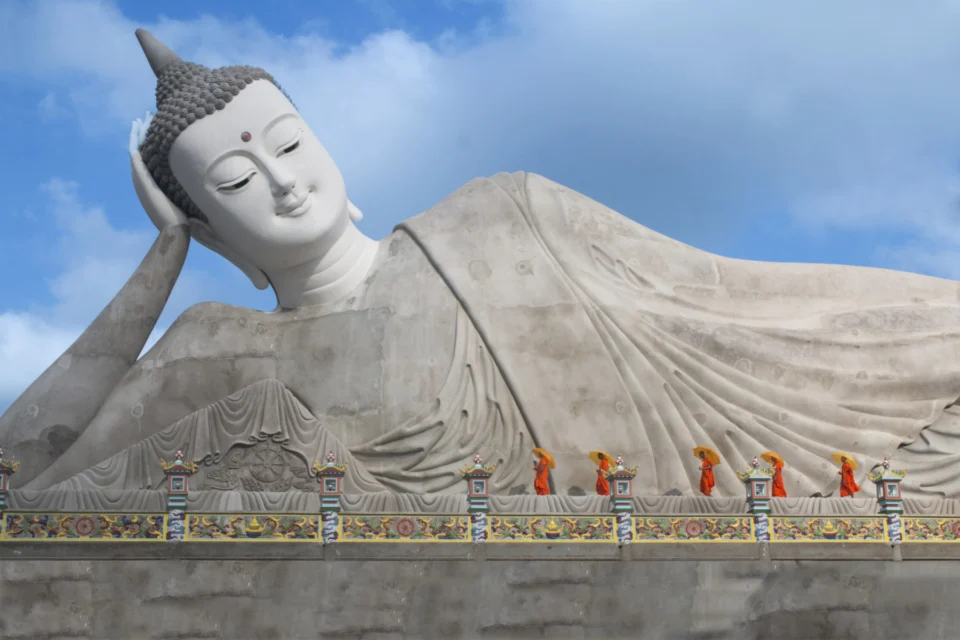
Statue of the reclining Buddha. Photo: VNA
Embodying the contemporary revival of Khmer art, Bôtum Vong Sa Som Rong pagoda impresses from the entrance with its monumental gate carved with a finely gilded triple stupa. The complex skilfully blends traditional lines with imposing modern structures: the main sanctuary is in pastel grey-blue with intricate gilding, while a huge memorial stupa holding royal ashes points its spire to the sky. Its centrepiece is a gigantic reclining Buddha in parinirvana, 63 metres long and 22 metres high, painted in brilliant gold. Rising above the surrounding orchards, it is one of the largest reclining Buddhas in Vietnam and draws pilgrims and photographers.
Practical tip: Visit in the late afternoon around 4.30 p.m. to photograph the golden statue in the warm light of sunset.
Address: 367 Ton Duc Thang street, Ward 5, Soc Trang city, Soc Trang province.
3. The majestic Chen Kieu pagoda

Photo: thamhiemmekong
About 12 km from the city centre along National Road 1A, Chen Kieu pagoda (or Sa Lon pagoda) owes its fame to a uniquely daring handmade decoration. When the sanctuary was rebuilt in the 20th century, faced with a shortage of paint and costly materials, the monks had the idea of collecting millions of broken bowls, cups, plates and porcelain and ceramic tiles from local people. These fragments were painstakingly reassembled into intricate mosaics covering the façades, pillars and roof of the main building. The result is a play of sparkling textures and geometric patterns reflecting the sun from every angle, a decorative ensemble without equal.
Practical tip: Take time to look closely at the walls of the main hall to appreciate the detailed assembly of Chinese and Vietnamese porcelain.
Address: Dai Tam commune, My Xuyen district, Soc Trang province.
4. The authentic river life of Nga Nam floating market

Photo: Quang Nguyen Vinh
At the strategic junction of five major canals linking Soc Trang, Hau Giang and Bac Lieu provinces, Nga Nam floating market is one of the last water markets in the Mekong Delta to keep purely traditional trading, far from industrial tourist circuits. From 3 a.m., dozens of motorboats (ghe) and canoes converge on the junction to trade seasonal fruit, orchard vegetables and basic goods. The cay beo tradition is strictly kept: each trader hangs the vegetable or fruit for sale (pineapple, watermelon, pumpkin) at the top of a long bamboo pole so it can be spotted from afar in the morning mist.
Practical tip: Hire a boat at the pier around 5.30 a.m. to see the market at its busiest and enjoy a bowl of hu tieu cooked right on the kitchen boats.
Address: Nga Nam town, Soc Trang province (about 60 km south-west of Soc Trang city).
5. My Phuoc island, a fruit oasis
Rising from the majestic Hau river (the lower branch of the Mekong), My Phuoc island is an extremely fertile alluvial strip of more than 1,000 hectares, known as the province's fruit basket. Thanks to a mild microclimate and soil enriched with silt at each flood, the island has unbroken family orchards producing high-quality durians, rambutans, mangosteens, pomelos and mangoes. The ferry crossing from the mainland sets the tone of a pastoral escape: there are no cars here, and you explore by bicycle or on foot along shady paths beside irrigation canals and bamboo « monkey bridges » (cau khi).
Practical tip: Plan your visit for the Double Fifth festival (Tet Doan Ngo, 5th day of the 5th lunar month) to join the great orchard festival and taste the fruit at its ripest.
Address: Nhon My commune, Ke Sach district, Soc Trang province.
6. The ancient Kh'leang sanctuary
Built in the mid-16th century (around 1533) on a sacred mound surrounded by legends, Kh'leang pagoda is considered the oldest and most revered Khmer Theravada Buddhist sanctuary in Soc Trang city. Surrounded by a large green park shaded by towering century-old sao and dau trees, it keeps a wooden architectural ensemble of exceptional craftsmanship that served as an aesthetic model for many temples in the region. The main hall (Vihear) rests on a raised multi-level stone base to protect it from floods, supported by powerful carved teak columns with floral motifs and intricate gilding. The triple-pitched roof, covered with fish-scale tiles, is edged with stylised Naga serpents whose raised tails point proudly to the sky. Inside, in soft light, an ornate altar holds a central bronze Buddha seated in meditation, nearly 7 metres high. It is surrounded by a priceless collection of ancient ritual objects, ceremonial bronze drums, murals of the Buddha's past lives and precious sacred texts inscribed on palm leaves (La buong).
Practical tip: Visit the Soc Trang Khmer Culture Museum, just opposite the pagoda entrance, to learn more about the community's arts, costumes and traditional musical instruments.
Address: 53 Nguyen Chi Thanh street, Ward 6, Soc Trang city, Soc Trang province.
7. Mo Ò nature reserve and mangrove

Tourists exploring « monkey island » in Cu Lao Dung. Photo: Duy Tan
At the far southern tip of the vast Cu Lao Dung river archipelago, exactly where the Hau river flows into the salty East Sea, the Mo Ò mangrove is a coastal ecological sanctuary of priceless biological value. Spread over thousands of hectares of dense swamp forest dominated by mangroves with tangled roots (duoc) and ban trees with breathing roots rising from the mud, it plays a key role in protecting the coast from erosion and slowing salt intrusion. This amphibious ecosystem is a prime refuge for dozens of species of migratory waterbirds and otters, and a huge nursery for marine crustaceans and fish. Discovering the site is an ecological adventure: visitors can follow raised wooden walkways under the dark canopy or take small motorboats deep into narrow swampy channels. It is a chance to see how local fishermen use ancestral techniques to catch mangrove crabs and mudskippers (ca thòi loi) and gather shellfish at low tide.
Practical tip: Bring an effective mosquito repellent, wear light but covering clothes and boots or shoes that don't mind mud if you plan to explore the marshy trails.
Address: Southern tip of Cu Lao Dung district, Soc Trang province.
8. Ong Bon pagoda, a jewel of Hoa art
An emblematic building of the spiritual heritage of the dynamic Chinese (Hoa) community, settled in Soc Trang for more than two centuries, Ong Bon pagoda (also known as Phuoc Lam temple or An Hoa assembly hall) stands proudly in the heart of the commercial centre. Built at the end of the 19th century and carefully restored, this sanctuary dedicated to Phuoc Duc Chanh Than (the god of earth and prosperity in Taoist folk belief) is a masterpiece of southern Chinese religious architecture. Its façade is striking, with glazed ceramic reliefs, colourful murals of mythological scenes and upturned roof corners adorned with fine porcelain dragons and phoenixes. Crossing the solid wooden threshold leads to an open inner courtyard (light well) that casts natural light on the hand-carved precious-wood frame. The interior atmosphere, mystical and enveloping, is filled with the fragrant smoke of dozens of giant incense coils hung from the ceiling. Each altar, decorated with gold leaf, red-lacquered calligraphy panels and painted silk lanterns, reflects the cultural wealth and spiritual fervour uniting the region's Hoa merchants and sailors.
Practical tip: The temple is spectacularly lively during Lunar New Year and the Mid-Autumn Festival, when the courtyard comes alive with drums and lion and dragon dances.
Address: Nguyen Thi Minh Khai street, Ward 3, Soc Trang city, Soc Trang province.
9. Tan Thanh bird sanctuary and reserve
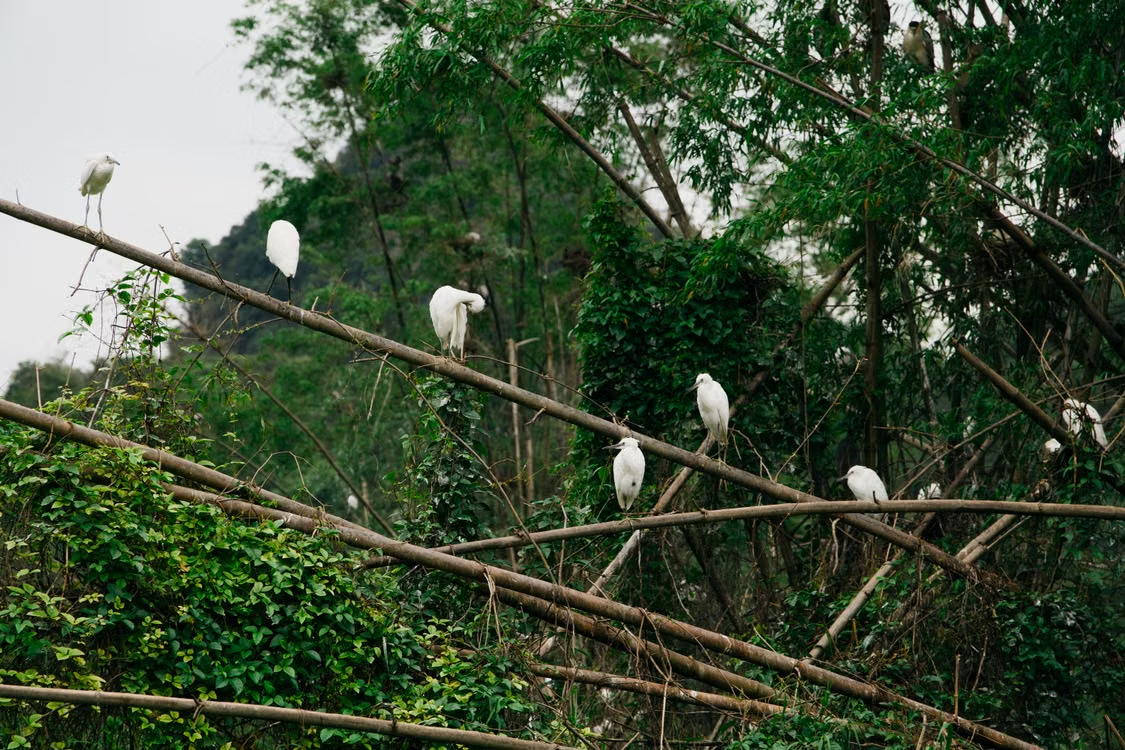
Photo: Quang Nguyen Vinh
Nestled in the preserved rural landscape of Long Phu district, about twenty kilometres from the city, Tan Thanh bird sanctuary is a true oasis of biodiversity and a haven for the wildlife of the Mekong Delta. Covering protected wetlands, ponds covered with sacred lotus and dense woodland of giant bamboo, sao trees and eucalyptus plantations, it offers an ideal habitat for waterbirds to rest and nest. The site has a permanent population of several tens of thousands of birds of more than 40 waterbird species, notably large colonies of white egrets (cò), grey herons, cormorants, Chinese pond herons and storks. All day long, the calm of the forest is broken only by wind in the bamboo and birdsong under the canopy. The spectacle peaks in the late afternoon, between 4.30 and 5.30 p.m.: thousands of birds that spent the day feeding in the surrounding rice fields and canals return to the sanctuary. The sky fills with winged silhouettes landing on the treetops, gradually covering the forest in a pure white mantle in the golden light of sunset.
Practical tip: Arrive in the late afternoon and bring binoculars or a camera with a telephoto lens to watch the nests and flights without disturbing the peace.
Address: Tan Thanh commune, Long Phu district, Soc Trang province.
10. The riverside of the Ngo boat race festival
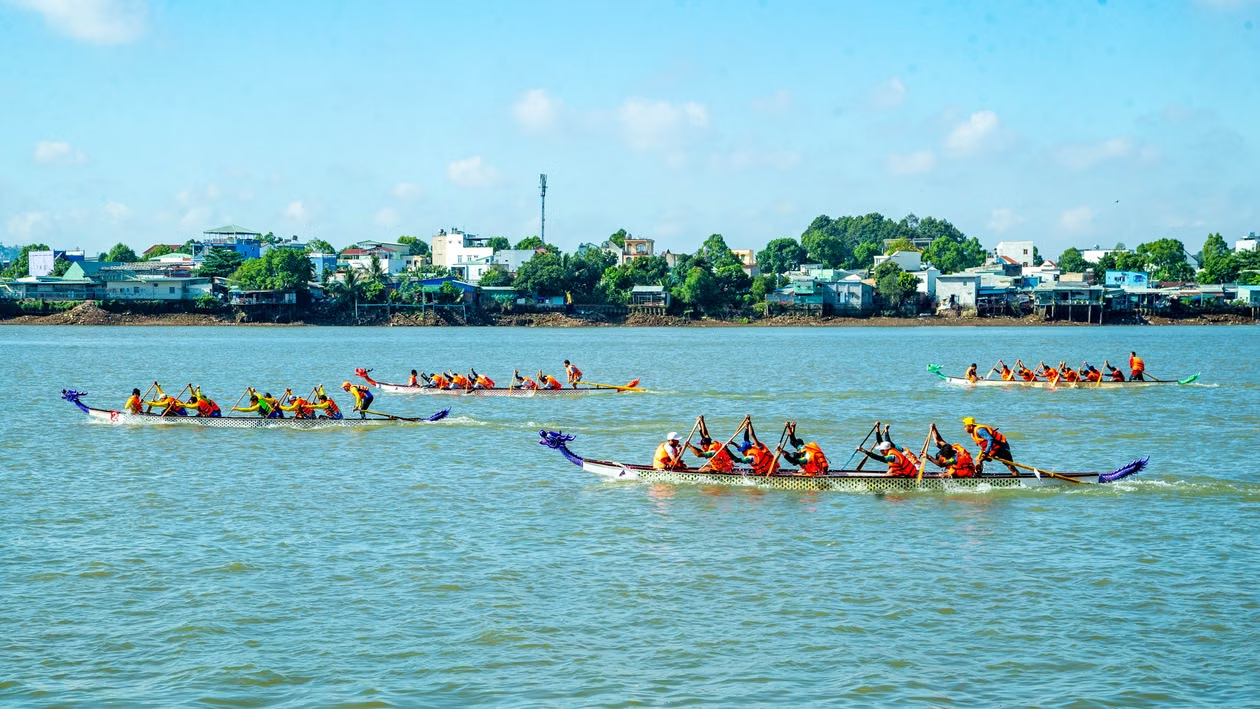
Photo: Bao Minh
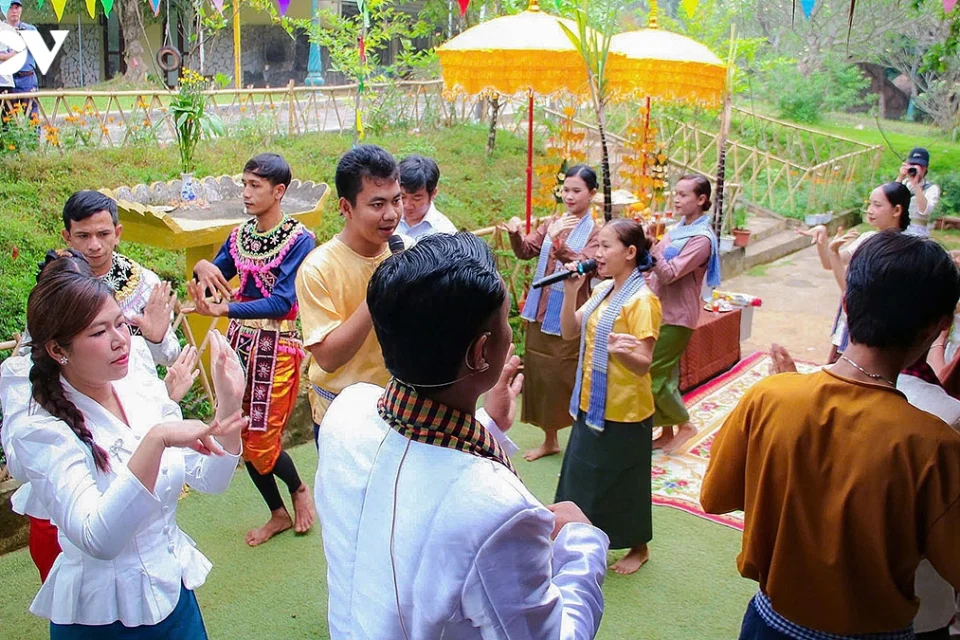
Laid out along the landscaped banks of the Maspero river through the heart of Soc Trang city, this esplanade is the historic and cultural stage of one of the most spectacular sporting and folk events in Southeast Asia: the Ghe Ngo boat race (held every year during the great Khmer festival Ooc Om Boc, on the full-moon evening of the 10th lunar month). For the Khmer community, the Ghe Ngo is not just a boat but a sacred object carved from a single tree trunk, blessed by monks and decorated on the bow with the painted head of a protective mythical creature (dragon, naga, Krut eagle). During the festival, dozens of men's and women's crews, each of 50 to 60 highly trained rowers from pagodas across the delta, compete over a 1,000 to 1,200-metre course, cheered on by more than 100,000 spectators packed along the banks. Outside the racing season, the esplanade is a lovely riverside promenade with flower gardens, monumental sculptures celebrating river culture, shaded benches under palm trees and many cafés where it is pleasant to stop at day's end to watch the sun set over the Maspero.
Practical tip: If you visit Soc Trang in November (around the full moon of the 10th lunar month), book your accommodation several months ahead to see this festival, listed as national intangible cultural heritage.
Address: Mac Dinh Chi street, along the Maspero river, Soc Trang city, Soc Trang province.
Soc Trang specialities: 4 local must-tries
1. Rice noodle soup with fermented fish broth
The province's signature dish, born of local cultural blending, bun nuoc leo stands out for its clear, fragrant broth made from fermented fish paste (mam sac or mam bo hoc), strained and simmered with lemongrass and wild galangal. The bowl of rice noodles is topped with poached river fish, fresh peeled prawns, slices of crispy roast pork (heo quay) and a basket of herbs including split water spinach and shredded banana flower.
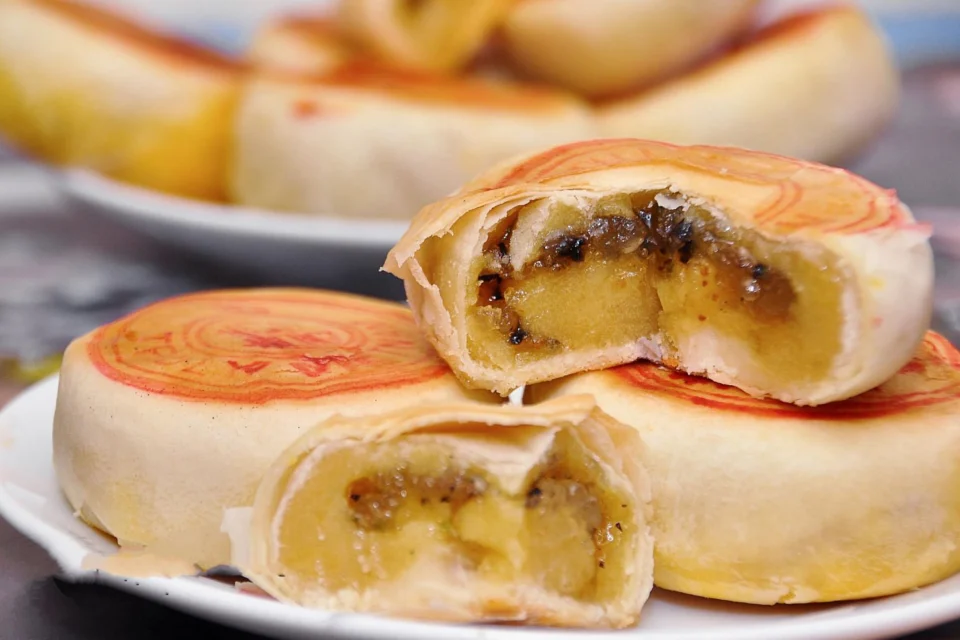
2. Flaky durian and mung bean cake (Banh pia)
An ancestral speciality introduced by the Hoa community, banh pia is a round pastry recognisable by its extremely thin, many-layered flaky crust. The generous filling combines smooth mung bean or taro paste, fragrant durian and a salted egg yolk at the heart. It is traditionally eaten warm, cut into wedges, with a cup of hot green tea.
3. Bun goi da rice noodle soup
Originating in My Xuyen district, this noodle dish derived from the fresh spring roll has a sweet-and-sour broth made with tamarind juice, palm sugar and coconut milk. The rice noodles are served with slices of boiled pork belly, freshwater prawns, bean sprouts and crushed roasted peanuts, a tasty balance of sweet, salty and crunchy.
4. Fried white radish cakes
A popular street snack, banh cu cai is made from rice flour batter mixed with grated white radish, small dried shrimps and minced pork. It is first steamed, then cut into squares and pan-fried until golden with beaten egg and spring onion. Served with fresh salad and sweet-and-sour nuoc mam, these cakes are crispy outside and soft inside.
Climate and best times to visit
Soc Trang has a tropical monsoon climate typical of the Mekong Delta, with mild temperatures all year (26 to 29 °C on average) and two distinct seasons:
The dry season (December to April): The ideal time to explore the province. It is sunny, the air is pleasant and water levels make boat trips on the canals and to the river islands easy.
The rainy season (May to November): Tropical showers, usually short, in the late afternoon. It is, however, the best season for fresh fruit in the My Phuoc orchards and for major festivals such as Ooc Om Boc at the end of the year.