
tea plantation hills
(Photo: Ravi Pinisetti)
Rooted in the heart of the Trung Du and northern mountain region of Vietnam, Thai Nguyen province is far more than the undisputed national capital of tea. It is a heritage sanctuary of rare nobility, where the serenity of its botanical landscapes combines with the cultural richness of the Tay, Nung and San Diu ethnic communities. From the gracefully curving tea hills of Tan Cuong to the steep, wild slopes of the Tam Dao massif, Thai Nguyen offers a poetic, sensory and regenerative immersion. It is the destination of choice for travellers seeking rural authenticity, hiking in the wild and pastoral refinement.
Practical information & location
Address & geography: Thai Nguyen province, Trung Du and northern mountain region, Vietnam. Located just 75 km north of Hanoi (about 1 hr 15 min via the CT07 expressway) and 50 km from Noi Bai International Airport.
Best season: September to November (autumn) is the ideal time to visit the region. The climate is mild, dry and sunny. During this golden period the autumn tea harvest reaches an exceptional aromatic intensity, and the deep valleys of Dinh Hoa and Vo Nhai take on the golden hue of terraced rice fields ready for harvest.
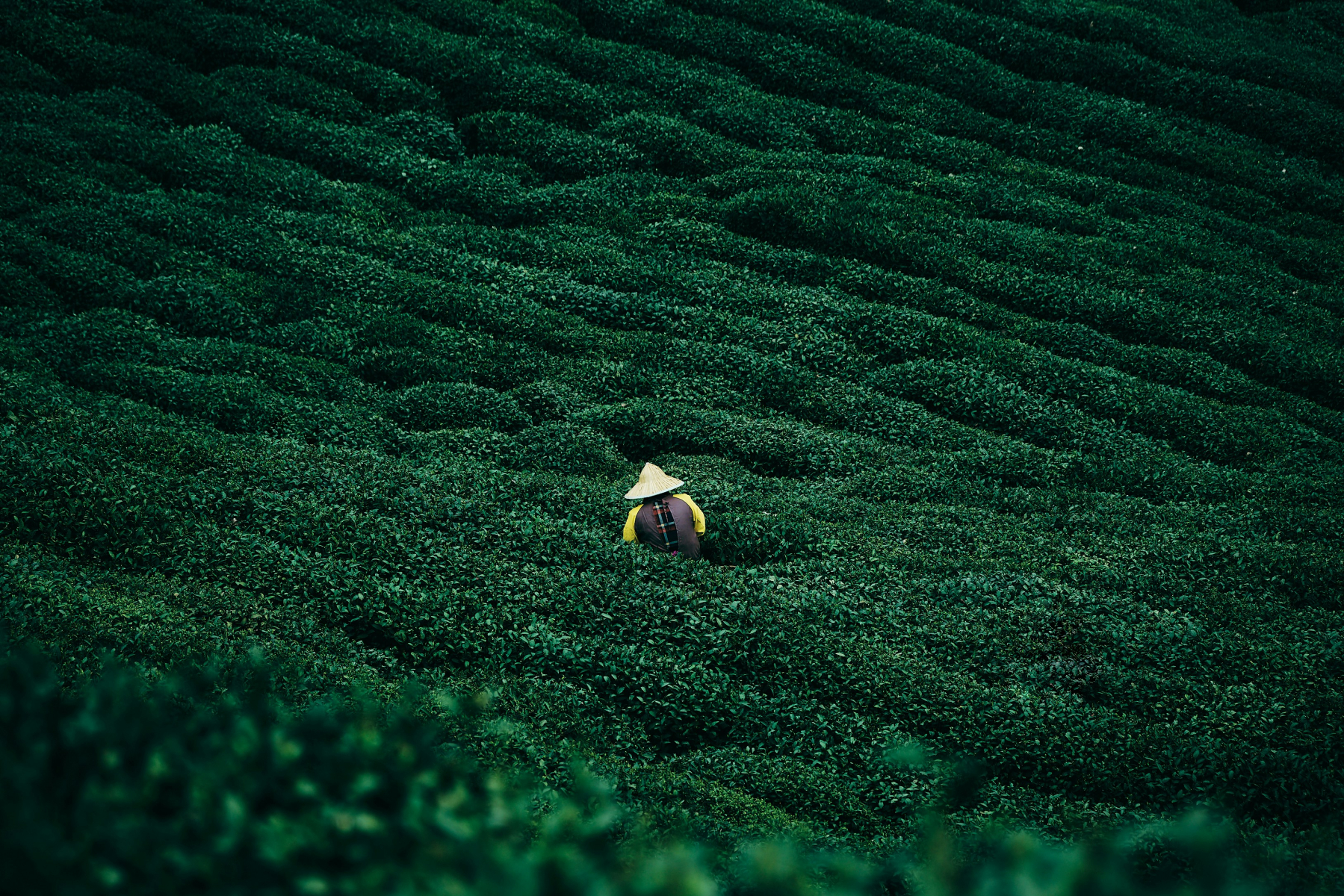
Farmers harvesting tea
(Photo: seelean)
4 must-do immersive experiences
1. Join the tea picking and artisanal roasting in Tan Cuong
Far from industrial tourist circuits, this immersive experience begins at first light on the misty slopes of Tan Cuong. Alongside the tea pickers, you will learn the surgical precision of the “one bud, two young leaves” harvest, which must be done before the sun’s rays evaporate the morning dew.
The day continues in the intimacy of a family workshop, where the real alchemy of processing takes place. You will work the fresh leaves in large cast-iron woks over a wood fire to master the crucial stages: withering, hand-rolling that breaks the plant cells without tearing the leaf, and the final drying that gives the tea its emblematic “fish-hook” shape (tra moc cau). The experience ends on the veranda of a traditional house with a guided ritual tasting, to appreciate the clarity of the yellow-green liquor and the lingering vegetal notes of the brew.
2. Go water trekking at Cua Tu and explore the Tam Dao massif
For lovers of raw nature and thrills, the Cua Tu valley (“The Gate of Death”), nestled on the eastern slope of the Tam Dao massif, offers a spectacular water-trekking route through preserved primary forest. The route follows a crystal-clear river winding between huge granite cliffs covered in moss and tree ferns.
It involves climbing over boulders polished by floods, passing through three successive rock gates and taking welcome dips in huge natural pools of emerald-green water. It is a physical and refreshing crossing that lets you admire the remarkable biodiversity of the north’s high-altitude forests.
3. Immerse yourself in community life at the eco-tourism village of Thai Hai
Recognised by the World Tourism Organization (UNWTO) as one of the best tourism villages in the world, the hamlet of Thai Hai is a living conservatory of Tay culture. The site brings together some thirty century-old stilt houses, dismantled in their original villages and rebuilt identically in the heart of a forest reserve.
Visitors are welcomed not as customers but as guests of a large community family. You will stay in these traditional wooden structures, share meals made with vegetables from the organic garden and fish from the village ponds, learn the secrets of medicinal plants gathered in the undergrowth, and in the evening enjoy a concert of traditional Hat Then singing accompanied by the crystal notes of the Dan Tinh lute.
4. Sail at sunset and enjoy tea on Nui Coc Lake
This reservoir of more than 25 km², dotted with 89 green islands and islets, is the setting for one of the most popular romantic legends of northern Vietnam: the tragic story of Chang Coc and Nang Cong.
A private cruise aboard a traditional boat lets you escape the bustle of the shore to sail among wild coves, visit the Three Pines Cave and approach the 45-metre-high monumental statue of Shakyamuni Buddha. At dusk, the boat cuts its engine in the middle of the peaceful lake so you can savour a steaming cup of tea as the silhouette of the Tam Dao mountains stands out against a purple-tinged sky.
4 culinary specialities of the region

tea leaves after drying
(Photo: Oleg Guijinsky)
Tan Cuong’s exceptional tea (Tra Dinh / Tra Tom Non):
Considered the golden vintage of Vietnamese tea growing, this green tea stands out for its clear, golden-tinged liquor and a very delicate aroma reminiscent of com (young green rice). On the palate, a fresh, vegetal bitterness fades instantly to make way for a velvety sweetness that lingers long in the throat (the famous hau ngot).
Bo Dau traditional rice cake (Banh chung Bo Dau):
From a centuries-old craft village, this banh chung is made exclusively with the nep vai variety of sticky rice grown in the valleys of Dinh Hoa. Wrapped in large wild dong leaves and generously filled with creamy mung beans and free-range pork belly seasoned with black pepper, it is simmered for more than ten hours in pure water from the village’s natural wells, which gives it its emerald-green colour and melt-in-the-mouth texture.
Bamboo-tube rice and roast pork with mac mat leaves (Com lam & Thit lon quay):
An essential pairing at ethnic festivals, sticky rice is packed into sections of fresh bamboo and grilled slowly over embers, absorbing the sap and woody fragrance of the stem. It is served with free-range pork marinated with wild mac mat (clausena) berries and leaves, spit-roasted until the skin is crisp while the meat stays juicy and fragrant.
Pork braised with black canarium fruit (Tram den kho thit):
Tram den is the fruit of a large wild tree harvested in autumn in the province’s mountain forests. After being softened in warm water, its purple flesh reveals a rich, oily and slightly tangy flavour. Slowly braised in a clay pot with cubes of pork belly and artisanal fish sauce, the fruit melts into the cooking juices, giving the meat a dark colour and a fruity, woody and deeply original taste.

(Photo: Timothy Newman)
Thai Nguyen’s excellence does not stop at its borders; it shines as the symbol of a nation that has preserved its deep identity. Walking through these emerald gardens, you realise that tea is the lifeblood of this province, nourishing an economy of quality and respect for living things.
This heritage is not frozen in time; it evolves with sovereign dignity, adopting sustainable farming practices that strengthen its ecological resilience. Thai Nguyen thus remains the sanctuary of an eternal alchemy, a place where the clarity of its springs, the strength of the land and the passion of its people come together to offer the world one of its finest expressions of refinement and sincerity.


