More about Christ the King of Vung Tau

Overlooking the southern tip of the Vung Tau peninsula, the statue of Christ the King stands 170 metres up on the summit of Mount Nho. This emblematic monument of Ba Ria - Vung Tau province, built from 1974 and completed in 1994, is a major geographical and cultural landmark for travellers visiting the South-East region. Less than two hours from Ho Chi Minh City by road or hydrofoil, the site attracts visitors as much for its architectural value as for the exceptional panorama it offers over the East Sea. An excursion up this mountainside combines historical memory, physical effort and scenic discovery.

Four key spaces to discover when visiting the monument
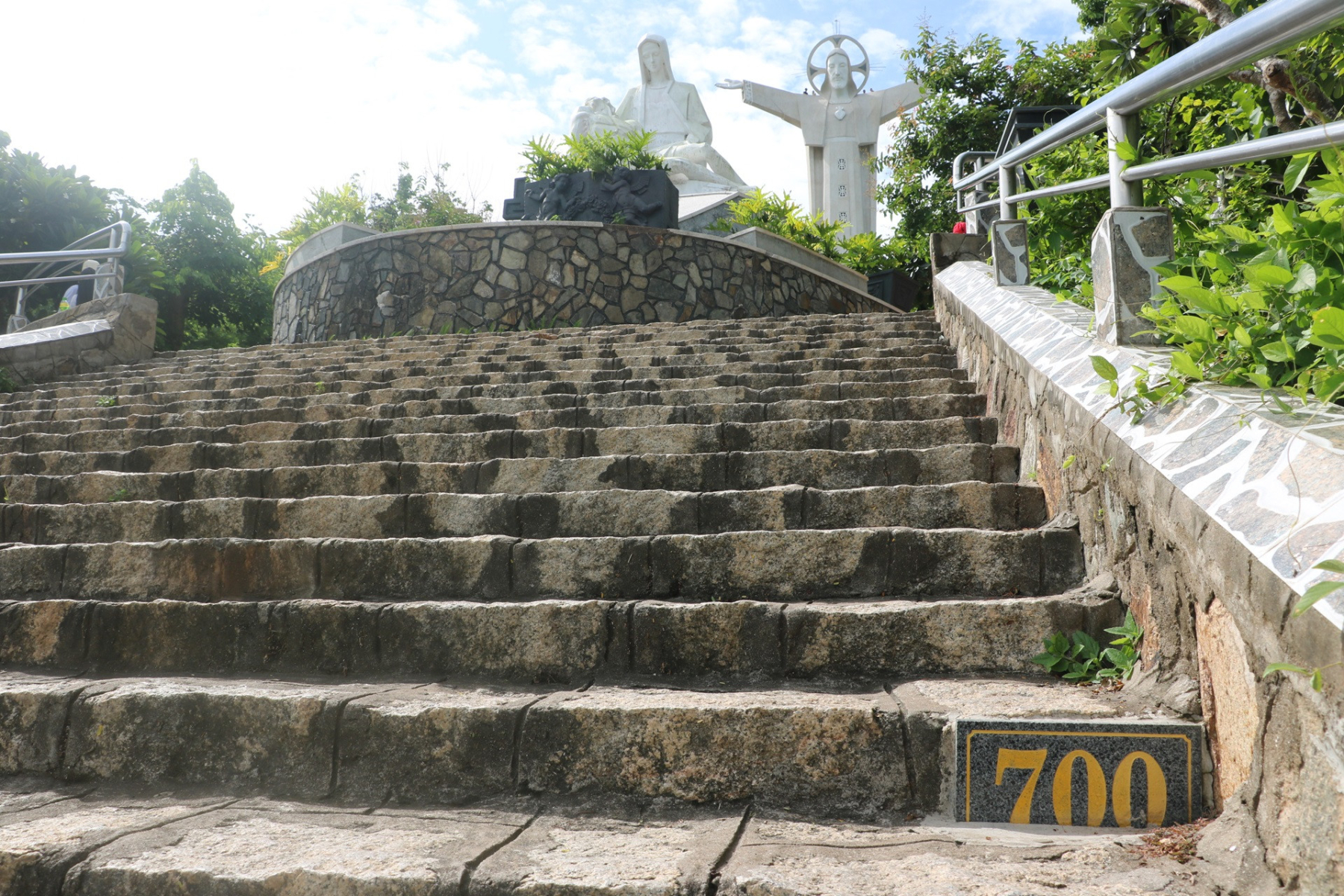
Photo: Vietnamnet
The footpath and steps of Mount Nho: The climb to the summit starts at the foot of the mountain, along the Ha Long coastal road. The route consists of almost 1,000 stone steps winding through dense local vegetation that provides regular patches of shade. Rest areas allow visitors to stop and face the sea breeze. Access is completely free and the climb takes about thirty minutes on average, offering a pleasant contrast between the cool of the trees and the heat of the coast.
The monumental structure of the statue: At 32 metres high, with its arms outstretched over a span of 18.4 metres, the work is striking for its size and its robustness against the marine elements. Christ stands on a massive concrete pedestal decorated with detailed bas-reliefs depicting the Last Supper and the twelve apostles. Inside, travellers find a simple exhibition space before entering the narrow central corridor, governed by strict rules on dress out of respect for the religious site.
The inner staircase and the arm platform: A spiral staircase of 133 steps runs through the heart of the statue directly to the monument's two shoulders. This narrow, vertical final section opens onto small outdoor balconies that can hold only a few people at a time. From this unique viewpoint, visitors enjoy a 360-degree panorama over the straight line of Bai Sau, the crescent of Bai Truoc cove and the vastness of the ocean, making this the high point of the itinerary.
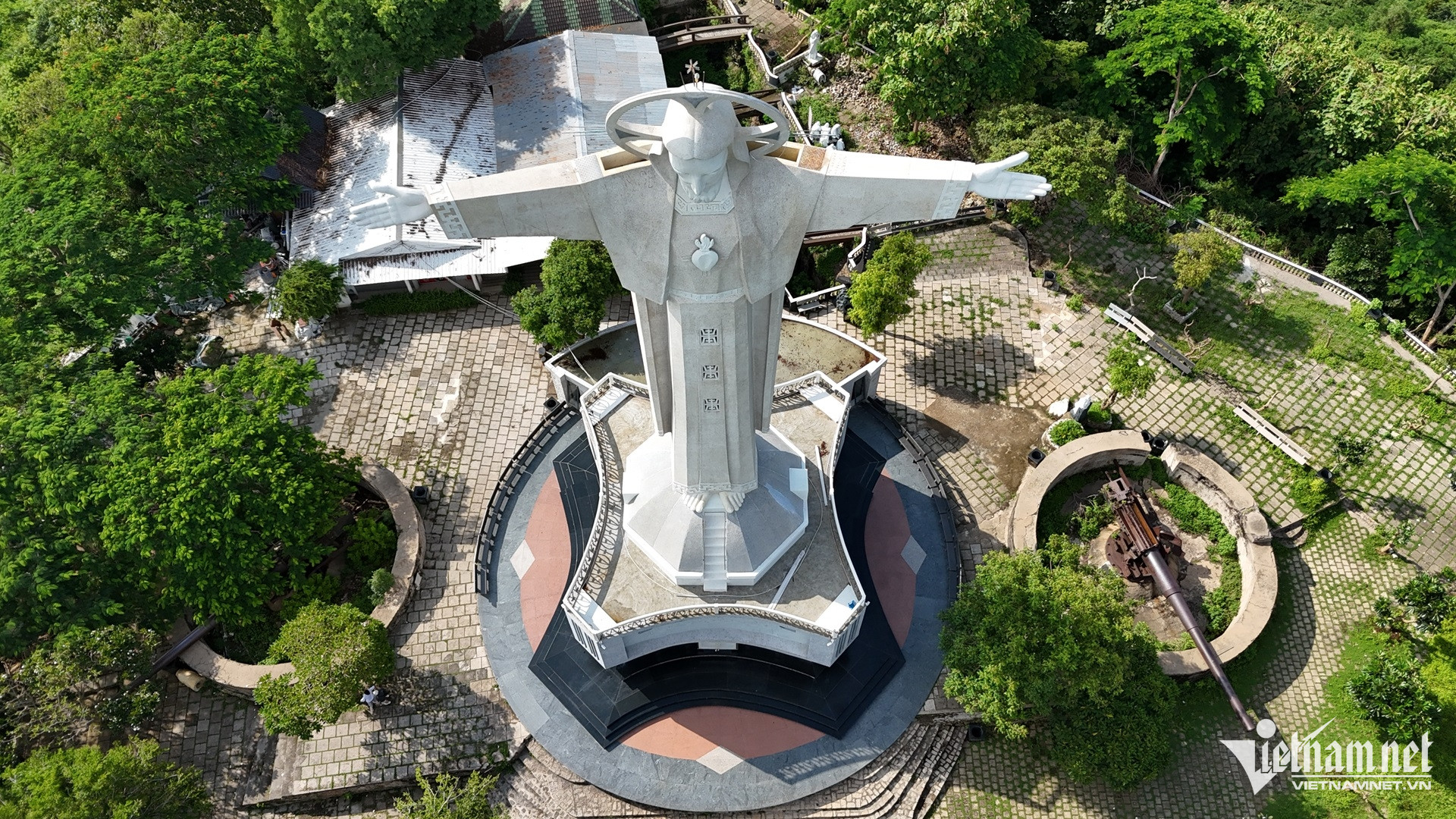
Photo: Vietnamnet
The old gun battery of Mount Nho: Just below the base of the statue are three giant artillery pieces belonging to a former coastal defence line from the late 19th century. Each gun is installed in a circular masonry fortification 10.5 metres in diameter, linked to the others by a network of trenches and underground shelters. This historic ensemble adds a heritage and military dimension to the visit, bearing witness to the peninsula's strategic role in the colonial era.
Climate and planning your excursion by season
The statue can be visited all year round thanks to the stable temperatures in Vung Tau, which hover around 27°C. The dry season, from November to April, remains the ideal period, with clear skies guaranteeing perfect visibility from the statue's arms. It is strongly advised to start the climb early in the morning, as soon as it opens at 7 am, to avoid the heat and the weekend crowds. During the rainy season, from May to October, mornings are generally sunny, but the stone steps can become slippery during afternoon showers, so suitable walking shoes are needed.

Photo: VnExpress
An essential landmark on the southern coast
The statue of Christ the King of Vung Tau represents a singular architectural balance, combining sacred art with a viewpoint over the whole area. Thanks to its dominant position and its integration into the natural setting of Mount Nho, the monument offers a perfect transition between the lively city centre and the vastness of the sea. Its proximity to other historic sites such as the lighthouse and Cape Nghinh Phong makes it easy to include in a complete cultural itinerary, confirming its status as an essential stop for understanding the character and history of this seaside city.