
Tugging rituals and games in the rice-growing cultures of East and Southeast Asia are practised within communities to ensure abundant harvests and prosperity.

Tugging rituals and games foster social solidarity, provide entertainment and mark the beginning of a new agricultural cycle.
Tug of war is a folk game frequently seen at traditional festivals. It is one of the cultural activities linked to the spiritual beliefs of many peoples, embodying team spirit, discipline and the will to surpass oneself. It also promotes physical training, strength, endurance, wisdom and resilience, helping people develop their state of mind, their virtue and their professional talent.
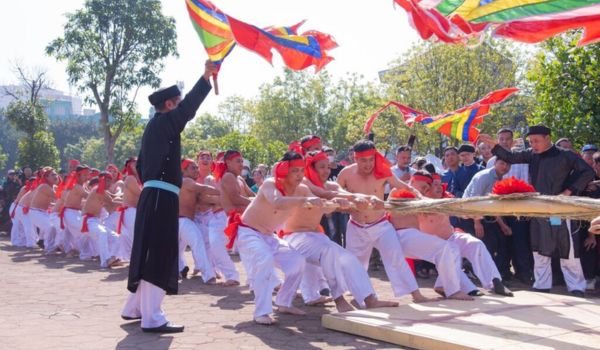
The captivating display of collective strength through the game of tug of war
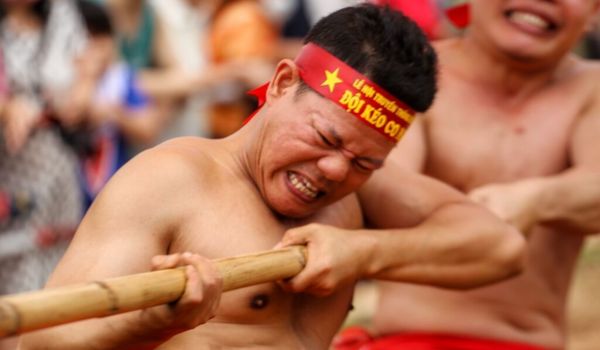
A rattan stem replacing the rope, a variant of the game.
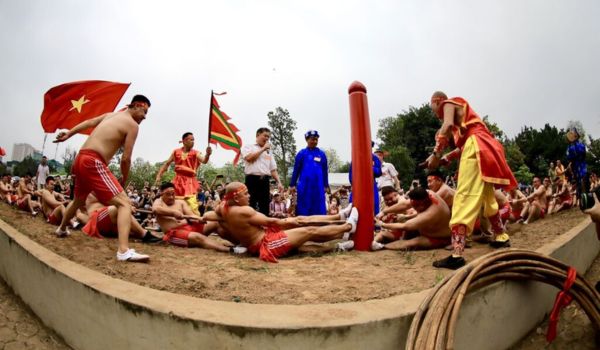
A seated variant highlighting the diversity of practices.
Tugging rituals and games also serve to strengthen unity and solidarity, as well as the sense of belonging and identity among community members. In Vietnam, they are particularly rooted in the midlands, the Red River Delta and the northern Central region, the ancestral lands of the Vietnamese and the cradle of rice growing.

A moment of sharing between the Vietnamese and South Korean teams, captured on 18 November in Hanoi.
In 2015, these practices in Vietnam, Cambodia, the Philippines and the Republic of Korea were inscribed by UNESCO on the Representative List of the Intangible Cultural Heritage of Humanity.
Source of information and photos: Phuong Nga - Khanh Hoa/VNA/CVN
Last checked Suggest a correction