More about Top 10 Must-Try Specialities of Ca Mau: A Practical Food Lover's Guide to Vietnam's Southern Tip
1. Ca Mau crab: the undisputed master of the brackish mangroves

Ca Mau crab. Photo: Tran Hieu
Raised free in the vast mangrove forests (rung ngap man) of Nam Can, Ngoc Hien or Dat Mui, Ca Mau crab is regarded by gourmets as the best mud crab in all of Southeast Asia. Unlike crabs intensively farmed in closed ponds, it lives in water renewed daily by the tides and feeds only on small shrimp, wild fish and shellfish.
The categories to know before ordering
To choose your crab well at the stalls or in a restaurant, you need to know the local classification:
Cua gach (female crab with roe): The gourmet's holy grail. The shell is completely filled with dense, creamy, extremely rich orange roe (gach). The meat is slightly less plentiful than in the male, but the roe has an exceptionally powerful umami taste.
Cua thit (male meat crab): Recognisable by its huge claws and narrow apron. Its meat is extraordinarily firm, sweet and juicy, coming away in perfect long white strands.
Cua com (or Cua 2 da - moulting crab): The ultimate rarity. Caught just before it sheds its old shell, this crab has a thin, tender second inner skin full of nutrients and fat. Its meat is incomparably sweet.
Preparation techniques
Cua hap nuoc dua (steamed in coconut water): The best way to judge freshness. The crab is gently steamed in fresh coconut water with a few stalks of lemongrass. The sweetness of the coconut enhances the natural sugar of the meat.
Cua rang me (tossed in tamarind): The crab is cut up, lightly fried and coated in a reduction of tamarind pulp, nuoc mam, cane sugar and chilli. The tangy, sticky sauce goes wonderfully with the richness of the roe.
Practical information & pitfalls to avoid
The string trap (Day trói cua): At some markets, vendors tie the crabs with very thick wet cloth cords that can weigh 30% to 50% of the total weight! Always ask for crabs tied with very thin raffia or ask for the price “by real weight without string”.
Recommended places:
Quan Cua Thu Oc (39 Nguyen Trai, Ward 9, Cà Mau city) - a specialist in fresh crab cooked every way.
Nha hang Quat Mo (14-16 Bui Thi Xuan, Cà Mau).
Indicative price: 380,000 - 650,000 VND / kg depending on category and season.
2. U Minh straw-grilled snakehead: the ancestral cooking of the forest pioneers
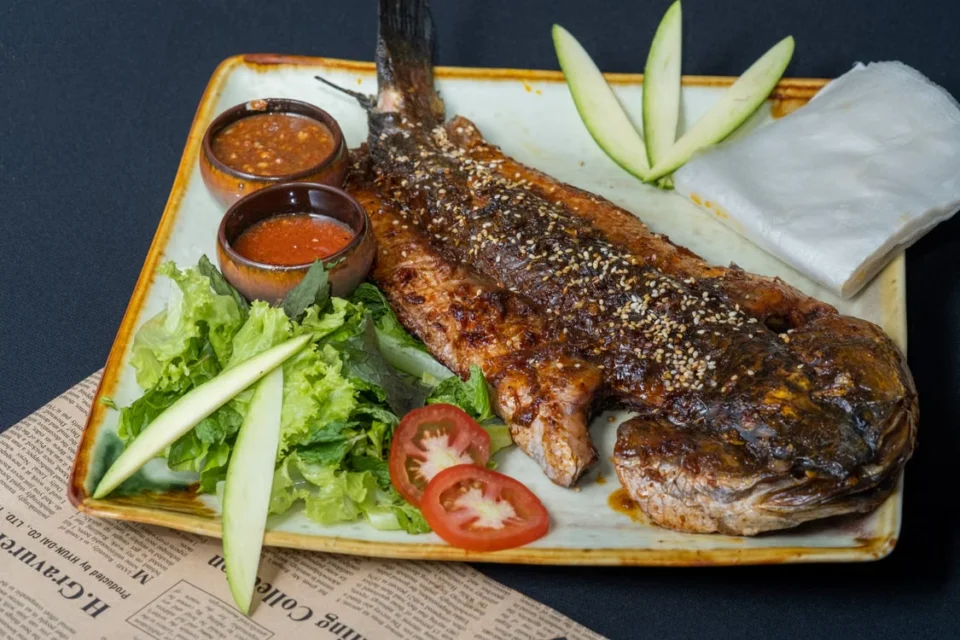
 Snakehead fish grilled under straw. Photo: Ngoc Anh
The nuong trui technique (straw grilling) is a living symbol of the pioneering of the South's wild lands (Khai pha mien Tay). In U Minh district, the dish uses only ca loc dong (wild freshwater snakehead) caught in the dark canals and marshes of the cajuput forest.
The ritual of wild cooking
The dish rejects all modern culinary refinement:
No gutting: The fish, fresh out of the water, is neither scaled, gutted nor marinated. Keeping the innards and scales locks in the fish's natural juices during cooking.
Skewering: A freshly cut green bamboo stick is pushed through the fish's mouth to the tail. The skewer is then planted upright in the ground, head down.
The straw fire: The fish is completely covered with a tall stack of dry rice straw, which is set alight. The cook keeps a lively fire going for 12 to 15 minutes.
Scraping: Once the straw has burnt away, the fish looks completely charred, black as coal. The cook scrapes off the burnt scales with a knife: the skin comes away in one piece, revealing white, steaming, wonderfully soft flesh with a smoky fragrance.
The art of eating it
The fish is opened along the backbone. The flesh is picked off by hand and placed on a thin rice paper (banh trang). Wild greens from the forest are added: young banana blossom (bap chuoi), sour star fruit, cucumber and above all la dang (bitter leaf) or dot choai (wild fern shoots).
The roll is dipped into a small dish of Mam me (thick tamarind sauce) or Muoi ot hot (coarse sea salt pounded with fresh bird's eye chillies). Connoisseurs love the fish's liver and bile (gan va mat ca), which bring a much-prized noble bitterness.
Practical information
Where to have the authentic experience:
Khu du lich sinh thai Muoi Ngot (Tran Van Thoi, U Minh Ha): you can catch fish in the canals yourself before grilling them under straw.
Khu du lich Quoc gia U Minh Ha.
Indicative price: 150,000 - 220,000 VND per large fish (enough for 2 to 3 people).
3. U Minh fermented fish hotpot: the aromatic symphony of forest and marsh

U Minh fermented fish hotpot. Photo: FB Ca Mau
Regarded as the culinary summit of the Mekong Delta, Lau mam (fermented fish hotpot) finds its wildest and most generous expression in U Minh, thanks to the incredible variety of water greens and river fish available on the spot.
Making the perfect broth
The secret of a great hotpot lies in the subtle balance of its broth, which must be very fragrant without being too salty or harsh:
The fermented base: The cook uses artisanal mam sac (fermented gourami) or mam tre (fermented catfish). The fish paste is simmered in water until the flesh dissolves completely, then strained through muslin to remove all the bones.
Softening: This concentrated brine is then topped up with fresh coconut water for a natural, rounded sweetness. Plenty of crushed lemongrass stalks (sa dap dap) and a touch of chilli are added to tame the strength of the fermentation.
A wealth of toppings from land and water
Into the bubbling broth in the middle of the table, diners dip in turn:
Thick slices of ca loc (snakehead), ca dua or ca lang (rich-fleshed river fish).
Giant freshwater prawns (tom cang xanh) with firm meat.
Slices of melting pork belly and chunks of aubergine.
The botanical treasure (the forest in your bowl)
The real magic of the dish lies in its platter of greens, often featuring 20 to 30 different varieties: water lily stems (bong sung), shredded banana blossom, lotus stems, rau dang (bitter knotweed), water fern shoots (dot choai), dien dien flowers (rainy season) and rau dua. The fresh herbs are dipped for a few seconds in the boiling broth to keep their crunch.
Practical information
Recommended places in Cà Mau:
Nha hang Dong Que (217 Tran Hung Dao, Ward 5, Cà Mau city).
Quan Lau Mam Am Thuc Ca Mau (Ngo Quyen street).
Indicative price: 300,000 - 450,000 VND for a generous hotpot for 3 to 5 people.
4. Rach Goc dried shrimp: the certified red gold of the southern-tip mangroves
From Ngoc Hien district (at the very tip of the peninsula), Rach Goc dried shrimp has Protected Geographical Indication (PGI) status. It is the luxury artisanal product every Vietnamese dreams of bringing back from a trip to Cà Mau.
Why is Rach Goc shrimp unique?
The species: It is made exclusively from tom dat (wild greasyback shrimp) caught in the mangrove forests. This variety cannot be farmed industrially on pellets: it feeds only on the phytoplankton of the brackish waters.
Its physical features: The wild shrimp is medium-sized, with a thin shell and naturally pinkish-red flesh without any artificial colouring. Once dried, the flesh becomes very firm, chewy and sweet, with no unpleasant muddy smell.
The traditional process
Cooking at dawn: The live shrimp are caught on the night tides. At dawn they are plunged into a pot of boiling salted water. The amount of salt is a family secret: too much masks the taste of the shrimp, too little prevents proper preservation.
Sun-drying: The shrimp are spread on large bamboo trays and dried under the scorching coastal sun for 2 to 3 days.
Shelling (Quat tom): Once perfectly dry, the shrimp are put into cloth bags and gently beaten to loosen the shells without breaking the flesh.
How to eat it
As a drinks snack (the local way): Served as it is with cu kieu (pickled small wild onions) or pickled white radish. The contrast between the sweet-salty chewy shrimp and the tangy crunch of the onion is perfect.
In cooking: A magic ingredient to boost the flavour of soups (canh bau, hu tieu) or pounded for green papaya salads.
Practical information
Buying tip: Choose shrimp that feel very dry, with a natural orange-red colour (not fluorescent red) and an even curve.
Where to buy: Directly from the Rach Goc Agricultural Cooperative (Ngoc Hien) or at approved speciality shops in central Cà Mau (such as Tom Kho Hoang Khanh).
Indicative price: 1,300,000 - 1,700,000 VND / kg for top quality (100% tom dat).
5. Rach Goc ba khia crab: the little sea crab with an intense fermented flavour

Ba khia crab tossed with chilli. Photo: Fox
Ba khia (Sesarma mederi) is a small amphibious crab recognisable by the three marked stripes on its shell (hence its name, ba khia, “three stripes”). It lives at the foot of the dark mangrove roots in the tidal zones of Rach Goc.
The night harvest and the salting
Crab hunting: The harvest takes place at night, especially during the rainy months (the 8th to 10th lunar months), when the crabs come out in their thousands onto the mangrove branches. The fishermen paddle into the dark forest and catch them by hand with thick gloves.
Salting (Muoi ba khia): After rinsing in clean water, the live crabs are plunged into large jars of very strong brine. This immediate salting ensures that the meat doesn't turn mushy and stays firmly attached to the shell.
The art of serving it
Ba khia is never eaten straight out of the brine (too salty). It needs careful preparation first:
The cook removes the top shell and the gills and rinses the crab in hot water to reduce the excess salt.
The claws and body are broken into pieces.
Everything is marinated for several hours with kumquat or lime juice, plenty of crushed garlic, crushed fresh chilli, cane sugar and julienned green mango or papaya.
Taste profile & tasting
The acidity of the lime and the sweetness of the sugar “cook” the salty crab meat and slightly soften its shell. The result is an explosion of flavours: salty, very spicy, tangy, with an incredibly deep taste of sea fermentation. It is the condiment par excellence with a bowl of steaming hot rice or a plain rice porridge (chao trang) on rainy days.
Practical information
Where to taste & buy:
Quan Ba Khia Rach Goc (Ngoc Hien district, Cà Mau).
The central markets of Cà Mau city (sold in sealed jars, ready to eat).
Indicative price: 140,000 - 200,000 VND for a 1 kg jar of marinated ba khia.
6. Spicy chicken banh tam: the city's fiery, comforting breakfast

Spicy chicken banh tam. Photo: Cao An Bien
While banh tam is found as a sweet dish with coconut milk in other Mekong Delta provinces, Cà Mau has turned it into a savoury, hot and intensely spicy dish. It is the essential breakfast for city residents to start the day right.
Making the noodles and the curry
Handmade noodles (Banh tam): They are made from a cooked rice dough reworked while hot, then pulled by hand into thick, white, tender, slightly airy and chewy strands. Their slightly spongy texture is ideal for holding thick sauces.
The spicy curry broth: The broth is a creamy reduction infused with pounded fresh lemongrass, annatto seeds (hat dieu mau) for a bright orange-red colour, curry powder and red chilli. Unlike classic curry, it uses less coconut milk and focuses on a sharp, lively heat that warms the palate.
Free-range chicken (Ga tha vuon): Only free-range chicken with firm, juicy meat is used. The chicken is cut into pieces on the bone or shredded, then gently simmered in the curry broth to absorb all the spices.
Assembling and eating
At the bottom of a deep bowl, the cook places a handful of raw bean sprouts, julienned cucumber and herbs (Thai basil, mint). On top goes a generous portion of piping-hot banh tam, then the chicken pieces, congealed chicken blood (huyet) and sometimes offal, before a ladle of steaming curry broth is poured over.
The dish is served with a small dish of salt, chilli and kumquat juice for dipping the chicken.
Practical information
Unmissable places in Cà Mau:
Banh Tam Ga Cay A Voi (52B Nguyen Trai, Ward 9, Cà Mau city) - the most famous address in town.
Banh Tam Dao (Le Lai, Ward 2, Cà Mau city).
Indicative price: 35,000 - 50,000 VND for a very generous bowl.
Best time: Mainly eaten at breakfast (6 to 10 a.m.).
7. Mudskipper grilled with salt and chilli: the amphibious star of the mangroves

Mudskipper grilled with salt and chilli. Photo: Chau Anh
Ca thòi loi (the mudskipper) is one of the most fascinating creatures of Cà Mau's ecosystem. Able to breathe through its skin, crawl across the mud and even climb mangrove roots, this fish leads a very active life. Its constant movement gives its flesh exceptional firmness, with no excess fat and completely free of annoying fine bones.
Preparation and charcoal grilling
Cleaning: The fish, freshly caught in traps in the mud, is cleaned of silt with salted water. It is usually not gutted, as its innards are very clean and bring a pleasant bitterness.
The rustic marinade: The fish is coated in a paste of coarse sea salt pounded with fresh bird's eye chillies and a little garlic oil.
Grilling: The fish are laid out on a grill over a bed of very hot charcoal. In the heat, the skin turns crispy and a lovely golden colour, while the flesh inside stays perfectly white, juicy and very fragrant.
Taste profile & accompaniments
The flesh of ca thòi loi is strangely reminiscent of free-range chicken breast or wild frog, with a very mild hint of the sea. You pull off the flesh with your fingers, roll it in lettuce leaves and fresh herbs, then dip it in Mam me (spicy sweet-and-sour tamarind sauce).
Practical information
Where to try it:
At the eco-tourism restaurants around Cape Cà Mau: Nha hang sinh thai Dat Mui (Dat Mui commune, Ngoc Hien).
Quan Hai San Loi Vang (Cà Mau city).
Indicative price: 130,000 - 180,000 VND for a portion of 3 to 4 grilled fish.
8. Mangrove clams grilled with salt and chilli: the giant of the deep mud
Vop (Geloina coaxans) is a wild bivalve that lives buried deep in the mud of the Mui Ca Mau mangroves. Much bigger, thicker and meatier than an ordinary clam (a single vop can measure 8 to 10 cm), it is a precious resource for coastal communities.
The technique of cooking over embers
Because its shell is very thick, vop is ideal for barbecuing:
The washed shellfish are placed directly on the grill over charcoal.
As soon as the heat makes the shell gape, the cook pours in a spoonful of sauce made from nuoc mam, coarse sea salt, crushed chillies, a squeeze of lime juice and a little spring onion fat (mo hanh).
The shellfish's juice bubbles inside its own shell, cooking the flesh in its spiced seawater.
Tasting
You pick up the hot shell to eat the whole clam. The texture is chewy and juicy, with an explosion of salty, sweet and spicy juice in the mouth. It is the ideal seafood starter with a cold beer in the late afternoon.
Practical information
Where to try it: The seafood stalls in the Dat Mui area or the Cà Mau night market.
Indicative price: 100,000 - 160,000 VND per kilo.
9. U Minh wild honey: the floral nectar and treasure of the wild hives
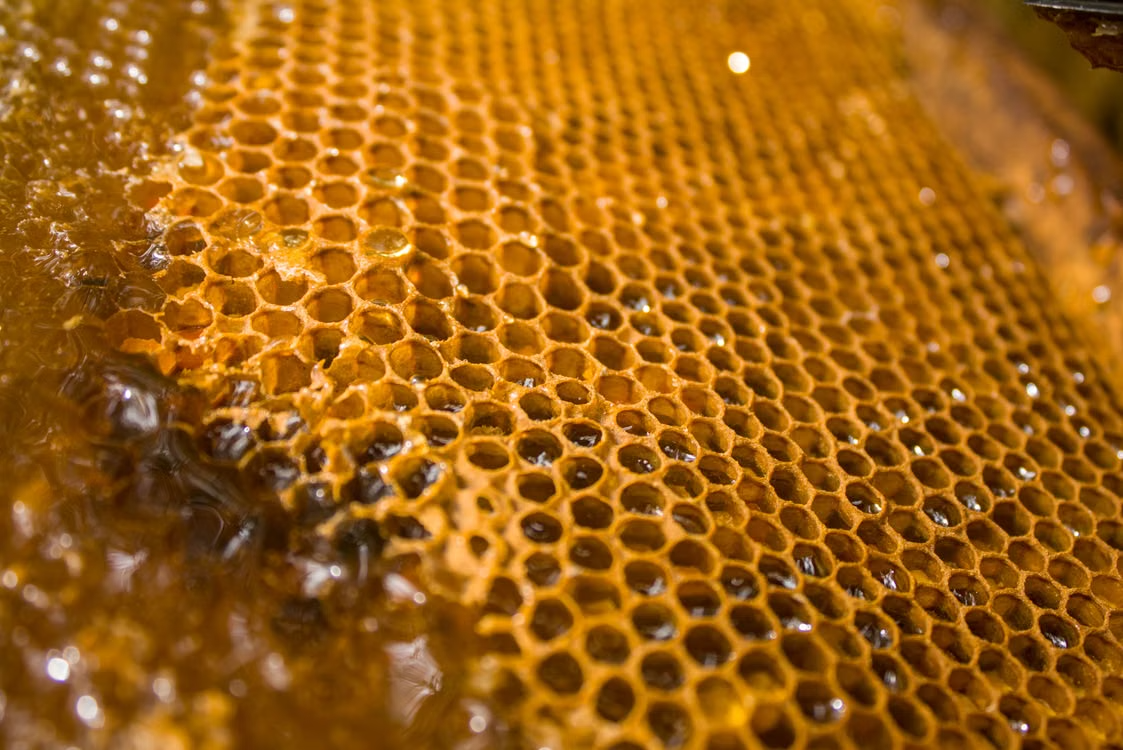
A hive full of honey. Photo: Saul Cob
The cajuput forest (rung tram) of U Minh Ha is home to a tradition unique in the world: Nghe gac keo ong (the artisanal harvesting of wild honey), listed as national intangible cultural heritage of Vietnam. The rafter keepers (tho gac keo) place wooden rafters in the forest to entice colonies of wild giant honey bees (Apis dorsata) to build their hives there.
The two wonders of the hive
Mat ong rung U Minh (pure forest honey): Harvested mainly while the cajuputs are in flower (March to August), this honey has a translucent amber colour, great fluidity and a very distinctive woody floral scent. It is naturally rich in enzymes and does not crystallise easily.
Ong non (bee brood comb): The part of the hive containing young bee larvae full of royal jelly.
Bee brood salad (Goi ong non): The brood comb is blanched in boiling water, then mixed with shredded banana blossom, Thai basil, roasted peanuts and a tamarind dressing.
Steamed (Ong non hap la he): The larvae are steamed with garlic chive leaves. It is an extremely creamy, mild dish renowned for its strengthening properties.
Practical information & buying tips
Beware of fakes: Because of its high value, wild honey is often imitated and diluted with sugar syrup at roadside stalls.
Where to buy genuine certified honey:
Phong Ngan Agricultural Cooperative (U Minh district, Cà Mau) - official producers guaranteeing wild origin.
Speciality shops at Cà Mau airport or state-run shops.
Indicative price: 400,000 - 600,000 VND per litre of pure wild forest honey.
10. Mui Ca Mau shrimp spring rolls and shrimp mini pancakes: the crispy freshness of wild shrimp

Mui Ca Mau shrimp mini pancakes. Photo: Dien May Xanh
To end this culinary journey, the crispy snacks made with tom dat (the small wild mangrove shrimp) are the symbol of Cà Mau's family and festive cooking.
1. Cha gio tom dat (wild shrimp spring rolls)
Unlike northern spring rolls filled with minced pork and mushrooms, Cà Mau's cha gio puts wild shrimp in the spotlight:
The filling: It consists only of whole peeled tom dat shrimp and grated taro or sweet potato for softness.
The rice paper: Rolled in thin local rice paper, the spring rolls are fried until deep golden. The wrapper becomes as crisp as glass, while the centre reveals the sweetness of the shrimp.
2. Banh khot tom dat (turmeric mini pancakes)
Cooked in small cast-iron moulds, these little rice-batter bites flavoured with coconut milk and yellow turmeric are topped with a whole fresh wild shrimp, tail and all. The edge is ultra-crispy while the centre stays creamy.
How to eat them
Both specialities are rolled in large lettuce and mustard green leaves (cai xanh) with herbs, then dipped generously in a diluted, tangy and spicy nuoc mam with crunchy papaya.
Practical information
Where to try them:
The Cà Mau city night market (Phan Ngoc Hien street, open from 5 to 11 p.m.).
Quan An Vat Hoang Beo (Cà Mau city).
Indicative price: 40,000 - 60,000 VND for a plate of spring rolls or banh khot.