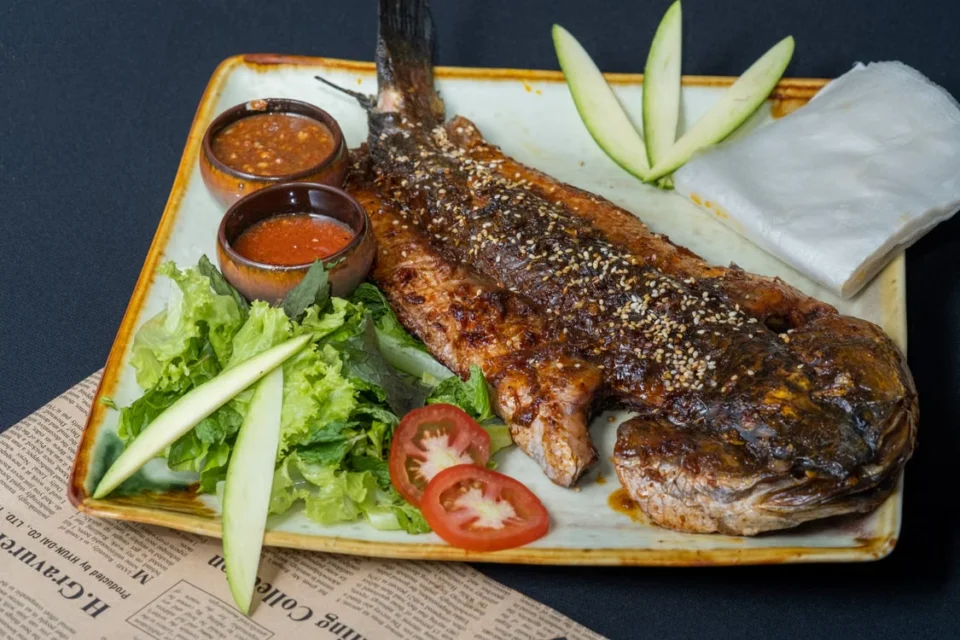
More about Tay Ninh Cuisine: Top 10 Signature Specialities and Condiments
1. Dew-softened rice paper with boiled pork

Photo: Conor
Overview & ingredients
Regarded as the true culinary monument and the greatest pride of Tay Ninh province, banh trang phoi suong is listed as national intangible cultural heritage. Unlike ordinary rice paper, it stands out for its supple, slightly elastic and subtly salty texture. The dish features thin slices of farm pork belly or leg cooked through, served with an impressive bunch of wild herbs (rau rung) picked along the Vam Co Dong river and on the slopes of Ba Den mountain (more than a dozen varieties such as la coc, la xoai, rau xao nhái or la que vi).
Preparation secrets & tasting
Making banh trang phoi suong is a craft of extreme precision. The rice paper is made from good-quality rice, steamed and then dried in the sun. It is then quickly toasted over a rice-husk fire to create tiny air pockets before being exposed to the night dew (phoi suong) between midnight and dawn. This natural moistening gives the rice paper perfect suppleness without ever making it sticky. To eat it, lay a selection of wild herbs, cucumber sticks, bitter green banana, pickled daikon and a slice of pork on the soft sheet, then roll it up tightly. Dip it in a small bowl of exceptional pure nuoc mam, spiked with pounded garlic, green chilli and a touch of kumquat juice. On the palate, the salty suppleness of the rice paper goes with the richness of the pork, the tangy bitterness of the wild herbs and the power of the sauce.
Where to try it:
Ut Hue restaurant (Nguyen Van Rop street, Tay Ninh city)
Hoang Minh restaurant (National Highway 22, Trang Bang ward, Tay Ninh)
Indicative price: 80,000 - 150,000 VND a portion
2. Trang Bang pork noodle soup (Banh canh Trang Bang)
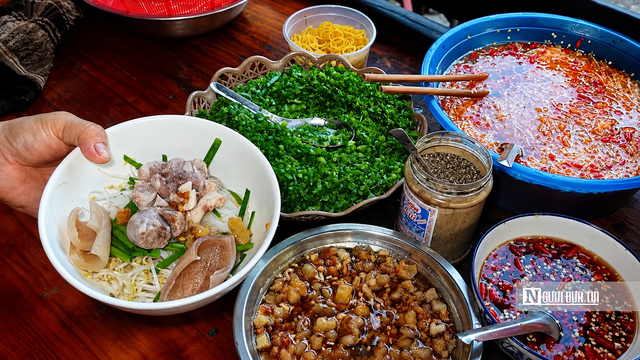
Photo: Nguoiduatin
Overview & ingredients
A comforting, emblematic speciality of the province's southern gateway, banh canh Trang Bang is famous throughout Vietnam for the crystal clarity of its broth and the freshness of its ingredients. The noodle, made from the region's pure rice flour, is dazzling white, soft yet firm to the bite. The steaming bowl brings together generous pieces of pork knuckle (gio heo), neatly sliced lean pork, poached pork blood and a shower of freshly chopped chives.
Preparation secrets & tasting
The secret of this dish lies in the slow, meticulous cooking of the broth. Pork bones are blanched and then simmered for long hours over a low heat with grilled onions and white radish, skimmed constantly to obtain a perfectly clear broth, full of flavour and naturally sweet. The noodles are blanched to order in a separate basket before going into the bowl. When serving, the cook pours the hot broth over the meat and noodles and adds a pinch of crushed Tay Ninh black pepper. The soup is eaten with a plate of fresh herbs and crispy grilled rice crackers crumbled straight into the broth.
Where to try it:
Banh Canh Nam Dung restaurant (90 Nguyen Van Rop, Trang Bang, Tay Ninh)
Ut Tay restaurant (Trang Bang ward, Tay Ninh)
Indicative price: 35,000 - 55,000 VND a bowl
3. Tay Ninh chilli shrimp salt (Muoi tom Tay Ninh)
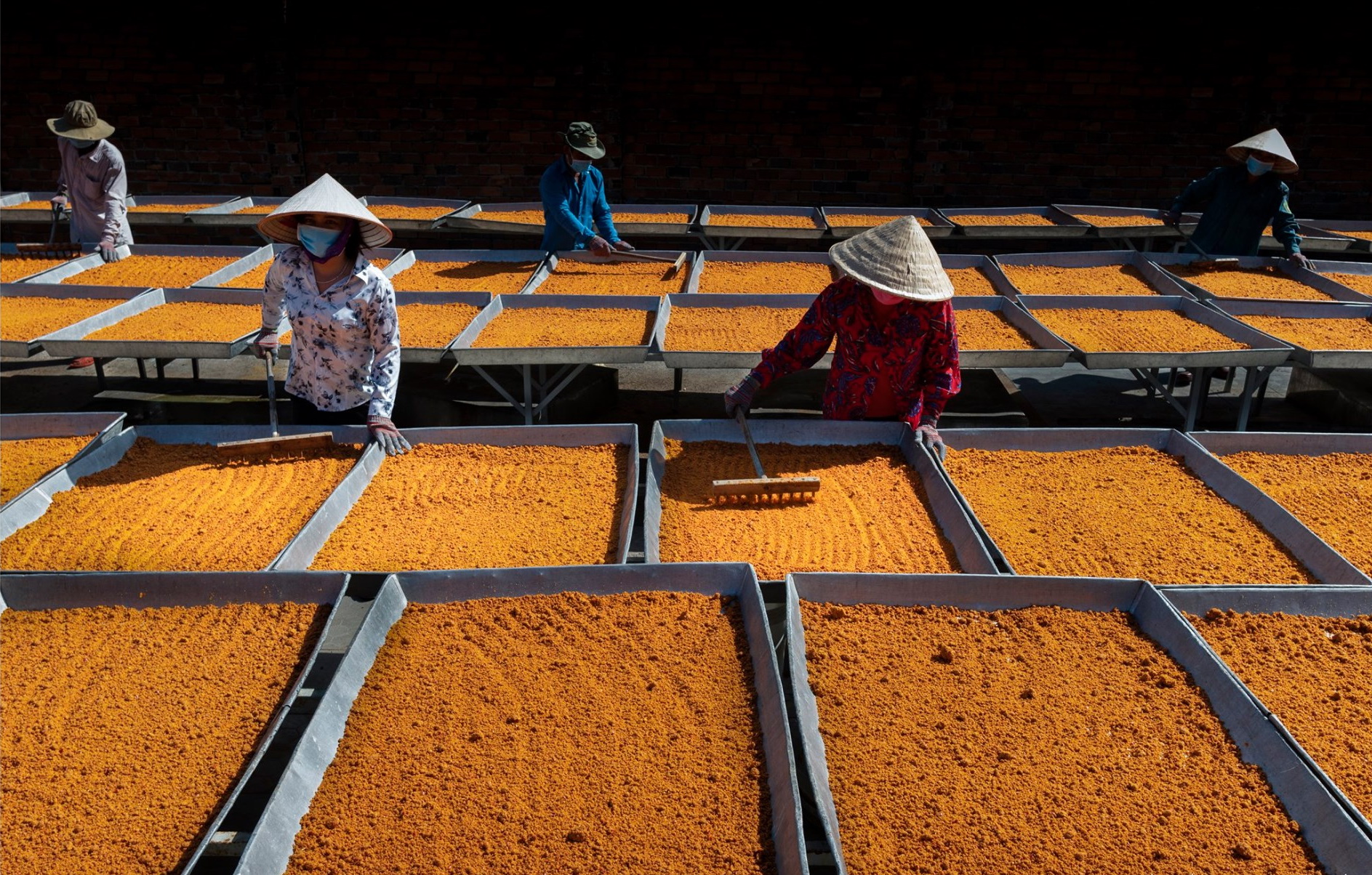
Photo: DV
Overview & ingredients
Paradoxically and fascinatingly for a province with no sea coast, Tay Ninh is the undisputed capital of shrimp salt in Vietnam (muoi tom). Born in times of hardship, when people looked for ways to enrich their daily meals, this condiment is now a national icon. It combines rock sea salt, high-quality dried shrimp, pounded ripe red chilli, garlic and a hint of cane sugar.
Preparation secrets & tasting
Making shrimp salt requires rigorous craftsmanship. The dried shrimp are rehydrated, ground and mixed with salt, garlic and fresh chilli in proportions that each family keeps a jealous secret. The paste is then toasted in large cast-iron woks over a carefully controlled wood fire. The salt-maker must stir constantly to drive off the moisture without burning the spices, until the grains are dry and crunchy, with a natural brick-red or bright orange colour. With its exceptional umami power, this condiment is eaten everywhere with sour fresh fruit (green mango, ambarella, jackfruit, pomelo) or used to season grilled dishes and salads.
Where to try it:
Muoi Tom My Van (Tran Hung Dao street, Tay Ninh city)
Long Hoa market (Hoa Thanh ward, Tay Ninh)
Indicative price: 30,000 - 70,000 VND a jar (200 g - 500 g)
4. Young beef grilled over embers (Bo to Tay Ninh)
Overview & ingredients
From the vast pastures stretching along the region's flower-filled low-lying areas, bo to (free-range veal or young beef) is one of the unmissable stars of Tay Ninh's convivial tables. The meat comes from young animals, which makes it extremely tender and low in fat, with a thin gelatinous skin and a very gentle, milky flavour. The dish comes in several forms, the most popular being a whole piece grilled over embers (bo to nuong y) or marinated with chilli.
Preparation secrets & tasting
To appreciate the pure quality of the meat, the chosen cuts (ribs, fillet or belly with the skin) are very lightly rubbed with a drizzle of oil, a little pounded lemongrass and a pinch of local chilli salt. The meat is set on a grill over glowing casuarina charcoal. Seared over a high heat, the skin turns crisp and golden while the flesh stays juicy, pink and tender. When it is cut, the juices run generously. The hot slices are rolled in rice paper with mustard greens, cucumber and green banana, then dipped in a small bowl of mam mut (a local fermented fish sauce) or fermented tofu sauce (chao) spiked with fresh chilli.
Where to try it:
Bo To Nam Sanh restaurant (National Highway 22B, Hiep Tan commune, Hoa Thanh, Tay Ninh)
Bo To Tran Hien restaurant (322 30 Thang 4 street, Tay Ninh city)
Indicative price: 100,000 - 180,000 VND a plate
5. Mixed rice paper salad with chilli (Banh trang tron Tay Ninh)
Overview & ingredients
Thanks to its centuries-old rice paper industry, Tay Ninh is the original home of banh trang tron, the street snack most loved by young Vietnamese. In Tay Ninh the dish keeps its rustic authenticity: strips of soft rice paper (banh trang deo) are mixed with shrimp salt, fried shallot oil, dried red chilli, fresh kumquat juice, rau ram leaves (Vietnamese coriander) and roasted peanuts.

Photo: Bich Tran
Preparation secrets & tasting
The magic of Tay Ninh's banh trang tron lies in the quality of the base rice paper (often made with chilli pulp or tamarind worked straight into the batter before drying) and the instant balance of the seasonings. The strips are drizzled with annatto oil and kumquat juice, then quickly tossed by hand with the chilli salt and herbs so that the rice paper softens without turning mushy. On the palate it is an explosion of textures and flavours: the soft, spicy rice paper meets the crunch of the peanuts, the sharp tang of the kumquat and the lingering heat of Tay Ninh chilli.
Where to try it:
Stalls around Long Hoa market (Hoa Thanh ward, Tay Ninh)
Street-food stands near the Cao Dai Holy See (Hoa Thanh, Tay Ninh)
Indicative price: 15,000 - 30,000 VND a bag
6. Cao Dai vegetarian cuisine
Overview & ingredients
As the cradle of Caodaism - a syncretic religion born in the early 20th century - Tay Ninh has a vegetarian culinary tradition (am thuc chay) of exceptional sophistication. Because religious precepts require vegetarian meals several times a month (or permanently for dignitaries), Tay Ninh's cooks have raised the handling of vegetables, tofu, mushrooms and roots to a gastronomic art in its own right, able to rival meat dishes.

Photo: Dan Tay Ninh
Preparation secrets & tasting
Tay Ninh's vegetarian cooking relies exclusively on fresh natural ingredients from local orchards, without overusing ultra-processed products. Cooks use banana blossom, young jackfruit, taro, pomelo pith or straw mushrooms to recreate surprising textures in stir-fries, braises and soups. Sauces are made from artisanal fermented soy sauce (nuoc tuong) or reduced pineapple juice to add umami depth. At a traditional vegetarian meal in Hoa Thanh you might taste mam thai chay (a salad of pineapple, green papaya and mung bean noodles), grilled tofu skewers with chilli or very delicate root-vegetable soups, for a healthy, balanced and soothing experience.
Where to try it:
Tri An vegetarian restaurant (near the Cao Dai Holy See, Hoa Thanh, Tay Ninh)
Vuong Boi restaurant (Pham Van Dong street, Hoa Thanh, Tay Ninh)
Indicative price: 30,000 - 80,000 VND per dish or set menu
7. Rock lizard of Ba Den mountain
Overview & ingredients
An unusual, upmarket speciality for curious gourmets, than lan nui is a species of lizard that lives only among the piled-up rocks and steep caves of Ba Den mountain. Feeding only on wild medicinal plants, bananas and figs growing on the mountain, its meat is said to be very wholesome, firm and tasty and, according to traditional medicine, fortifying.
Preparation secrets & tasting
Because it is rare and hard to catch, the rock lizard is prepared with care. Once cleaned, it is most often deep-fried over a high heat until the skin is golden and crispy, or simmered in a pot with lemongrass, green peppercorns and coconut milk. Fried whole, the meat is sweet, recalling the delicacy of frog or free-range chicken, with very tender bones that can be eaten entirely. This exceptional dish is served hot with crispy rice crackers, wild herbs and a small bowl of chilli salt with green pepper.
Where to try it:
Dong Que restaurant (Boi Loi street, Ninh Son ward, Tay Ninh city)
Lam Son restaurant (at the foot of Ba Den mountain, Tay Ninh)
Indicative price: 150,000 - 250,000 VND a plate (depending on the season)
8. Mountain snails of Ba Den mountain
Overview & ingredients
Another biological and culinary treasure unique to Ba Den mountain, oc nui (mountain snail) is a rare species that only comes out of its rocky hiding places in the rainy season (May to November). Like the rock lizard, it feeds only on wild medicinal herbs growing on the mountain slopes (such as la thuoc thuong and la nang hai), which gives its flesh a very particular herbal fragrance.

Photo: Fox
Preparation secrets & tasting
Unlike ordinary freshwater snails, the mountain snail needs no long soaking to purge it of mud, as its flesh is naturally clean. It is simply washed in spring water and steamed with pounded lemongrass and wild lime leaves to preserve its fragrance. It is also stir-fried with coconut or with butter and garlic. To eat it, the meat is pulled out with a small pick: the texture is remarkably crunchy and firm, with a slight, very refined vegetal bitterness at the finish. It is dipped in chilli salt with kumquat juice.
Where to try it:
Song Que restaurant (Boi Loi street, Tay Ninh city)
Specialist restaurants at the foot of Ba Den mountain (rainy season)
Indicative price: 100,000 - 160,000 VND a plate
9. Spicy pomelo-pith nem
Overview & ingredients
An original plant-based speciality born of the anti-waste ingenuity of Tay Ninh's vegetarian cooks, nem vo buoi is a fermented bite made not with pork but with pomelo peel. The ingredients are the white inner pith (cui buoi) of local pomelos, shredded green papaya, sour star fruit pulp, garlic, red chilli and chum ruot (star gooseberry) or banana leaves for wrapping.

Photo: Dien May Xanh
Preparation secrets & tasting
Making nem vo buoi takes patient handwork: the white pith is carefully separated from the bitter outer peel, diced, then squeezed and rinsed in salted water dozens of times to remove all bitterness. It is then steamed and pounded in a mortar with sour star fruit juice to trigger natural fermentation, before being mixed with the green papaya and chilli. Small squares are shaped, topped with a slice of fresh chilli and an aromatic leaf, then wrapped tightly in banana leaves. After about a day of fermentation, the nem turns firm and pink. In the mouth it is crunchy and gelatinous, with a tangy, sweet, spicy and refreshing flavour.
Where to try it:
Artisan nem stalls at Long Hoa market (Hoa Thanh ward, Tay Ninh)
Souvenir shops at the foot of Ba Den mountain
Indicative price: 30,000 - 50,000 VND for ten
10. Sour pork sausage with dew-softened rice paper (Nem buoi deo & Banh trang phoi suong)
Overview & ingredients
A traditional welcome dish served at family gatherings and ceremonies, this combination showcases the synergy between tangy local charcuterie and dew-softened rice paper. The dish brings together Tay Ninh nem chua (pork sausage fermented with chilli and garlic), slices of nem vo buoi and cut sheets of soft phoi suong rice paper, served with basil, mint and raw garlic.
Preparation secrets & tasting
The art of this dish lies in the freshness of the nem's fermentation and in assembling it on the spot. Pork nem chua brings its tangy, spicy, meaty flavour, while nem vo buoi adds a unique vegetal crunch. Diners roll these little tangy bites in a piece of dew-softened rice paper with a few herb leaves. Everything is dipped in a mild artisanal chilli sauce or a pinch of shrimp salt. It is the quintessential country appetiser in Tay Ninh, with a striking contrast between the soft rice paper, the sharp heat of the chilli and the crunch of the fermented charcuterie.
Where to try it:
Tri An restaurant (Hiep Tan street, Hoa Thanh, Tay Ninh)
Tay Ninh city market (Tran Hung Dao street)
Indicative price: 40,000 - 70,000 VND a plate