More about The Braised Fish of Vu Dai and the Ancestral Culinary Art of Ha Nam
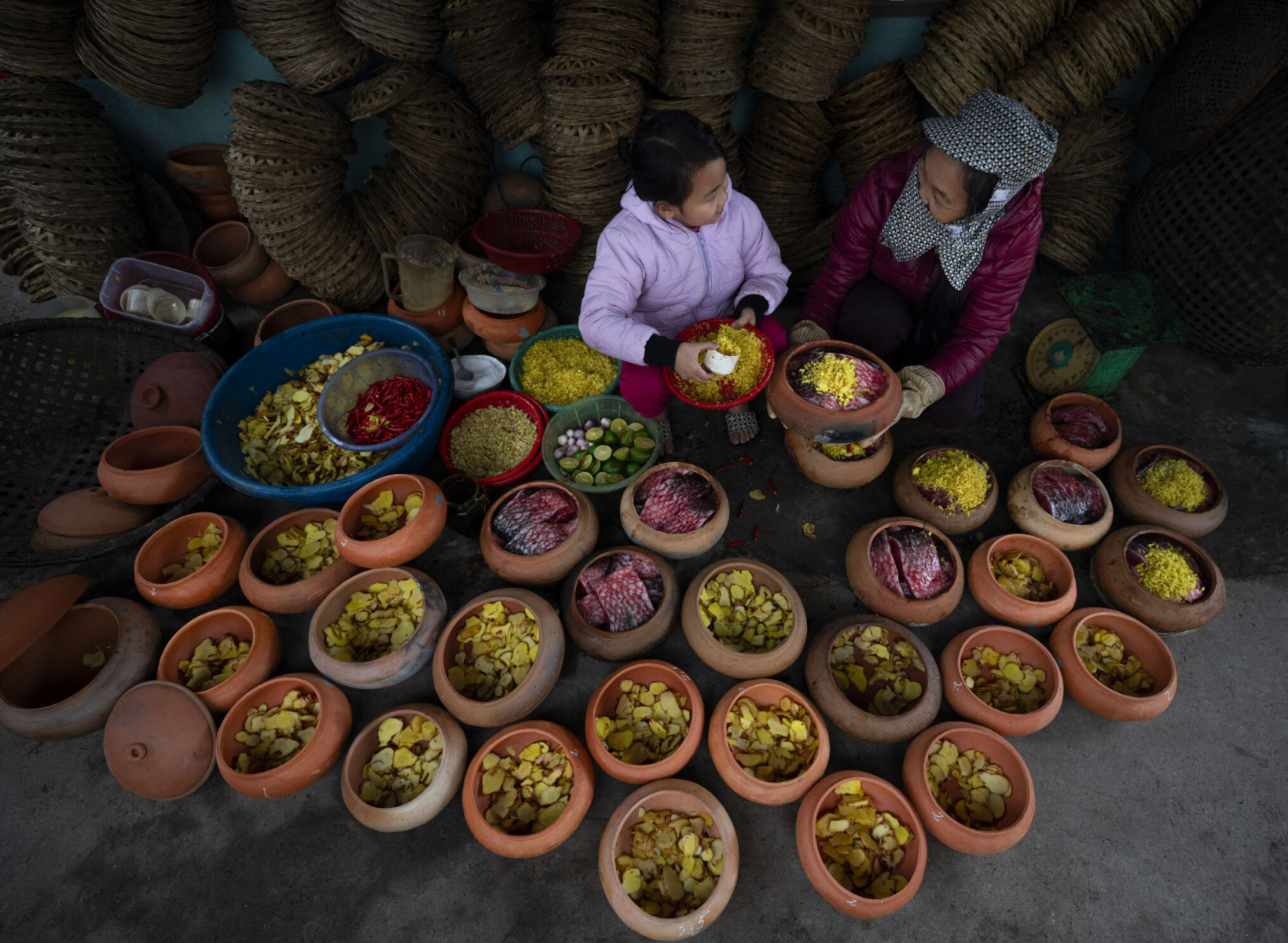
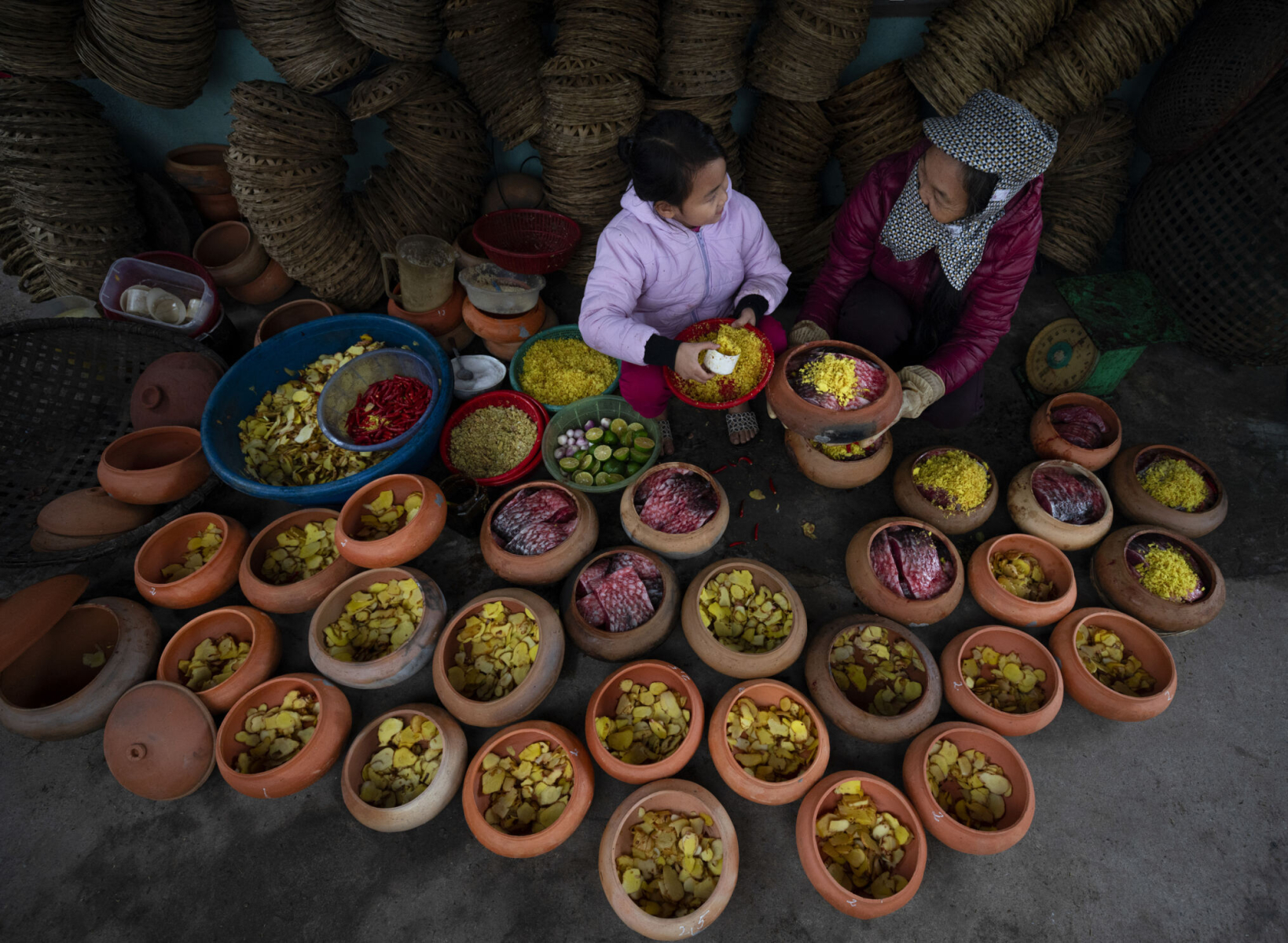
Preparing the pot for the braised fish. Photo: VNA
The alchemy of terroirs and the master artisans’ secret
Making this legendary dish leaves no room for improvisation and follows technical standards of absolute rigour. It all starts with the choice of vessel: the artisans flatly refuse metal and use only terracotta pots. Uniquely, each pot brings together two distinct terroirs: the body of the vessel comes from Nghe An province for the exceptional porosity of its clay, while the lid is made in Thanh Hoa province for its resistance to very high temperatures. This combination allows perfect heat regulation and the slow evaporation essential to the long simmering.
As for the ingredients, the undisputed king of the pot is the black carp (ca tram den). The cooks select only adult fish weighing at least three to five kilograms, guaranteeing particularly firm, dense flesh free of any muddy taste. After careful cleaning, the fish is cut into thick steaks and laid on a lavish aromatic bed: sliced fresh galangal, crushed ginger, shallots, red chillies, tangy paddy-crab juice, lime juice, sugar-cane caramel and a very pure artisanal nuoc mam.

Cooking a fish stew over a wood fire. Photo: VNA
The discipline of the longan-wood fire: 16 hours of cooking
The true signature of Vu Dai village lies in its cooking technique, which is something of a thermal marathon. Dozens of clay pots are lined up on long brick hearths and kept over continuous heat for a colossal twelve to sixteen hours at a stretch, requiring someone to keep watch day and night.
The choice of fuel is fundamental here: the villagers burn only longan wood. This noble wood has the rare quality of burning very slowly while maintaining stable, powerful embers, and its neutral smoke never masks the delicate aromas of the fish and spices. As the hours pass, under the combined action of the crab juice, natural acids and constant reduction, the liquid evaporates completely. The hardest bones disappear or become as soft as marrow, while the pieces of fish remain perfectly whole, imbued with a deep, even amber colour.
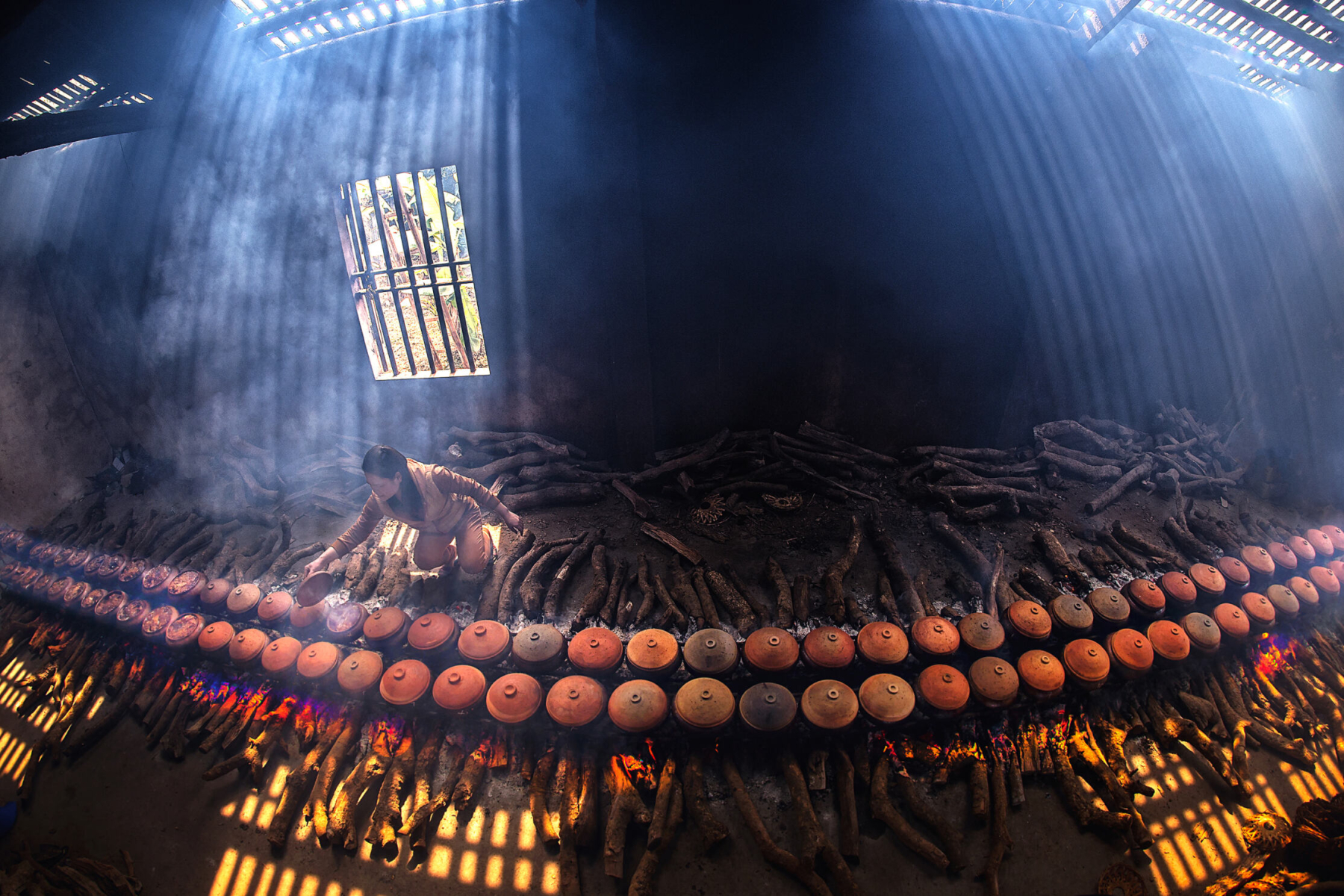
Cooking a fish stew over a wood fire. Photo: VNA
Traditional tasting and natural preservation
Contrary to what you might expect of a slow-cooked dish, Vu Dai braised fish is traditionally eaten cold or at room temperature. It is precisely this temperature contrast that creates the magic: the firm, cool flesh of the fish, full of the concentrated notes of galangal and reduced sauce, melts on contact with a bowl of steaming white rice or a piece of banh chung (sticky rice cake).
The dish also has remarkable keeping qualities inherited from the days before electricity. Thanks to the complete dehydration of the flesh during cooking and the natural antiseptic properties of salt and galangal, a pot of fish keeps perfectly at room temperature for several days, even several weeks, without losing any of its flavour. To check the quality of a pot bought on the spot, the surface of the fish should look completely dry, with no liquid left, and give off a captivating scent of roasted galangal as soon as the clay lid is lifted.
Practical guide for travellers
For those who would like to add this gourmet stop to a journey through northern Vietnam, the village of Vu Dai (Hoa Hau commune, Ly Nhan district) is about 40 kilometres from Phu Ly city and 80 kilometres from central Hanoi.
Getting there from Hanoi: The journey is very easy by private car or taxi along the Eastern expressway (CT.01) and then National Route 21A, taking between 1 hour 15 and 1 hour 30 minutes.
Best time to visit: It is strongly recommended to arrive between 8 and 10 am. This is exactly when the family kitchens get busy cleaning the fish, preparing the spice beds and filling the pots before lighting the impressive rows of hearths for the day.
Recommended visit time: Allow a stop of 3 to 4 hours. That leaves plenty of time to wander around a producer’s house, watch the cooks’ gruelling work in front of the embers, taste the dish and leave with your own terracotta pot.
Combined itinerary idea: You can easily combine your gourmet morning in Vu Dai with a visit to the vast spiritual complex of Tam Chuc (the largest Buddhist site in the country) in the same province, or with a cultural stop at the Ngoc Lap communal house.


