

More about Binh Dinh Cuisine: Top 10 Traditional Local Specialities
1. Bun cha ca Quy Nhon: the marine elegance of the central coast

Photo: Dien May Xanh
Overview & ingredients An emblematic speciality of the coastal city of Quy Nhon, bun cha ca embodies the freshness and generosity of the local catch. The dish consists of fine, soft rice vermicelli topped with a generous amount of fishcakes (cha ca) made from sea fish just landed at the port (lizardfish, Spanish mackerel or wolf herring). The fishcakes come in two textures: fried until golden and slightly crisp, or gently steamed to keep the flesh white, soft and airy.
Preparation secrets & tasting The dish's worth lies in its clear, naturally sweet broth, made by long simmering of fresh fish bones and heads, cleared of all impurities. Pieces of squash, ripe red tomato and fresh pineapple are added for a fruity, refreshing tang. Binh Dinh's secret is the fish paste: the flesh is carefully picked by hand, then pounded in a mortar with garlic, shallot, black pepper and a little pork fat for perfect springiness (do dai) without any additives. The bowl is served piping hot with a plate of local condiments: fresh green chillies to bite into, homemade fried chilli paste and an assortment of fresh herbs.
Where to try it:
Quan Bun Cha Ca Ngoc Lien - 379 Nguyen Hue street, Quy Nhon city.
Quan Bun Cha Ca Thuan - 126 Nguyen Hue street, Quy Nhon city.
Indicative price: 35,000 - 55,000 VND a bowl.
2. Rice vermicelli with pork offal: the region's heritage breakfast

Photo: Dien May Xanh
Overview & ingredients A must at traditional breakfasts and village festivals throughout Binh Dinh province, banh hoi long heo is a tasty, comforting combination. Banh hoi is made of extremely fine rice flour threads woven into a delicate mesh and steamed. It is served with a lavish plate of fresh pork offal (liver, heart, tongue, intestines and pork belly, perfectly boiled) and a bowl of hot rice porridge (chao) cooked in the offal stock with pork blood.
Preparation secrets & tasting Making banh hoi requires complex craftsmanship: the rice dough is pressed through moulds with tiny holes and laid in thin sheets on pieces of cloth for ultra-quick steaming. Straight out of the steamer, each sheet is brushed with an oil infused with Chinese chives (he), which gives it its characteristic green fragrance and an appetising sheen. To eat it, roll a portion of banh hoi with a piece of crunchy offal and fresh herbs, dip it in a light, tangy, spicy nuoc mam, then enjoy a spoonful of steaming porridge.
Where to try it:
Quan Banh Hoi Long Heo Man - 76 Tran Phu street, Quy Nhon city.
Quan Banh Hoi Hong Thanh - 22 Nguyen Nhac street, Quy Nhon city.
Indicative price: 40,000 - 65,000 VND for a full portion.
3. Jumping shrimp pancakes: the crispy pancake with leaping shrimp

Photo: Quang Nguyen Vinh
Overview & ingredients A festive variant of the central Vietnamese pancake, banh xeo tom nhay (literally “jumping shrimp pancake”) owes its poetic name to the absolute freshness of its ingredients: the freshwater or lagoon shrimp are still alive and leap on the hotplate during cooking. The size of a small plate, this pancake stands out for its golden, thin and extremely crispy batter, which shows off the sweet, firm shrimp.
Preparation secrets & tasting It is cooked in small individual cast-iron pans. The cook first adds a handful of fresh shrimp, which sizzle instantly in the hot oil, then pours in a ladle of rice batter scented with coconut milk and turmeric powder. Crunchy bean sprouts and sliced onions follow. The base of the pancake turns golden and lacy. To eat it, cut it into pieces and roll them in dry or moistened rice paper (banh trang Binh Dinh) with slices of bitter green banana, sour star fruit and lettuce, then dip the roll in a fermented fish sauce with chilli and garlic.
Where to try it:
Quan Banh Xeo Tom Nhay Gia Vy - 14 Dien Hong street, Quy Nhon city.
Quan Banh Xeo Rau Mam - 91 Dong Da street, Quy Nhon city.
Indicative price: 25,000 - 40,000 VND each.
4. Tre Binh Dinh: spiced artisanal charcuterie

Photo: Dac San Xu Nau Thuy Trinh
Overview & ingredients A unique charcuterie speciality that often surprises travellers with its rustic look, Binh Dinh's tre looks at first glance like a tiny broom made of rice straw. Beneath this traditional plant wrapping lies a fermented charcuterie treasure made from crunchy pig's ears, pig's head and pork belly, seasoned with a profusion of local spices.
Preparation secrets & tasting The pork is carefully cleaned, boiled and cut into very thin strips. It is then mixed with grated fresh galangal, chopped garlic, black peppercorns, a dash of fish sauce and above all plenty of toasted rice powder (thinh). The mixture is packed tightly, wrapped in guava leaves (which help the fermentation and add a tannic note) and then in a thick layer of dried rice straw. After a few days of natural fermentation, tre develops a tangy, spicy and very aromatic flavour. It is eaten pulled apart with a fork, with raw garlic cloves, green chillies and grilled sesame rice crackers.
Where to buy:
Tre Ba Bon - 03 Phan Boi Chau street, Quy Nhon city.
Speciality shops on Tran Phu street, Quy Nhon city.
Indicative price: 30,000 - 50,000 VND each (parcel).
5. Banh it la gai: a traditional sweet in a banana leaf

Photo: Dien May Xanh
Overview & ingredients A traditional pastry inseparable from ancestral ceremonies, weddings and Tet in Binh Dinh, banh it la gai is a small pyramid-shaped cake wrapped in a dark banana leaf. Its outer dough is deep black and very supple, made from a mixture of glutinous rice flour and ramie leaf juice (la gai). Inside is a generous, fragrant filling of mashed mung beans, grated coconut and cane sugar.
Preparation secrets & tasting The ramie leaves are boiled at length and then pounded in a mortar into a smooth paste, which is kneaded with the glutinous rice flour. The filling is made by cooking the mung beans with sugar and coconut until soft and fragrant with ginger. Shaped into pyramids and wrapped in oiled banana leaves, the cakes are steamed. On the palate, the smooth black dough is pleasantly chewy without ever sticking to the teeth, giving way to the sweetness of the coconut and the soft creaminess of the beans.
Where to buy:
Banh It La Gai Ba Xinh - 138 Nguyen Hue street, Quy Nhon city.
Traditional markets (Cho Moi, Cho Dam), Quy Nhon city.
Indicative price: 5,000 - 10,000 VND each.
6. Traditional pork roll: the charcuterie tradition of An Nhon
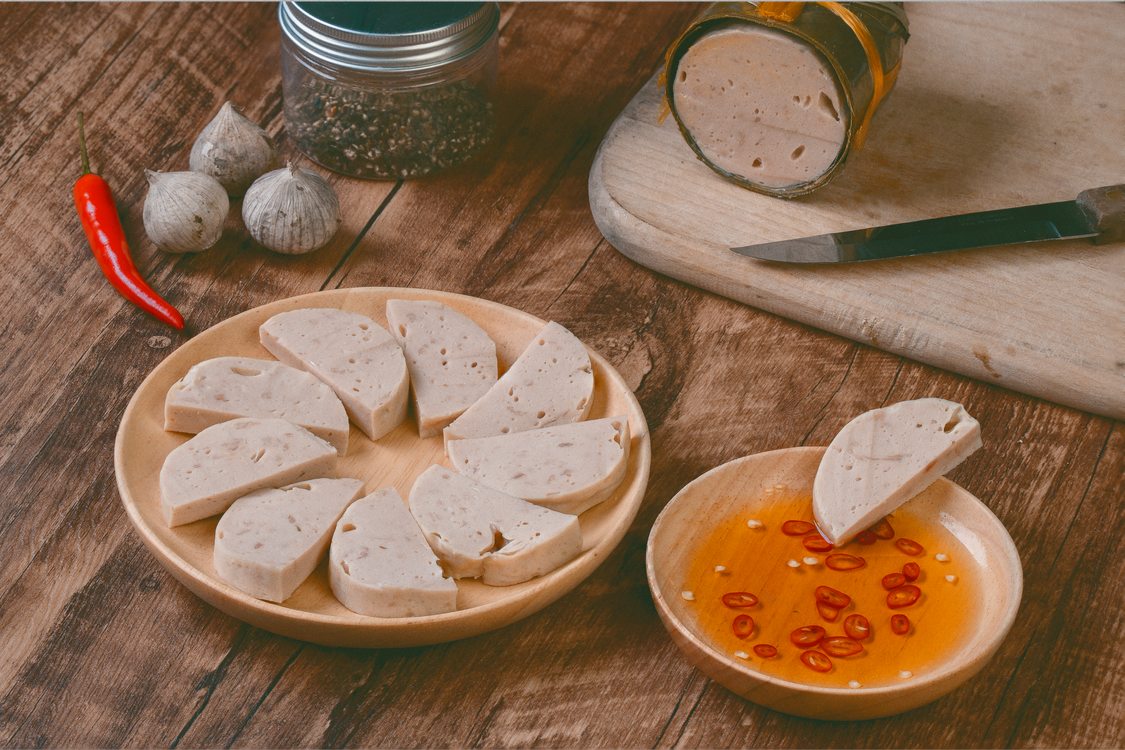
Photo: Hai Nguyen
Overview & ingredients From Tuy Phuoc district and the An Nhon area, cha lua Cho Huyen (traditional pork roll) has enjoyed a centuries-old reputation throughout central Vietnam. Unlike factory-made rolls, cha Cho Huyen is made only from freshly slaughtered farm pork, chosen from the best cuts of the leg, with no flour or preservatives.
Preparation secrets & tasting The meat is pounded by hand in stone mortars by the artisans into a supple, smooth, naturally elastic paste (gio song). It is seasoned with top-quality pure fish sauce, whole black pepper from the mountains and a hint of sugar. The paste is wrapped very tightly in several layers of fresh banana leaves and boiled in clean water. The result is a pink, firm, juicy roll with a woody fragrance from the banana leaf. It is eaten in thick slices at banquets, with raw garlic and fresh chillies.
Where to buy:
Artisan workshops in the Cho Huyen area, Tuy Phuoc district.
Local produce shops - Nguyen Thai Hoc street, Quy Nhon city.
Indicative price: 150,000 - 220,000 VND per kilogram.
7. Bun tom Ram Chau Truc: the wild rusticity of the lagoons

Photo: Huynh Nhi
Overview & ingredients A popular dish of rare authenticity, bun tom or bun ram from Chau Truc lagoon (Phu My district) is a rural speciality showcasing small freshwater shrimp and small lagoon crabs (ram). It is made to order in front of the customer, with no pre-cooked factory broth at all.
Preparation secrets & tasting The live shrimp or lagoon crabs are pounded whole in a mortar with garlic, shallot and chilli into a fine paste. When a customer orders, the cook puts a spoonful of this paste at the bottom of a bowl and pours boiling noodle water straight over it to cook the meat instantly, creating a cloudy, sweet and very aromatic broth. The rice noodles, pressed and cooked on the spot from fresh dough, go in at once. Finish with a drizzle of spring onion oil, chopped green chillies and grilled sesame rice crackers crumbled into the bowl for crunch.
Where to try it:
Quan Bun Ram My Hanh - 32 Ngo Duc De street, Quy Nhon city.
Quan Bun Tom Ram Chau Truc - 43 Mai Xuan Thuong street, Quy Nhon city.
Indicative price: 25,000 - 40,000 VND a bowl.
8. Tam Quan coconut rice paper: the crispy coconut rice cracker
Overview & ingredients From the Tam Quan area (nicknamed Binh Dinh's coconut capital), this dried rice paper is much thicker and richer than ordinary rice paper. Its batter combines good rice flour, freshly pressed coconut milk, grated coconut flesh, white sesame, sliced shallots, black pepper and a pinch of salt.
Preparation secrets & tasting The sheets are spread by hand on steaming cloths, then left for several days in the generous central Vietnamese sun to dry completely. Before eating, they must be patiently toasted over gentle charcoal. In the heat, the sheet puffs up, turns golden and gives off a bewitching scent of toasted coconut and fried shallot. It is extremely crispy and crumbly. Enjoy it on its own as a snack, or crumbled over seafood salads (goi), com hen or tre.
Where to buy:
Traditional markets and souvenir shops in Binh Dinh province.
The Tam Quan area, Hoai Nhon town.
Indicative price: 60,000 - 100,000 VND for a pack of 10.
9. Fish-gut hotpot: the rustic hotpot of fermented fish innards
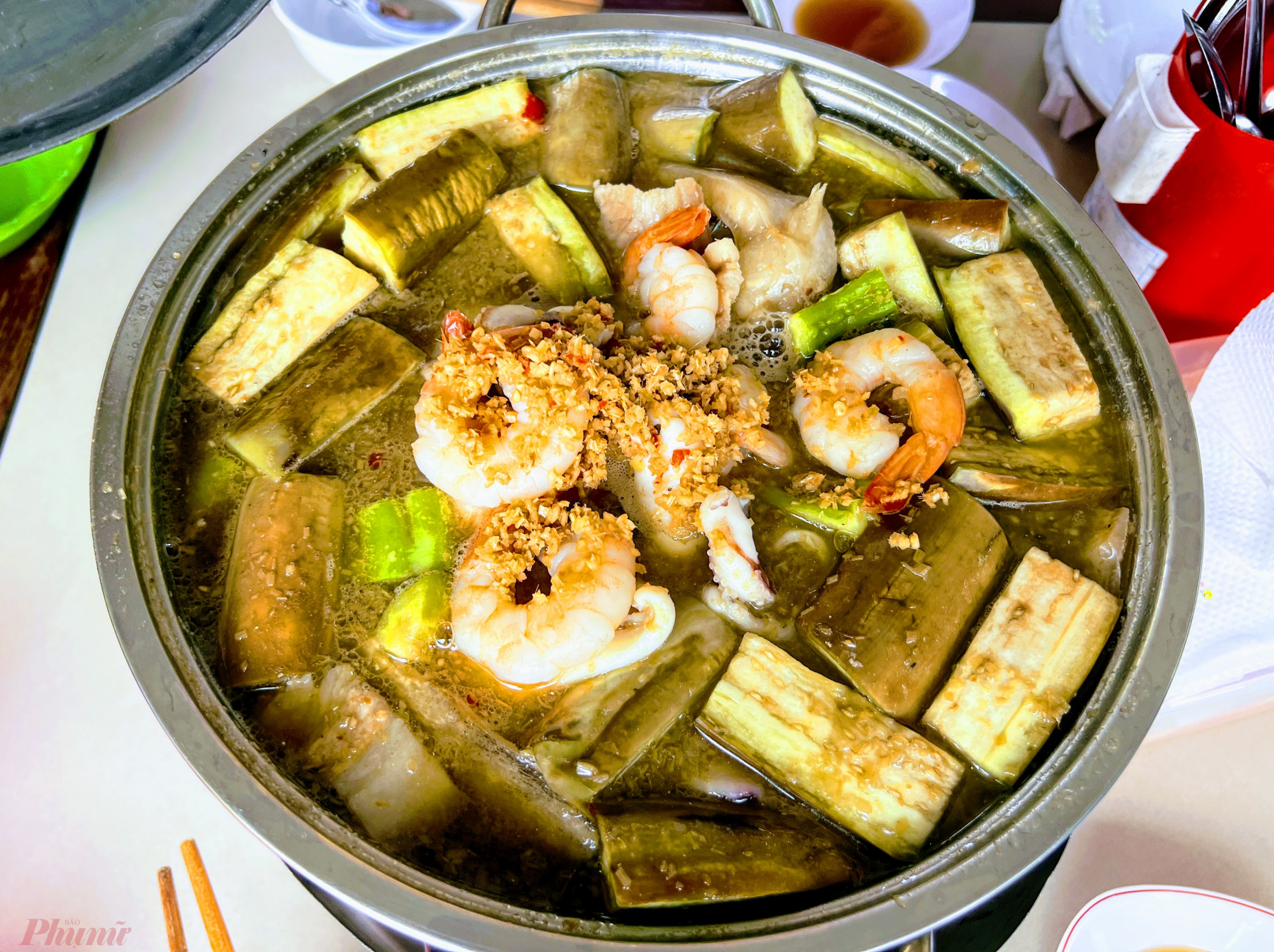
Photo: Quoc Thai
Overview & ingredients The rainy-season dish par excellence, lau mam ruot is a homely, very characterful speciality of the Binh Dinh countryside. It is made from mam ruot, a sauce of sea fish innards (such as tuna or Spanish mackerel) fermented in earthenware jars for several months with sea salt and chilli.
Preparation secrets & tasting The base is made by frying pork fat, garlic, pounded lemongrass and pineapple, then adding the mam ruot reduced with fresh coconut water to soften the strength of the fermentation. Pieces of fresh seasonal fish, pork belly and aubergine wedges then go in. This very bold hotpot is eaten bubbling in the middle of the table, with each diner dipping in fresh rice vermicelli and plenty of wild greens (banana blossom, water spinach, herbs).
Where to try it:
Traditional country-food restaurants - Nguyen Thi Dinh street, Quy Nhon city.
Mostly cooked in local homes in autumn and winter.
Indicative price: 150,000 - 250,000 VND a pot for 2 to 4 people.
10. Ruou Bau Da: the legendary rice spirit of the An Nhon artisans
Overview & ingredients To round off this culinary tour, Ruou Bau Da is the exceptional spirit served at every banquet and with the region's charcuterie. From the village of Bau Da (Nhon Loc commune, An Nhon district), this traditional rice spirit of 50 to 53 per cent is regarded as one of Vietnam's finest artisanal spirits.
Preparation secrets & tasting Its secret lies in very pure underground spring water from the village wells, combined with a handmade yeast based on medicinal herbs and carefully chosen rice or glutinous rice. It is distilled in traditional copper stills heated with rice husks for six hours straight. Despite its high strength, Ruou Bau Da is crystal clear, with a gentle scent of toasted rice and a warm, smooth, velvety feel in the mouth that is said to leave no headache. It is traditionally served in small porcelain cups at festive meals with tre or grilled seafood.
Where to buy:
Bau Da craft village - Nhon Loc commune, An Nhon town.
Official local produce shops - Quy Nhon city.
Indicative price: 80,000 - 150,000 VND per one-litre bottle.


