More about 10 Quang Binh Culinary Specialities That Will Enchant Your Taste Buds
1. Translucent tapioca dumplings

Tapioca flour dumplings at Dong Hoi market. Photo - H.A.
Although Banh loc originates from the former capital Hue, its Quang Binh version has earned a unique reputation and become a true local institution. This small dumpling stands out for its translucent dough of pure cassava flour, which reveals a generous, colourful filling.
In Quang Binh, the filling is a tribute to the produce of the land and rivers: a small sweet-fleshed freshwater shrimp, tasty pork belly and sliced wood ear mushrooms, all vigorously stir-fried with plenty of pepper. Wrapped in banana leaves and steamed, the dumplings are eaten piping hot. When eaten, the springy, firm dough mingles with the crunch of the shrimp, enhanced by pure fish sauce (nuoc mam cot) sprinkled with extremely hot local green chillies.
2. Rice noodle soup with baby clams
Bun hen (rice noodles with small freshwater clams) faithfully reflects the patience and simplicity of the people of central Vietnam. The hen (basket clams) are laboriously gathered from the sediment of local rivers, notably the Kien Giang River.
After being boiled to separate the meat from the shell, these tiny molluscs are stir-fried with garlic, shallots, chilli, pepper and Vietnamese coriander (rau ram). The broth from cooking the clams is clarified and flavoured with ginger and fermented shrimp paste (mam ruoc). A bowl of traditional Bun hen is a visual and gustatory work of art, combining fresh noodles, rich hen meat, crunchy fried pork crackling (top mo) and a profusion of fresh herbs, shredded banana flower and roasted peanuts.
3. One-sun dried squid
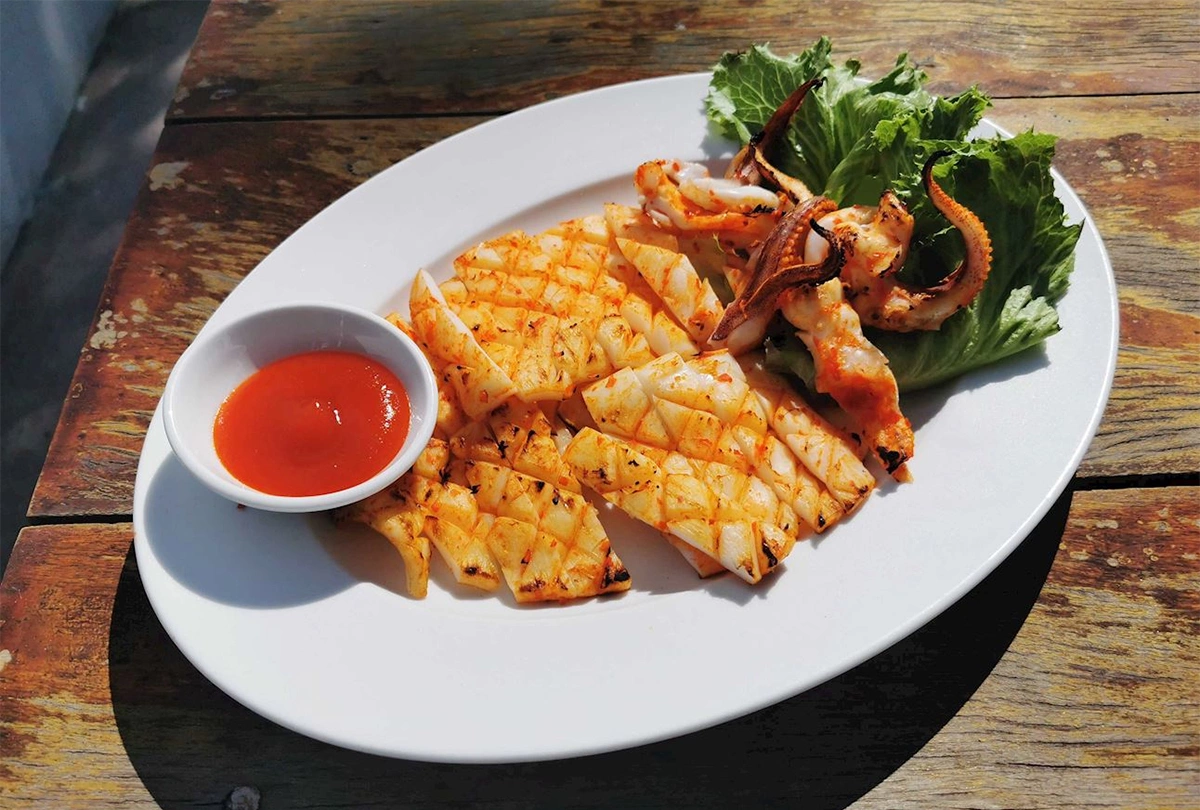
Grilled sun-dried squid with salt and chilli. (Photo: Taste Atlas)
With its long coastline bathed in highly saline waters, Quang Binh has fish and shellfish of particularly concentrated flavour. Among these marine treasures, Muc kho mot nang (“one-sun” squid) is a luxury product much prized by travellers.
The squid, freshly caught at dawn, are carefully cleaned in seawater and hung on bamboo frames to dry under Quang Binh's blazing sun for a single day. This unique process dries the outside of the squid while preserving the moisture, tenderness and natural sweetness of the flesh inside. Traditionally grilled over charcoal, it gives off an irresistible scent of the sea. The flesh becomes soft, dense and slightly springy, perfect dipped in local chilli sauce.
4. Traditional thick noodle soup

Chao canh. Photo: Vin
Chao canh is undoubtedly the national breakfast and comfort dish par excellence of every Quang Binh resident. Unlike Pho or Bun, the noodles in Chao canh (made from rice or wheat flour) are thick, soft and cut by hand.
The soul of the dish lies in its thick, smooth broth, made by simmering long pieces of pork bone, prawn heads and fresh fish (often snakehead or mackerel). A steaming bowl of Chao canh is generously topped with fried fish, prawns, pork and a shower of chopped spring onions. It is traditionally eaten with Ram (small crispy local spring rolls) dipped straight into the hot broth, creating an utterly divine contrast of textures.
5. Dong Hoi sweet potato
Born of the poverty and ingenuity of coastal people, Khoai deo (dried sweet potato) has now become an emblematic speciality affectionately called “the poor man's ginseng”. On the arid sand dunes of Dong Hoi, the red sweet potato is one of the few plants that can thrive, developing an exceptional sugar content.
After harvesting, the sweet potatoes are stored until their skin wrinkles and the sugar concentrates. They are then boiled, cut lengthways into thin slices and dried in the sun and wind of the coast for 10 to 12 consecutive days. The end product is a translucent amber-coloured strip. Khoai deo is not crunched but savoured slowly: warmed in the mouth, the sweet potato releases a concentrated, fragrant sweetness and a wonderfully chewy texture (deo). It is the ideal companion to a tea session at the end of the day.
6. Dew-softened rice paper
Although the southern version is very famous, the Banh trang phoi suong of coastal Quang Binh has a very distinct character linked to the unique climate of this central strip of land. Made from slightly salted pure rice batter, the sheet is first steamed, then dried a first time under the intense daytime sun to make it firm.
The crucial step that gives it its meaning takes place at dawn or late at night, when the artisans expose the sheets to the fine veil of mist and night dew (phoi suong). This natural process subtly rehydrates the rice paper, giving it an incredibly supple, elastic and soft texture with no need to wet it before eating. It is the perfect wrap for boiled pork, wild herbs and local grilled fish.
7. Tangy fermented shrimp
Tom chua (sour shrimp) is a speciality that captures the very essence of the art of fermentation in central Vietnam. It uses fresh medium-sized shrimp caught in the province's brackish rivers or estuaries.
After being carefully cleaned and beheaded, the shrimp are marinated in strong liquor (often local rice liquor) to keep their beautiful natural bright red colour and remove any fishy smell. Then comes the spice mix: finely sliced galangal, garlic, red chilli and cooked glutinous rice. Everything is sealed in jars for several weeks. The final taste is a bold symphony of natural sourness, the warm bite of galangal, the sweetness of the shrimp and saltiness, pairing divinely with slices of boiled pork belly.
8. Quang Binh squid cake
Less industrial than in other regions, Quang Binh squid cake (Cha muc) preserves a strictly artisanal method. The squid used are muc ong or muc la types, renowned for their thick, sweet flesh.
The secret of its springy, crunchy texture is that the squid is pounded by hand in a stone mortar rather than blended by machine. Just a little black pepper, garlic and fresh dill are added to enhance the original taste. Fried to order in very hot oil, the cakes puff up and turn an irresistible golden colour. Every mouthful reveals an intense scent of the sea, a firm bite and a natural sweetness that testifies to the absolute freshness of the product.
9. Artisanal coastal fish sauce
In centuries-old fishing villages such as Bao Ninh or Canh Duong, the art of Nuoc mam (fish sauce) is a precious heritage passed down from generation to generation. Thanks to the highly saline seawater, the anchovies (ca com) caught here have rich, nutrient-dense flesh.
The fish are mixed with pure sea salt in a secret proportion specific to each family of artisans, then pressed in wooden vats or earthenware jars for 12 to 18 months in the tropical heat. Traditional Quang Binh Nuoc
mam has a dark amber colour reminiscent of forest honey, a powerful yet refined aroma, and an initial saltiness that immediately softens on the finish (hau vi ngot). It is the liquid soul that gives depth to every dish in the province.
10. Stir-fried clams from the Nhat Le River

Photo: Tan Loc
The Nhat Le River is not only a poetic emblem but also a unique biological reservoir where hen (small basket clams) thrive exceptionally thanks to the meeting of fresh and salt water. The meat of these tiny shellfish is particularly sweet and fragrant.
For Hen xao, the meat is quickly stir-fried over a high flame in a wok with golden shallots, garlic, lemongrass, Vietnamese coriander (rau ram) and plenty of chilli to counter the “cold” nature of the shellfish according to traditional medicine. The dish is traditionally served with large crispy sesame rice crackers (banh trang nuong). Diners use pieces of cracker as a spoon to scoop up the clams, creating a perfect contrast between the crunch of the puffed rice and the spicy tenderness of the molluscs.