More about Echoes of the Ancient Kingdom and the Sacred Soul of the Cham People in Binh Thuan
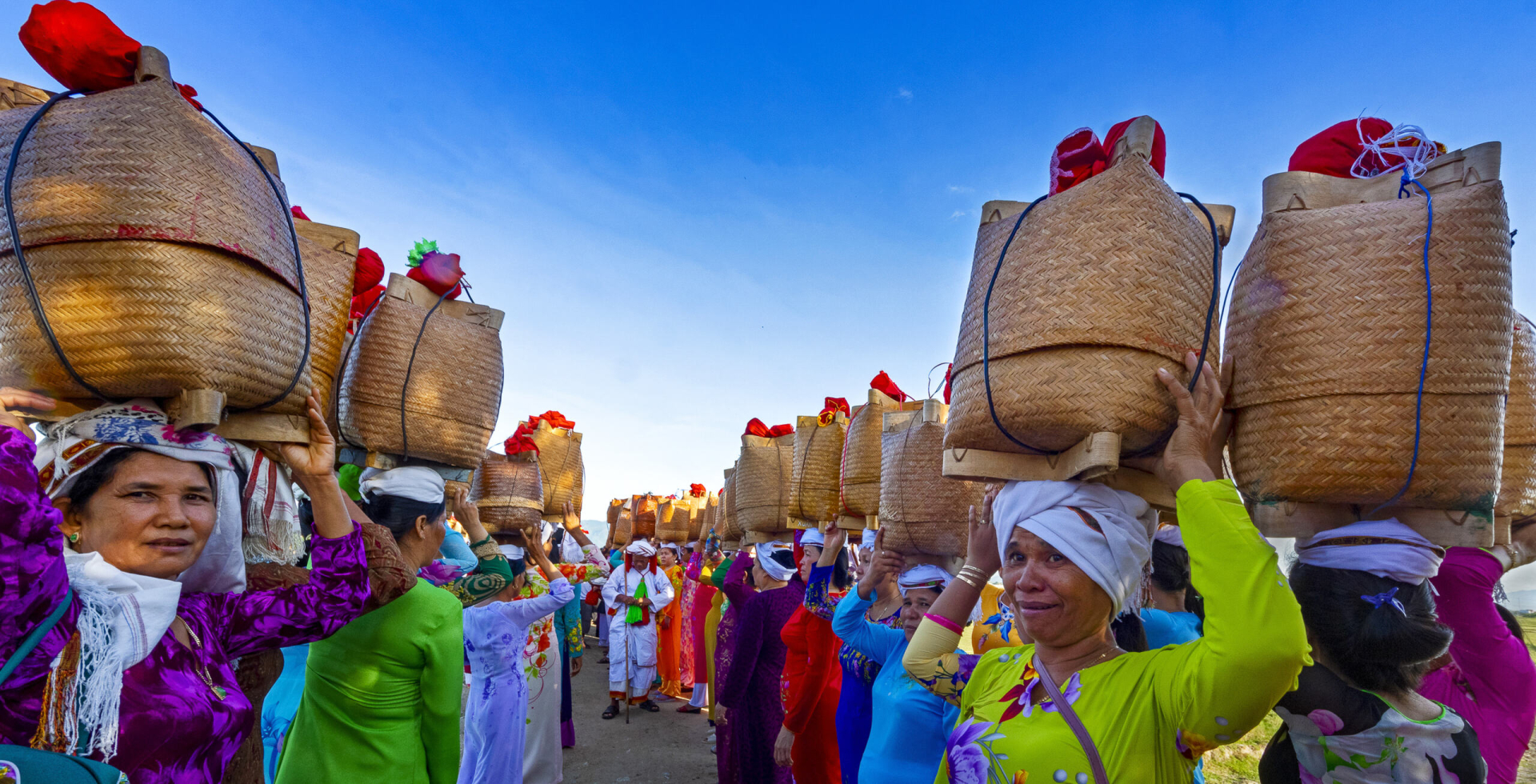
Venturing into Binh Thuan province is not only about discovering spectacular coastal landscapes; it also means entering the vibrant cradle of Cham culture. Much more than a historical testimony, the Cham people of Binh Thuan preserve a deep identity and a spirituality that shape every daily gesture. For the eye of a traveller in search of authenticity and inner clarity, attending one of their festivals, such as Kate, is a stop of rare elegance. It is a haven where time seems to stand still, where the sophistication of a thousand-year-old rite converses with the simplicity of community respect.
The Po Sah Inu towers and religious brick architecture
The most visible architectural testimony to Cham culture in Binh Thuan stands on Ba Nai hill, just 7 kilometres from the centre of Phan Thiet. The Po Sah Inu tower complex, built at the end of the 8th and the beginning of the 9th century, is one of the oldest monumental groups in the Hoa Lai architectural style. These structures, originally dedicated to the god Shiva and later to Princess Poshanu, are built of fired red brick using an ancient technique that limits the growth of moss despite the sea humidity.
The site comprises three main towers, the tallest of which rises to 15 metres. To appreciate the technical skill of the bas-reliefs and the structure of the stone lintels, early morning, between 7.30 and 9.30 am, is the best time of day. The low-angled light brings out the geometric details of the brick, and the relatively cool air makes it easier to climb the hill, with a clear view over Phan Thiet Bay below.
The Kate festival and the liturgy of offerings
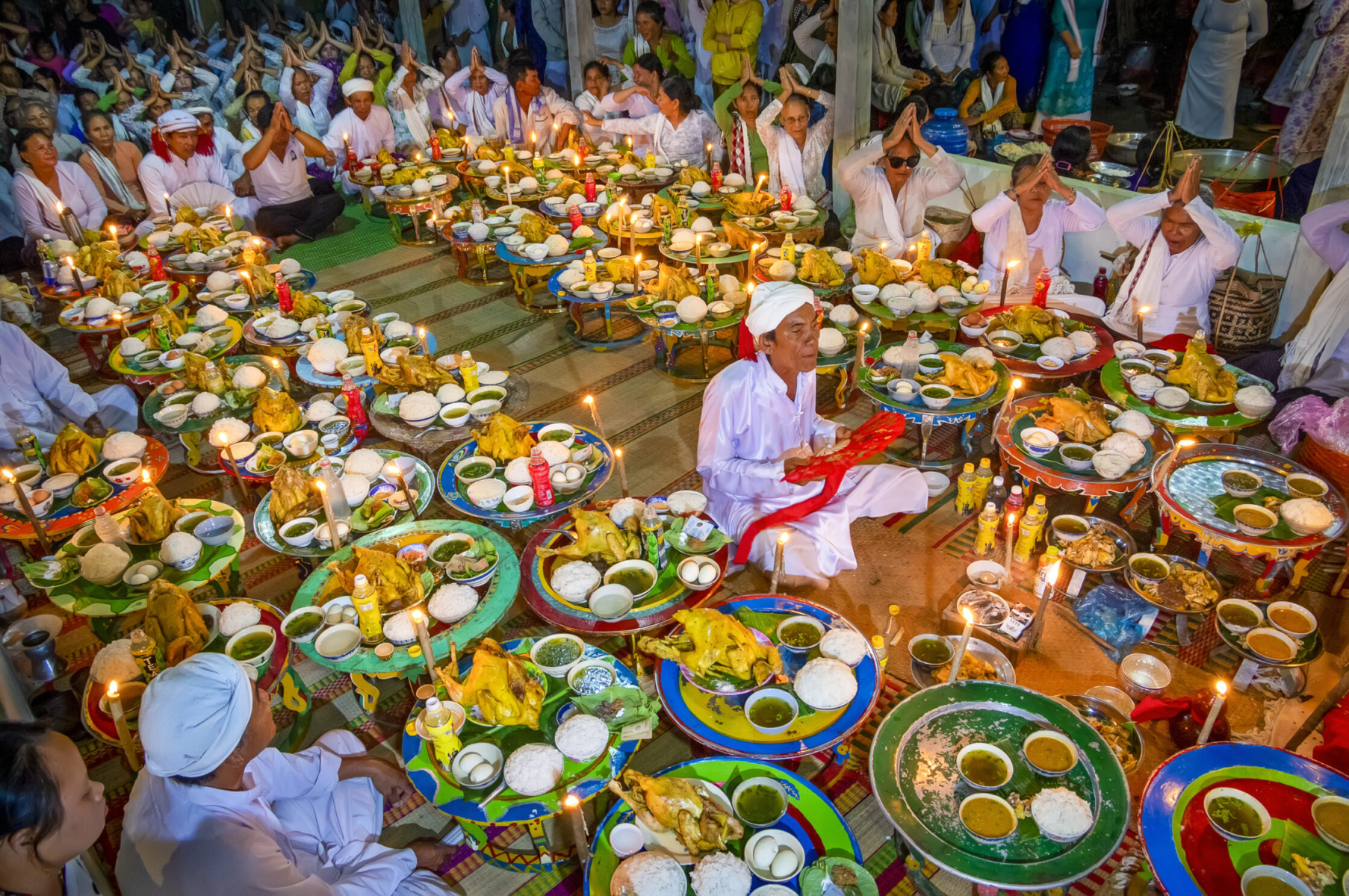
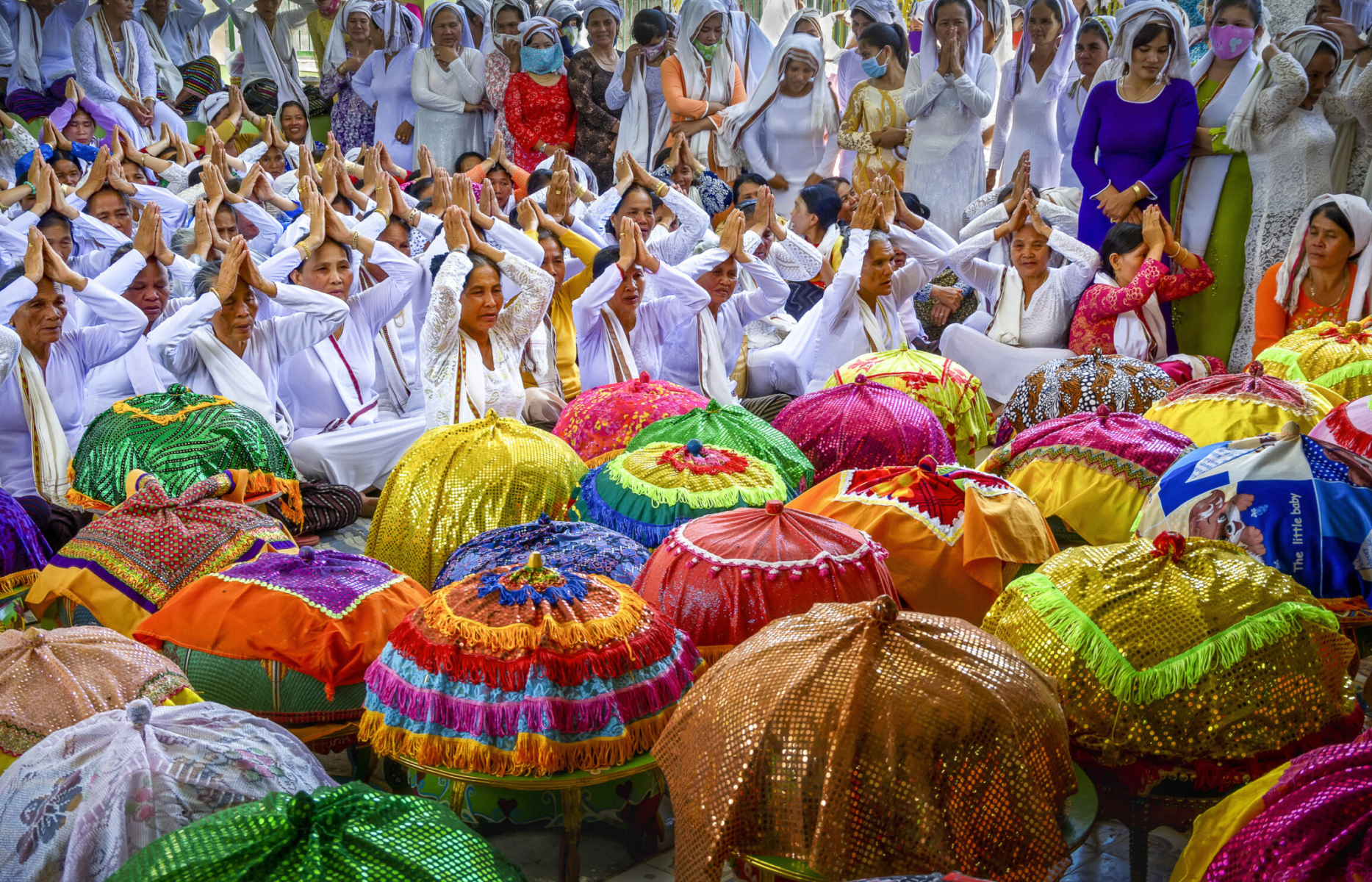
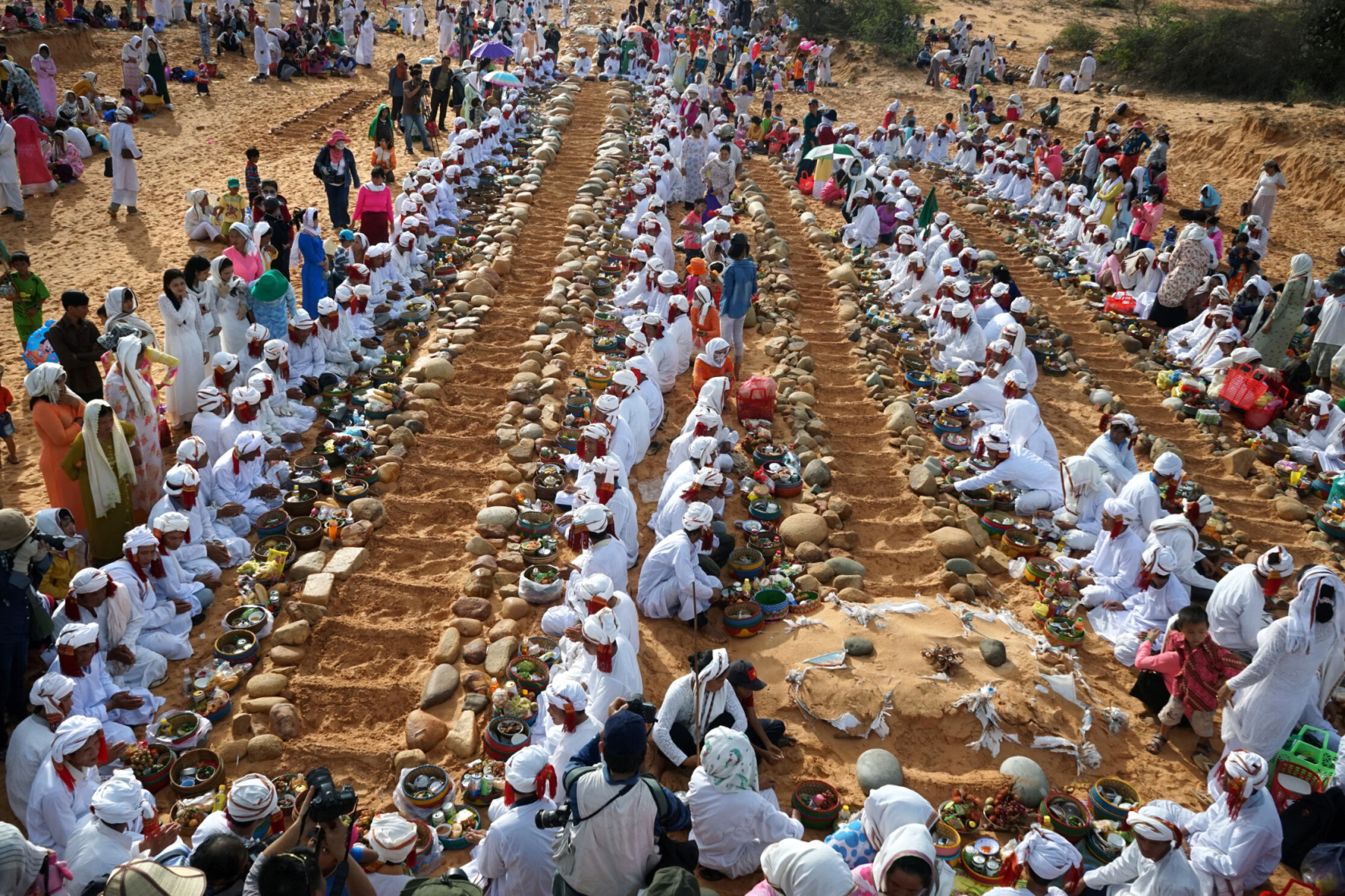
The community’s intangible heritage finds its richest expression during the Kate festival, which usually takes place in the seventh month of the Cham calendar (often late September or early October). This major celebration honours the memory of the ancestors, deified kings and national heroes who contributed to water management and local agriculture.
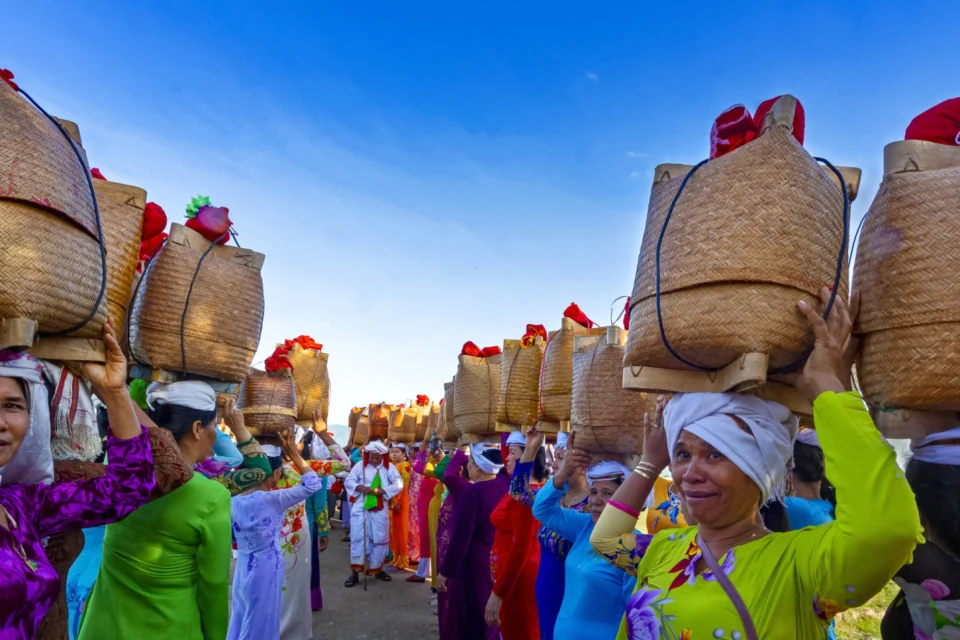
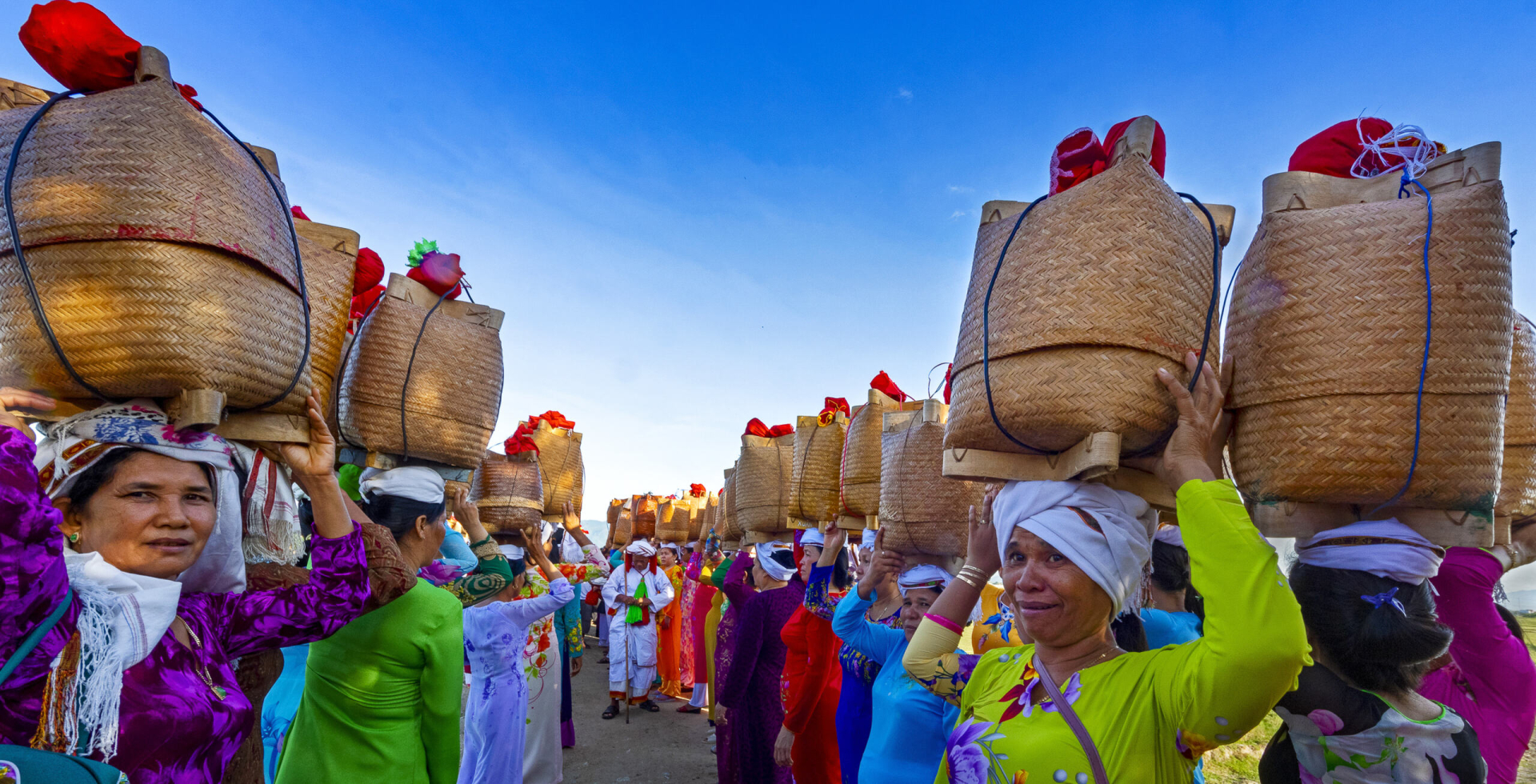
The heart of the event is a solemn procession in which women, dressed in the traditional long white robe and colourful belts, carry offerings of fruit, rice and poultry to the sanctuaries. The rituals, led by the community’s priests (ba bong), are accompanied by music played on the Baranung drum and the Saranai flute. Attending these ceremonies in mid-morning lets you observe the rigour of the liturgical codes and how ancient rituals maintain social cohesion between the region’s family lineages.
Weaving in the village of My Nghiep
Although the village of My Nghiep lies on the border with the neighbouring province of Ninh Thuan, its technical and commercial influence extends directly across the entire Cham community of Binh Thuan. This textile craft relies on vertical wooden looms worked exclusively by the village women. The process begins with spinning local cotton, followed by plant dyes made from the bark or leaves of local plants to obtain shades of red, black and yellow.
The woven motifs, called hoa van, are not mere ornaments; they indicate the social status, age and religious role of the person who will wear the garment or sacred belt. The workshops, built into family homes along the road, are open to visitors during the day. The weavers explain the variations in the geometric motifs, passed down directly from mothers to daughters, showing how this economic activity preserves the financial independence of the community’s families.
Practical information and regional connections
Access to the main Cham cultural sites of Binh Thuan has been made easier by the opening of the Dau Giay - Phan Thiet expressway, which links the province to Ho Chi Minh City in about two and a half hours by road. The night train or daytime express train between Saigon station and Phan Thiet station is a regular and punctual alternative.
To plan a complete itinerary, a stay of two to three days allows you to combine a visit to Po Sah Inu with the craft villages and the historic centre of Phan Thiet. Local infrastructure offers direct road links to the neighbouring provinces of Ninh Thuan and Lam Dong, making it easy to include this stop in a wider tour of the south-east or the Central Highlands.
Conclusion
Binh Thuan province offers a space for cultural exploration where history can be seen in monumental structures and in rigorously preserved ritual practices. From the weathered bricks of the Po Sah Inu towers to the intricate fabrics of local craftsmanship, discovering this heritage gives travellers precise geographical and anthropological insight into the development of the civilisations of the Vietnamese coast, far from purely beach-holiday images of the shoreline.
Photo: VNA