More about Top 10 Must-Try Specialities of Dong Thap: A Journey to the Heart of the Flavours of the “Land of Lotus”
1. Lai Vung Nem: the excellence of a century-old charcuterie craft
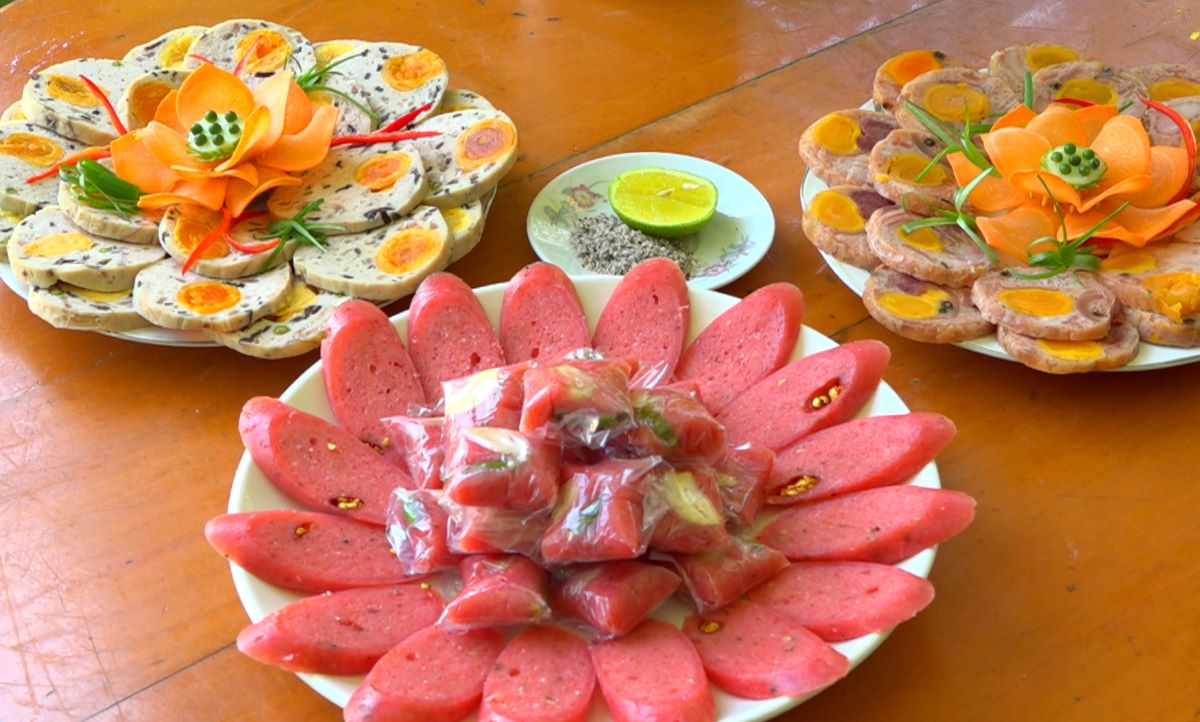
Lai Vung Nem. Photo: Phuc Hien
The jewel of the delta's culinary craftsmanship, Lai Vung nem is much more than simple charcuterie: it is the symbol of age-old know-how preserved in the heart of Lai Vung district. Making it relies on a meticulous balance of proportions: freshly slaughtered pork - still warm and carefully chosen from the loin or leg - is pounded by hand into a smooth, elastic paste, to which finely julienned pork rind is added for crunch. The seasoning combines crushed fresh garlic, ground black pepper and small whole bird's eye chillies. The mixture is then shaped into small squares, topped with a tam vong leaf (or a chum ruot leaf) that helps it ferment perfectly, and carefully wrapped in several layers of banana leaves tied with dried raffia. After two to three days of natural maturing at room temperature, the meat turns a bright ruby pink. On the palate, the nem opens with a delightfully tangy note, followed by a firm chew, the crunch of the rind and a spicy, fragrant finish that goes wonderfully with a cold beer or green tea.
2. The exceptional variations on Thap Muoi lotus: the plant soul of the land

Photo: Dong Thap Journal
In the vast marshlands of Thap Muoi, the lotus is not just a symbol of the landscape but the beating heart of local cuisine, used from root to seed with remarkable refinement.
Young lotus stems (ngo sen), crunchy and full of water, are pulled from the mud and then pickled to make tangy salads (goi ngo sen) paired with wild prawns and pork belly.
Lotus seeds (hat sen), sweet and floury, are steamed to stuff braised poultry or simmered in refreshing sweet soups (che hat sen).
The pinnacle of this culinary art is rice cooked in a lotus leaf (com goi la sen): high-quality glutinous rice is stir-fried in a wok with fresh lotus seeds, diced artisanal sausage (lap xuong), fragrant mushrooms and aromatic herbs. Everything is then carefully wrapped in a large fresh lotus leaf and steamed. When the parcel is opened at the table, a bewitching steam escapes, infusing the rice with the green, slightly woody notes of the leaf, for a tasting experience of rare elegance.
3. Sa Dec noodle soup: the culinary signature of the flour-milling village
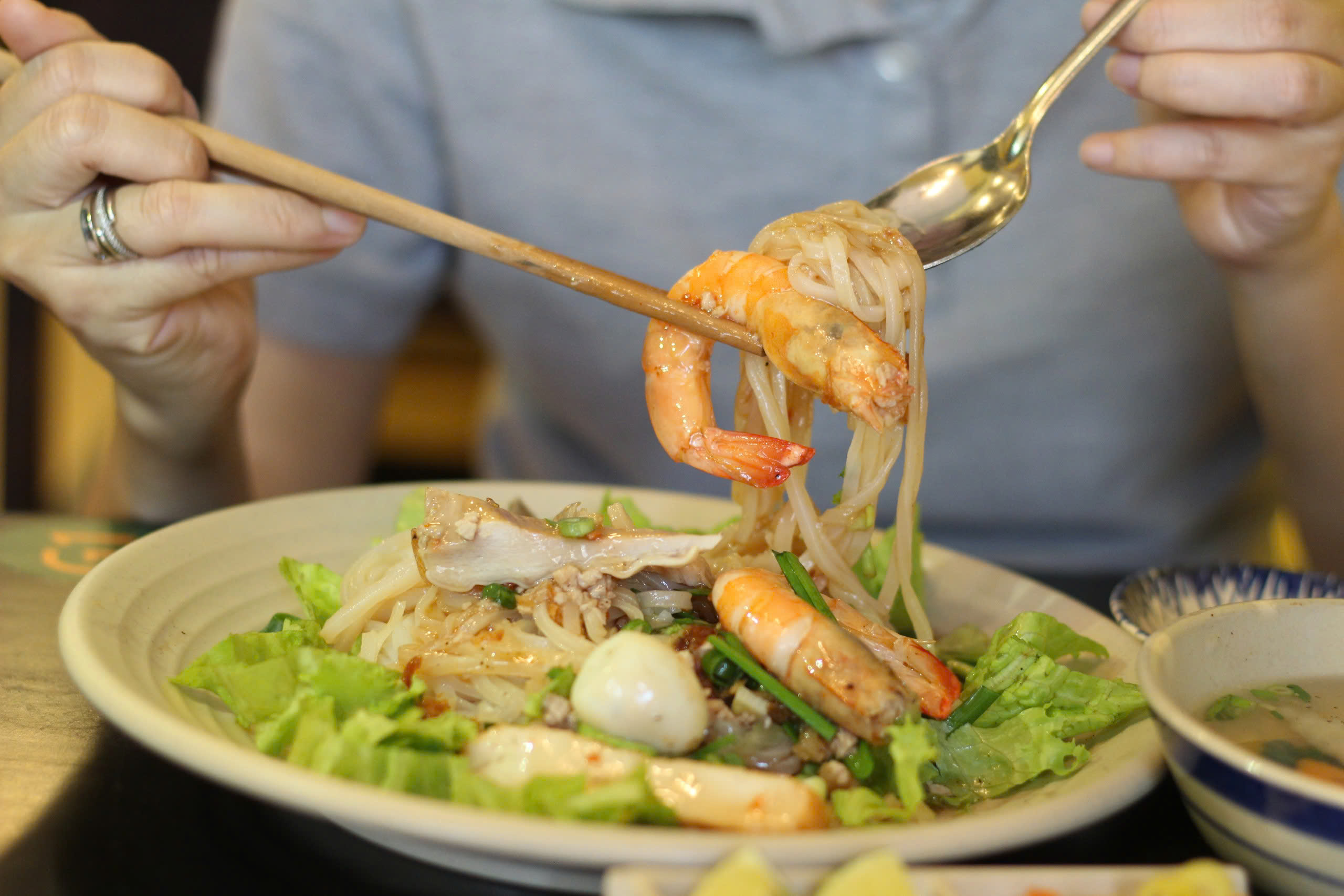
Sa Dec dry rice noodles. Photo: Cao An Bien
Carried by the century-old reputation of the town of Sa Dec and its calm river, this emblematic soup stands apart from its cousins in My Tho or Saigon thanks to the exceptional quality of its basic ingredients. The magic of the dish lies in its white noodles: made from Sa Dec's filtered rice flour, reputed to be the purest in southern Vietnam, they have a unique texture, at once tender, supple and perfectly springy, never breaking up in the hot broth. The clear broth is the result of hours of slow simmering of pork marrow bones, dried river shrimp and grilled onions, giving it a deep natural sweetness without artifice. Served in a large porcelain bowl, the soup is topped with slices of roast pork (xa xiu), tender liver, small peeled freshwater prawns, fresh chives and crispy fried garlic. Fans often eat it in its “dry” version (hu tieu kho): the noodles are then tossed in a slightly sweet and tangy homemade brown sauce based on soy and tamarind, while the steaming broth is served separately in a small bowl so you can alternate textures.
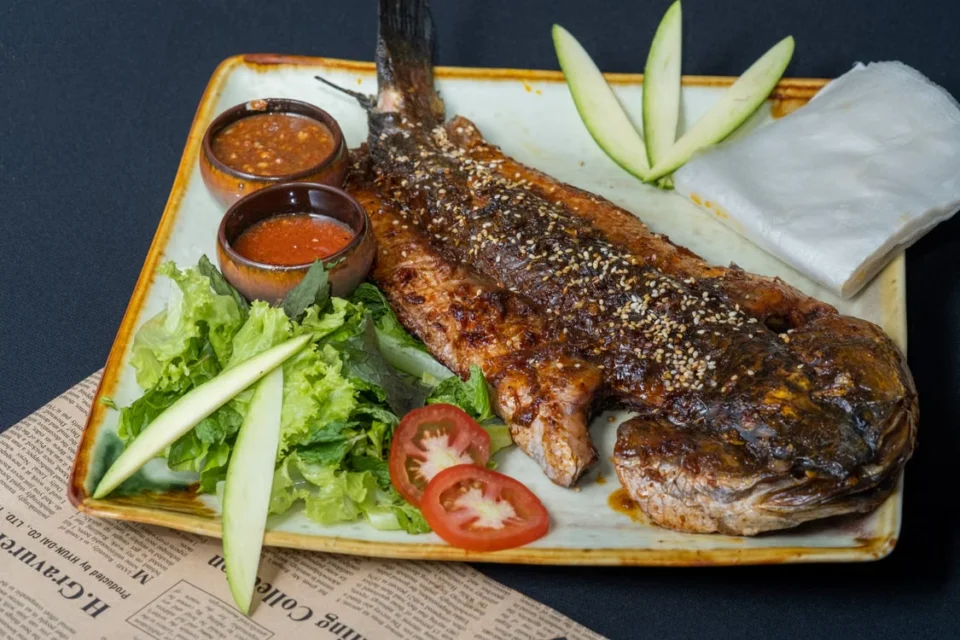
4. Straw-roasted snakehead fish wrapped in young lotus leaves

Photo: Dong Thap Tourist
A true tribute to the wild, rustic life of the delta's floodplains, this dish embodies the culinary tradition of the South's early pioneers. A wild snakehead fish (ca loc dong), caught in the canals and known for its firm flesh, is simply rinsed in clean water without being scaled or gutted, to keep all its natural juices. Skewered from mouth to tail on a green bamboo stick, it is planted upright in the ground and covered with a thick dome of dried rice straw, which is then set alight. It cooks quickly under intense, even heat. Once the straw has burnt away, the charred skin of the fish is scraped off with a knife to reveal juicy white flesh delicately scented with wood smoke. The touch unique to Dong Thap lies in the accompaniment: instead of the usual rice paper, very young lotus leaves (la sen non) are used, still rolled up on themselves and freshly picked from the ponds in the morning. The hot flesh is rolled in the tender leaf with a few field herbs, then dipped in a tangy, spicy tamarind sauce (mam me). The subtle bitterness and green freshness of the young lotus leaf beautifully balance the richness of the smoky fish.
5. Cao Lanh crispy pancake: the golden show of the riverside pans
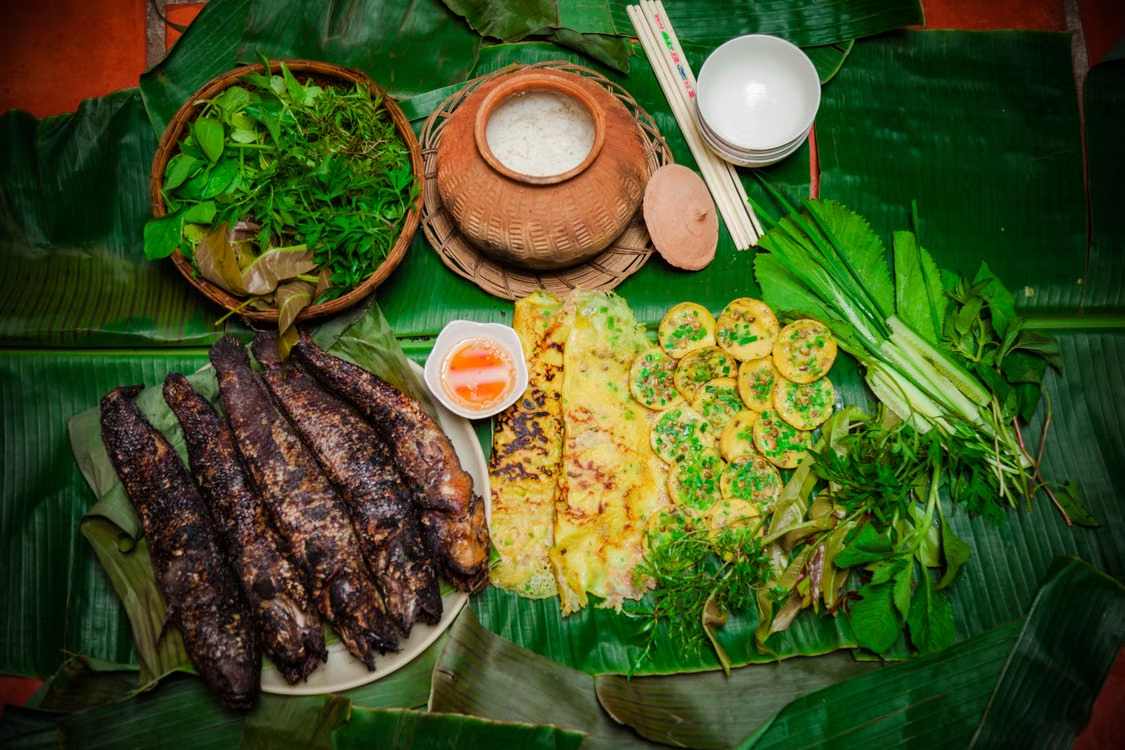
Photo: Luc Pham
While the banh xeo pancake is a classic of Vietnamese heritage, the version made in the city of Cao Lanh has risen to the rank of a true regional food institution thanks to an inimitable artisanal touch. The batter is made the same day by grinding local rice with spring water, fresh coconut milk for richness and a pinch of ground turmeric that gives it its sunny yellow colour. Poured swiftly into large, very hot, oiled cast-iron pans, the batter sizzles and spreads into an extremely thin layer, turning golden and wonderfully crispy at the edges while staying slightly soft in the centre. The particularly generous filling showcases local produce: minced duck with its small tender bones (a local speciality that adds a satisfying crunch), small sautéed river prawns, crunchy bean sprouts and strips of sweet jicama. Eating it calls for good company: you cut a piece of the hot pancake and wrap it in large leaves of wild mustard, fresh mango leaves or water herbs, before dipping it into a bowl of homemade nuoc mam balanced between cane sugar, crushed chilli and lime juice.
Here are the five other emblematic specialities of Dong Thap, described with the same immersion, cultural precision and love of food:
6. Lai Vung banana crisp: the age-old treat of the orchards

Freshly toasted banana crisps. Photo: L.T
The essential companion to its famous nem, Lai Vung district is also known for its skill in making this artisanal sweet, a true tribute to the delta's generous orchards. Preparation begins with choosing very ripe chuoi xiem bananas, which are sun-dried and chopped before going into large copper pans with cane sugar, freshly grated ginger and a dash of kumquat juice to balance the sweetness. Everything is slowly reduced over a low heat for several hours with constant stirring, until it becomes an amber, chewy, fragrant paste, into which crunchy roasted peanuts and white sesame seeds are folded at the last moment. The originality of mut chuoi phong lies in how it is shaped: the still-warm paste is spread and pressed between two thin crispy rice crackers (banh trang). When you bite into it, the contrast between the crumbly crunch of the outer cracker and the chewy softness of the candied banana is striking, lifted by the spicy warmth of the ginger. It is the perfect sweet to go with a lotus-flower infusion or a hot green tea.
7. Lai Vung pink mandarin: the golden treasure of the alluvial soil
Lai Vung pink mandarin. Photo: Van Long Bui
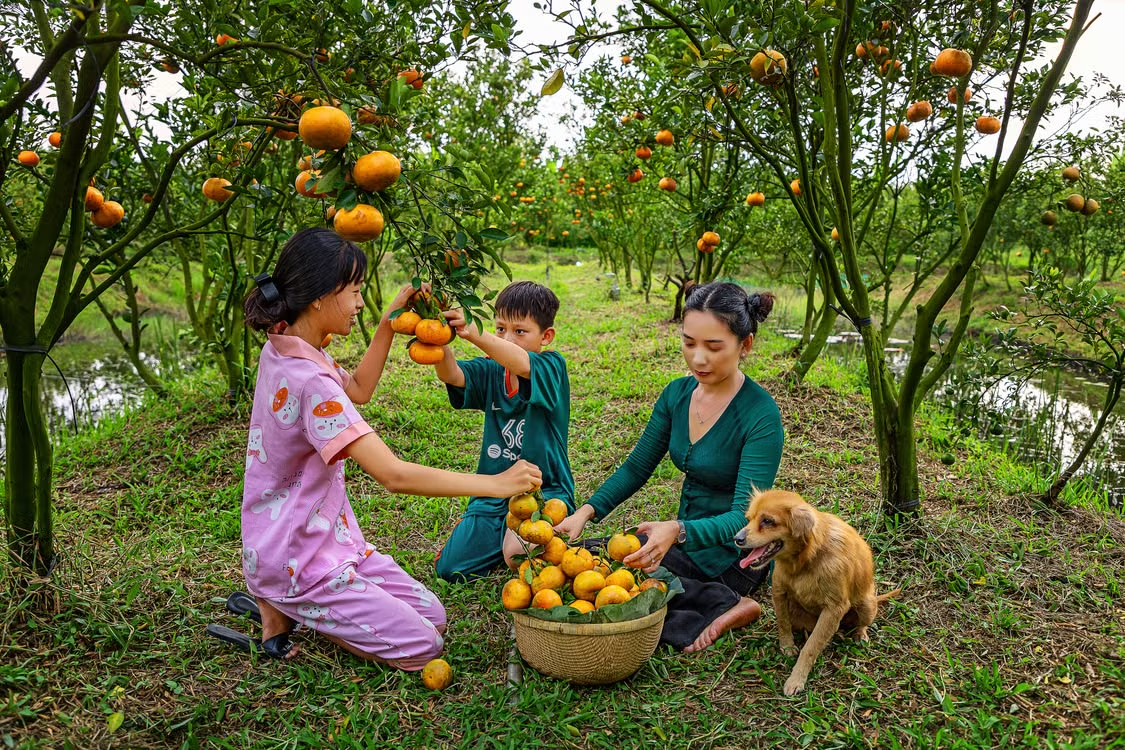
Blessed with a favourable microclimate and exceptionally fertile alluvial clay soil nestled between the Tien and Hau rivers, Lai Vung is the only home of the pink mandarin in Vietnam. This exceptional fruit stands out at first sight for its generous size and thin skin, which turns from soft green to an orange-yellow tinged with bright pink when it ripens, just before the Lunar New Year. Beneath its fragrant skin lies juicy flesh, divided into plump segments with few pips, delivering an explosion of flavour in which the sugary sweetness is lifted by a light, very refreshing touch of acidity. Beyond the pleasure of eating it fresh at the floating-market stalls, visitors love to stroll through orchards weighed down with golden fruit at the end of the year. Local artisans also turn the pink mandarin into jams, aromatic dried peel and craft liqueurs.
8. Sa Dec flour and old-style cakes: the tenth art of the rice grain

Traditional cakes of southern Vietnam. Photo: Chu Quang Minh
For more than a century, the banks of the Sa Dec river have been home to the largest flour-milling village in southern Vietnam, where hundreds of families carry on turning rice into flour of legendary purity and fineness. This exceptional raw material is the foundation of a living heritage: the traditional cakes of the delta (banh dan gian).
Banh bo thot not: a honeycombed steamed cake made with fermented rice flour, coconut milk and wild palm sugar, with a soft, spongy texture and natural caramel aromas.
Banh da lon: a layered steamed cake, alternating the green sweetness of pandan-leaf juice and the creamy yellow of mung beans puréed with coconut milk.
Banh it la gai: a bite of black glutinous rice filled with grated coconut and sesame, wrapped in a banana leaf.
Each of these sweets bears witness to a country way of life in which the noble rice grain meets the generosity of the coconut groves.
9. Thick rice noodles with coconut milk and shredded pork: a daring marriage of sweet and savoury

Thick rice noodles with coconut milk and shredded pork. Photo: Di Nam Sa Dec
An emblematic dish of Sa Dec's popular breakfasts, banh tam bi intrigues food lovers with its combination of seemingly contrasting ingredients that nonetheless blend into remarkable harmony. The thick, tender noodles, shaped like little silkworms (tam), are hand-rolled from Sa Dec's filtered rice flour, which gives them a unique softness and an ideal ability to soak up sauces. In a deep plate, the noodles are topped with a handful of bi - very finely shredded pork rind and lean pork, coated in fragrant toasted rice powder (thinh) - , simmered pork meatballs (xiu mai), grated cucumber and fresh herbs. The highlight is the dressing: the vendor pours over a generous ladle of warm, slightly salty coconut cream, then a drizzle of sweet-and-sour chilli nuoc mam. The creamy richness of the coconut coats the saltiness of the meat and the crunch of the raw vegetables for a wonderfully comforting spoonful.
10. Flood-season mam hotpot: the wild symphony of the high-water season
Ingredients for a fermented fish hotpot. Photo: Huynh Hong Dao
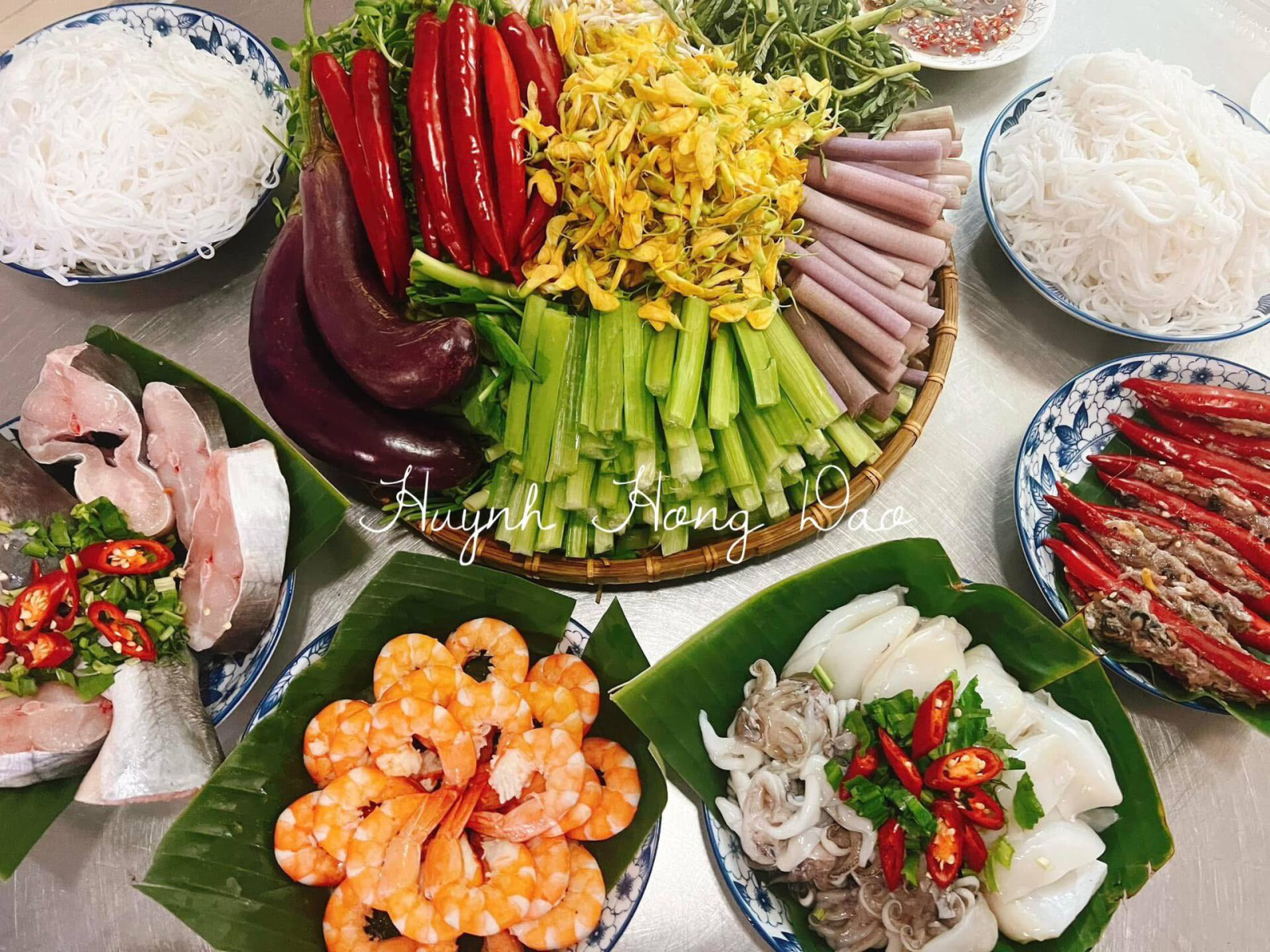
While fermented fish hotpot (mam) is a monument of southern Vietnamese cuisine, the one made in Dong Thap during the high-water season (mua nuoc noi, from September to November) reaches peaks of culinary complexity. The secret of the broth lies in the skilfully balanced reduction of two kinds of fermented fish: mam ca sac for its powerful aroma and mam ca linh for its rich sweetness. The strained broth is then clarified and flavoured with crushed lemongrass, garlic and purple aubergines that soak up the juices. At the table, diners dip in pieces of wild Mekong fish (catfish, snakehead), freshwater prawns and pork belly. But Dong Thap's true signature is the platter of wild greens that comes with it: more than twenty kinds of water herbs picked by hand in the flooded marshes, including the famous yellow sesbania flowers (bong dien dien), water lily stems, sliced lotus flowers, water spinach and wild banana shoots. It is the purest and most theatrical expression of the abundance of nature in the delta.