
Rapid urbanisation risks eroding the identity and uniqueness of cities. The traces of time and heritage features are gradually being replaced.
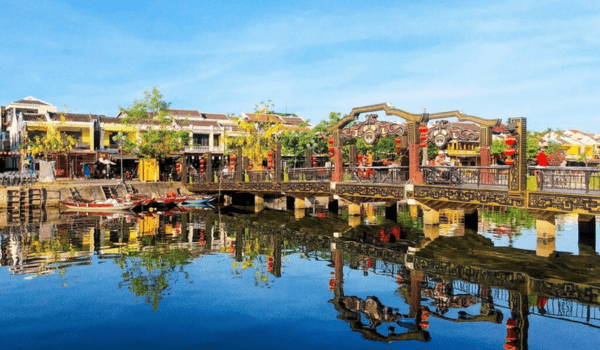
Hoi An, Quang Nam province (Centre), a heritage city. (Photo: VNA/CVN)
In this situation, specific criteria for heritage cities are needed, or a mechanism should be developed to serve as a basis for localities in planning, organising administrative units and resolving the problems of urbanisation.
1. The need to define a heritage city
Pham Phu Ngoc, director of the Hoi An Centre for Cultural Heritage Management and Conservation, Quang Nam province (Centre), explained that his city is managed as a heritage city. It has 27 national-level relics, 49 provincial-level relics and more than 1,330 sites on the city's list of protected sites.
The restoration of Hoi An's monuments is carried out continuously and regularly. The management, protection and promotion of the values of Hoi An's world cultural heritage, and of the city's entire system of monuments and cultural heritage in general, are recognised and supported at every level and by the whole community. However, some legal regulations on the restoration and embellishment of monuments are not consistent with the specific features of Hoi An's heritage, creating many obstacles to restoration work.
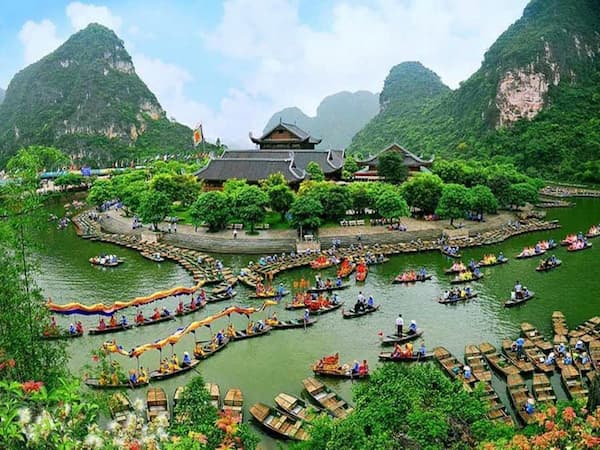
Ninh Binh province (North) currently has a system of 1,821 historical and cultural relics dating back thousands of years. Its Trang An landscape complex has been inscribed by UNESCO as a world cultural and natural heritage site. The ancient capital of Hoa Lu, the Trang An-Tam Coc-Bich Dong scenic area and the Non Nuoc mountain relic are classified as special national relics.
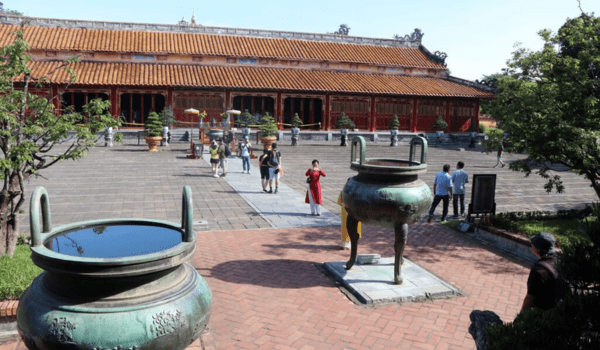
The ancient imperial city of Hue, Thua Thien Hue province (Centre), has a precious and vast system of tangible and intangible heritage.
(Photo: VNA/CVN)
The ancient imperial city of Huê, Thua Thien Huê province (Centre), also has a precious and vast system of tangible and intangible heritage. Like the ancient capital of Hoa Lu, the complex of relics of the ancient imperial city of Huê urgently needs specific mechanisms to meet the requirements of restoring, preserving and promoting its heritage values.
2. The need for a set of urban heritage criteria
Given the great value and appeal of heritage cities, specific mechanisms must be created and promoted so that they can keep their identity and not be swept away by urban development.
According to experts, the term "urban heritage" should soon be clarified and a chapter added to the Law amending and supplementing the 2009 Law on Cultural Heritage... to meet the requirements of managing heritage sites.
Around the world, many countries have regulations and criteria for identifying heritage cities. Vietnam has no shortage of cities that fully meet the criteria.
This year, the Ministry of Culture, Sports and Tourism will submit two amending and supplementing laws to the government, namely the Law on Advertising and the Law on Cultural Heritage, as a legal basis for more effective conservation and promotion of heritage values.
For travellers, discovering Hoi An, Huê, Ninh Binh or Vietnam's other heritage cities is much more than visiting tourist sites: it means entering fragile spaces shaped by centuries of history, craftsmanship and local life. In the face of urbanisation pressures, every gesture counts. By favouring respectful tourism, supporting preservation initiatives and choosing authentic experiences, everyone can help protect these unique cities. Travelling in Vietnam also means taking part in safeguarding a living heritage that is essential for future generations.
Source: Le Courrier du Vietnam
Last checked Suggest a correction