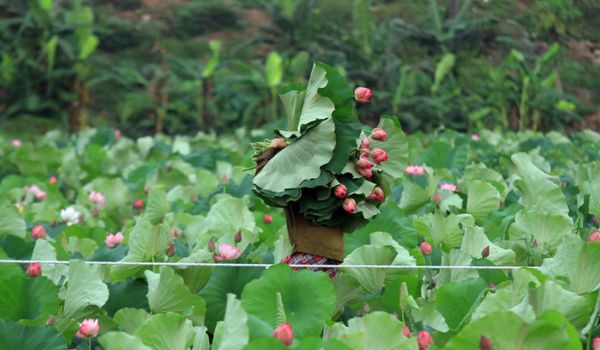
A true symbol of the thousand-year-old capital’s art of living, the traditional making of Tay Ho lotus-scented tea has just been officially recognised as national intangible cultural heritage. Nestled in the Quang An neighbourhood, this centuries-old craft demands infinite patience and an extremely meticulous scenting process to bring to life an elixir with flavours unique in the world. Discover the history, the artisanal secrets and the poetry of this jewel of Hanoi’s gastronomy, now an essential part of the local tourist experience.

What does it take to capture Hanoi’s most precious fragrance before the sun rises?
In the north-west of the capital, the misty waters of West Lake (Tay Ho) hold a horticultural and culinary secret that artisan families pass down like a state treasure. Here, far from industrialisation, lotus tea (Tra Sen) is crafted through a ritual of surgical precision that turns every gram of leaves into an ephemeral work of art. Venturing onto the banks of Quang An at dawn means discovering an exclusive tradition where nature sets the rules, and uncovering the secret of Hanoian elegance, one cup at a time.
The craftsmanship of Quang An’s artisans and the secrets of lotus tea
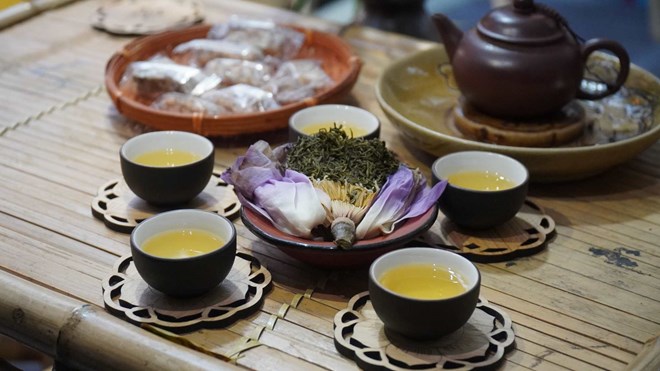
Lotus tea set. Photo: Minh Vu
Tay Ho lotus tea is not a simple aromatic blend but the result of a complex scenting process concentrated mainly in the villages of Quang An and Nhat Tan. To obtain a top-quality product, artisans use specific lotus flowers grown in the lake’s alluvium-rich areas. Each kilogram of tea requires the “rice grains” (anthers) to be extracted by hand from 1,000 to 1,200 lotus flowers freshly picked at dawn. This stage demands extreme care: the rice grains are mixed with high-altitude green tea, and the mixture then goes through several cycles of drying and re-scenting. The process can take 15 to 20 days, ensuring the floral aroma penetrates deep into the tea leaf.
Morning rituals on the shore and the flowering of the ponds
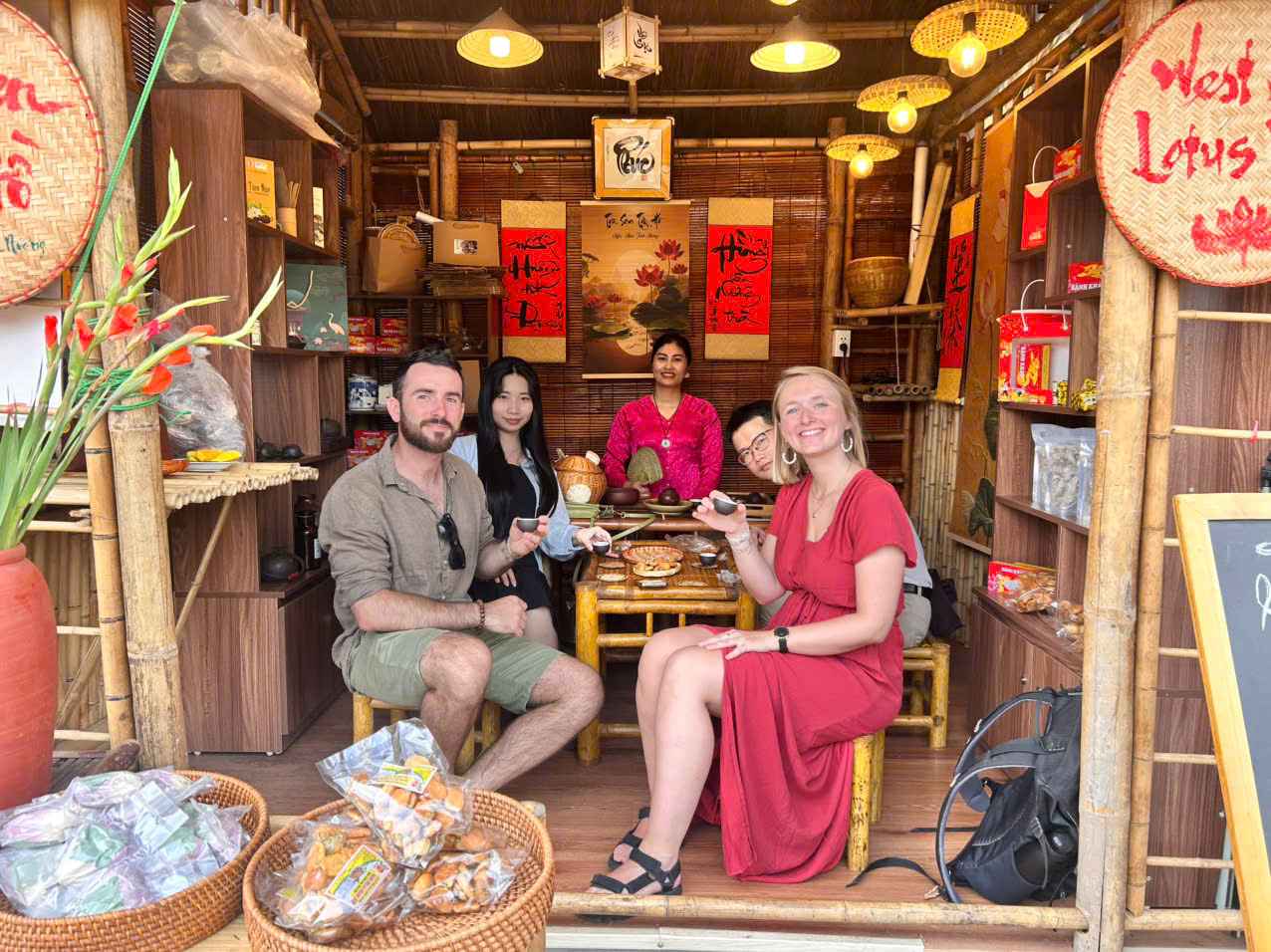
International tourists tasting lotus tea. Photo: Nguyen Thi Trinh Phuong
Tay Ho’s identity reveals itself fully at first light, between 5 and 7 am. This is exactly when the pickers paddle out in small boats to harvest the flowers before the sun dissipates the essential oils held in the heart of the lotus. The air is filled with a damp freshness and a lingering floral fragrance. Along Thanh Nien Road, which separates West Lake from Truc Bach Lake, local life revolves around outdoor exercise and stops at traditional tea houses. These establishments serve the brew according to strict preparation codes, with water at a precise temperature and ceramic utensils that help the aromas to unfold.
Spiritual heritage and waterside architecture

Lotus petals after cutting. Photo: Pham Tuan Anh
Beyond its tea culture, Tay Ho district is home to architecture of great historical value that punctuates walkers’ routes. Tran Quoc Pagoda, built on a small island linked by a causeway, is considered Hanoi’s oldest, with origins dating back to the 6th century. Its tall red tower and engraved steles offer a visual contrast with the flat grey surface of the lake. Further on, Quan Thanh Temple, dedicated to the guardian spirit of the North, houses a monumental black bronze statue, a masterpiece of 17th-century Vietnamese casting. These monuments are not mere relics but active places of worship where Hanoians come to burn incense and maintain an organic bond with their ancestors.
Seasons and getting to West Lake
The best time for a lotus-tea-themed trip is the flowering season, from late May to mid-August. It is during these hot, humid months that the scenting workshops are in full swing, letting you watch the artisans at work in real time. The rest of the year, especially in autumn (September to November), the climate is milder and ideal for walking or cycling around the lake’s 17-kilometre circumference.
In terms of connections, Tay Ho district is strategically located about 20 minutes by car from Noi Bai International Airport and 15 minutes from the historic city centre. Getting around locally is easy thanks to a network of circular electric buses and ride-hailing taxis. For full immersion, a two-day stay lets you alternate between studying the artisanal methods, visiting the Buddhist sites and exploring the flower gardens along the northern shore. Tay Ho remains one of the capital’s most serene anchors, where the elegance of tradition endures despite the bustle of the metropolis.