
Buoyed by a record 12.6 million international tourists and crowned “Asia’s Leading Destination”, Vietnam is at a decisive turning point in entering the high-end tourism market. Between the urgent need for sustainable development in the face of overcrowding at sites such as Sa Pa, the rise of immersive technologies serving heritage in Hue and Thang Long, and the growth of community tourism, discover the strategic roadmap to propel the land of the Dragon to the top of global competitiveness by 2030.

Vietnamese tourism is a cultural bridge fostering understanding between nations (Photo: VOV)
In 2023, Vietnam welcomed 12.6 million international tourists, 3.4 times more than in 2022 (according to the National Administration of Tourism), and was named “Asia’s Leading Destination” by the World Travel Awards.
This success reflects not only the appeal of Vietnam’s landscapes and culture but also opens up an opportunity for the country to position itself in the global high-end tourism value chain.
The world is moving rapidly towards experiential tourism, with travellers no longer content just to admire the scenery but seeking deep immersion in local culture. This is a golden opportunity for Vietnam to make the most of its incredible ecological diversity and rich cultural heritage.
Destinations such as Mu Cang Chai (Yen Bai), with its golden terraced rice fields at harvest time, or the Central Heritage Road have proved their potential by attracting large numbers of international tourists in recent years. However, the crucial question remains: how can these resources be turned into distinctive tourism products capable of competing with Thailand, Malaysia or Japan? This question still deserves a thorough answer.
Creative tourism: redefining traditional values in the digital age
The 21st century demands a balance between preservation and innovation. Japan has skilfully combined modern technology and cultural heritage to create innovative tourism experiences. In Kyoto, visitors can take part in virtual meetings with Geishas or Maikos via online platforms, allowing them to interact with and learn about Geisha culture remotely.
Virtual reality (VR) experiences in Kyoto often highlight ninja culture. At NINJA VR KYOTO, visitors can practise throwing shuriken, use blowpipes and dive into the traditional world of Japan through VR.
Japanese culinary art combines tradition and creativity, offering visitors immersive experiences. In Tokyo, sushi-making classes with professional chefs go beyond preparation techniques to explore Japanese culinary history and culture.
Meanwhile, France, with its refined gastronomy, stands out for its wine tours in the vineyards of Bordeaux, where visitors learn about the winemaking process, meet artisans and taste the products on site. UNESCO’s inscription of French gastronomy (notably the artisanal know-how and culture of the baguette) on the List of the Intangible Cultural Heritage of Humanity in 2022 strengthened France’s position as an essential gastronomic destination.
Vietnam: when technology serving heritage creates immersive experiences
Vietnam is gradually integrating modern technology to enhance the tourist experience and preserve its cultural heritage. At the Imperial Citadel of Thang Long, a Panorama projection room with a 360° screen brings historical events to life, immersing visitors in the history of the Vietnamese dynasties.
In Hue, the Monuments Conservation Centre launched the experience “In Search of the Lost Imperial City”, which uses virtual reality (VR) to recreate the imperial city as it was 200 years ago. Visitors can take part in various interactive activities, such as VR spaceship simulations, VR telescopes and VR treadmills, offering a panoramic and realistic view of the history of the Nguyen dynasty.
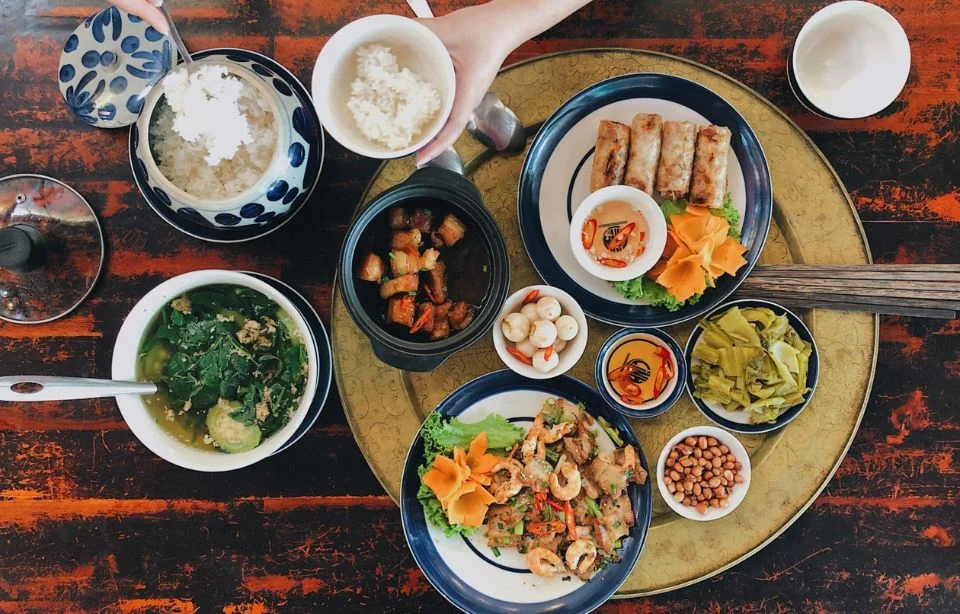
On the culinary front, Vietnam is already developing food tours combined with high-end stays. However, creative culinary tourism remains under-exploited despite its enormous potential.
For example, organising banh mi-making workshops with experienced artisans in Hanoi, or designing dinner shows with immersive holographic projections in Ho Chi Minh City: do these ideas seem unrealistic? Or are they the future of Vietnamese tourism?

Vietnam is already developing food tours combined with high-end stays
A “smart” tourism policy: balancing growth and sustainable development
Since 2023, the extension of the e-visa to 90 days and the increase in the length of stay to 45 days for 13 countries have attracted a large number of European tourists. However, according to the World Economic Forum’s (WEF) 2023 Travel & Tourism Development Index (TTDI) report, Vietnam ranks 59th out of 119 countries for tourism competitiveness. Despite certain strengths, the country still faces difficulties in environmental management and sustainable tourism development.
Take the example of Sa Pa, a town of 10,000 inhabitants that welcomed 2.7 million visitors in 2018. This overcrowding puts enormous pressure on local infrastructure and the environment, leading to risks of water pollution and cultural erosion.
To address similar problems, Iceland has introduced a compulsory booking system for sensitive sites such as the Blue Lagoon, limiting visitor numbers and protecting the environment. Vietnam could draw on this approach to regulate tourist flows in Sa Pa and other fragile natural sites.
More broadly, there is an urgent need to establish a regulatory framework setting visitor quotas for listed heritage sites, while developing alternative attractions to spread visitor flows better at peak times.
Another lever concerns tax policy, which should favour “green businesses”. Some countries grant tax relief to tourism and hospitality companies that use renewable energy. Vietnam could adopt a similar approach by making CSR (Corporate Social Responsibility) ratings a criterion for granting operating licences.
Responsible tourism: when local communities become the engine of development
According to the newspaper Bao Son La, the community tourism model in Moc Chau (Son La) has produced positive results. In ban Ang, Dong Sang commune, 40 families have invested in homestays and welcomed more than 92,000 visitors since 2020, generating turnover of more than 100 billion VND.
Likewise, in the villages of Ta So 1 and Ta So 2 (Chieng Hac commune), where more than 90% of residents are Hmong, 40,000 tourists have been recorded since 2021, with tourism revenue exceeding 20 billion VND. These successes show that empowering local communities does not merely preserve culture: it is also a unique driver of tourist appeal.
However, the main challenge remains training local human resources in the tourism sector. According to the Ministry of Culture, Sports and Tourism’s plan for developing community tourism in Vietnam, the goals for 2025 are that:
- At least 40% of community tourism managers receive training in tourism management.
- 30% of community tourism workers are trained and upskilled, at least 10% of them women.
- Every community tourism site has at least one person who speaks a foreign language.
This training aims to equip residents not only with hospitality and tourism management skills but also with knowledge of waste management and the preservation of intangible heritage. This contributes to sustainable tourism that respects the environment and local traditions.
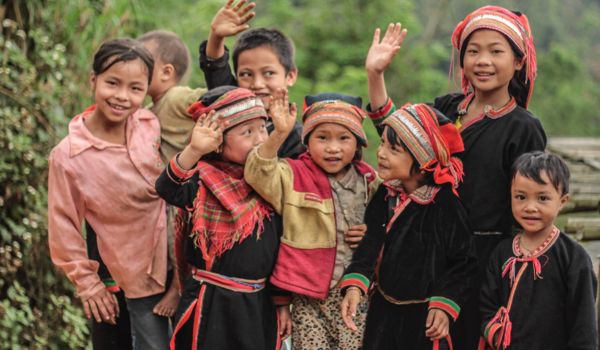
The main challenge remains training local human resources in the tourism sector (Photo: baotiengdan)
Marketing strategy 4.0: tapping the potential of niche markets and positioning destination brands
To attract more international tourists, Vietnam can implement targeted promotion strategies to reach new, fast-growing outbound tourism markets. For example, the Nordic countries, whose residents have high purchasing power and seek exotic destinations, or the Middle East, whose travellers are looking for rich cultural experiences and unique natural landscapes, are high-potential targets.
The Middle Eastern market, with 150 million travellers with high purchasing power, remains under-exploited. Developing halal-certified resorts in Nha Trang or Da Nang, combined with therapeutic spas using local medicinal plants, could appeal to this demanding clientele.
In addition, paying particular attention to the markets of East and South Asia, where the middle class is expanding rapidly, would also open up new growth prospects for Vietnamese tourism.
Vietnam must also step up the promotion of its unique cultural identity. Traditional festivals, culinary specialities and folk art forms are distinctive features that set Vietnam apart from other destinations. Working with content creators, international media and travel influencers will help strengthen Vietnam’s image among foreign tourists.
According to a Morning Consult study (2024), 22% of Generation Z have booked a trip after seeing a travel influencer’s post about a destination. In addition, 88% of consumers in this generation follow at least one travel influencer on TikTok, and 45% trust these content creators’ recommendations.
Vietnam has launched the “Live Fully in Vietnam” campaign to promote its tourism. To maximise its impact, working with platforms such as TikTok through viral challenges like #TasteofVietnam could attract a wide audience and spark worldwide enthusiasm.
It is essential to train tourism professionals so that they not only master international communication skills but also understand and value local traditions. This will improve the visitor experience while ensuring that cultural identity is preserved as the sector modernises.
By adopting this approach, Vietnam can develop its international tourism market sustainably, attracting new visitors while preserving its cultural values. However, the balance between conservation and development is delicate. As the saying goes, “it is easy to talk about, but doing it is not just difficult, it is extremely difficult”.
Taking Vietnamese tourism to new heights
To make Vietnam a “must-visit destination”, as Lonely Planet suggests, a comprehensive approach is essential, from macroeconomic policy to improving tourism services at local level. Vietnam’s tourism development strategy to 2030, approved by the Prime Minister, aims to position Vietnam as an attractive destination, among the top three tourism nations in South-East Asia and in the world’s top 50 for tourism competitiveness.
To achieve this ambitious goal, several measures must be put in place:
- Improve the institutional framework and policies of the tourism sector
- Develop tourism infrastructure and facilities
- Train a highly skilled workforce for the tourism industry
- Diversify and improve the quality of tourism products
- Strengthen the promotion and branding of Vietnamese tourism
- Integrate technology and innovation into tourism management and development
Every initiative should be guided by the principle of sustainable development, making the local community a key player and using technology to showcase Vietnam’s cultural heritage.
Tourism is not just a race for numbers. It is a journey that sows seeds of respect for heritage, human connection and love of nature. Only by embracing these values can Vietnam truly shine on the world tourism map.
Source: Vietbao
Last checked Suggest a correction
Sources